

In the prior blog, we discussed the candidacy criteria and contraindications for patients pursuing metabolic and bariatric surgery (MBS). In this second part, we’ll explore the key components of the preoperative evaluation for individuals who meet eligibility criteria, with a focus on required testing and cardiac assessment.
Once a patient is deemed eligible and commits to pursuing MBS, a structured series of appointments and tests typically follows. At accredited centers of excellence, this process is highly protocol-driven and aligns with national guidelines. It often begins with a bariatric seminar, which introduces patients to the surgical options, expected outcomes, multidisciplinary team members, and the overall care pathway. The seminar serves several purposes: it sets expectations, ensures patients understand the commitment required, and provides a forum for broad questions. It also marks the point at which paperwork and insurance coverage are reviewed. Discussing costs, deductibles, and benefits early helps minimize surprises and frustrations later in the process. This is particularly important for patients considering endoscopic procedures like intragastric balloons or endoscopic sleeve gastroplasty, which are often not covered by insurance.
After the seminar and initial logistics are addressed, the formal preoperative workup begins. A bariatric coordinator typically helps the patient navigate this multi-step process.
Surgical evaluation: While the seminar offers general information, an early appointment with the surgeon allows the patient to ask specific questions and discuss the most appropriate surgical option based on their individual goals and comorbidities. Typically, patients meet with the surgeon early in the preoperative process and again as the surgery date approaches. The surgeon is also responsible for obtaining informed consent, including a thorough discussion of the risks, benefits, and alternatives to surgery.
Psychosocial evaluation: A formal evaluation by behavioral health professionals is required and should be conducted by individuals trained in MBS-specific assessments, including evaluating for disordered eating, social support, and psychological readiness. Screening for mood disorders, trauma, substance use history, binge eating disorder, other disordered eating patterns, and suicide risk is essential. While a history of these conditions is not a contraindication to surgery, they must be appropriately managed prior to proceeding. In contrast, active substance abuse, suicidal ideation, uncontrolled psychosis, or other severe psychiatric conditions are contraindications to MBS until adequately treated and stabilized. The goal of the evaluation is not only to screen for existing issues but also to identify potential challenges the patient may face postoperatively and to provide coping strategies and follow-up resources to support long-term success.
Endoscopic evaluation: An EGD is commonly performed prior to MBS to assess for potential contraindications such as active gastritis, peptic ulcers, Helicobacter pylori infection, and Barrett’s esophagus. Identifying these conditions is important, as they may increase the risk of postoperative complications, influence surgical planning, or require treatment before surgery. In many bariatric programs, an EGD is routinely included as part of the preoperative protocol, although it is not universally required for all patients.
Dietary evaluation: A registered dietitian trained in the care of MBS patients is vital to perioperative success. The number of required visits varies by program and insurance requirements, but generally, a minimum of three visits is recommended. Dietitians also assist patients in initiating the preoperative liquid liver-shrinking diet during the weeks leading up to surgery.
We will now review the core medical components of the preoperative evaluation, which are aligned within the scope of the ABOM.
History and physical: An obesity-focused evaluation includes an assessment for adiposity-based chronic diseases, a detailed weight history (including past attempts and responses), motivation, and readiness for lifestyle change. In many cases, much of this may already be documented if the patient is followed in a weight management clinic. Review medications that may need to be adjusted before surgery (e.g., NSAIDs, anticoagulants, hypoglycemic agents), and anticipate those requiring dose modifications postoperatively (e.g., antihypertensives, anti-obesity agents, diabetes medications). A cardiovascular history is essential to identify cardiac risk (discussed later), and a thorough surgical history, noting any prior bariatric or gastrointestinal procedures or issues with anesthesia. A complete physical exam will help guide further testing and cardiac workup.
Sleep apnea screening: Untreated obstructive sleep apnea (OSA) is associated with increased perioperative complication rates and prolonged hospital stays following MBS. Therefore, all patients with obesity should be screened for OSA using a validated screening tool, such as the STOP-BANG questionnaire or the Epworth Sleepiness Scale. The Epworth Sleepiness Scale is more subjective, measuring the likelihood of falling asleep during various activities. In contrast, STOP-BANG primarily assesses objective risk factors. A STOP-BANG score of 2 or less effectively rules out OSA, while a score of 5 or more has approximately 80% specificity for the diagnosis. Scoring criteria are outlined below:
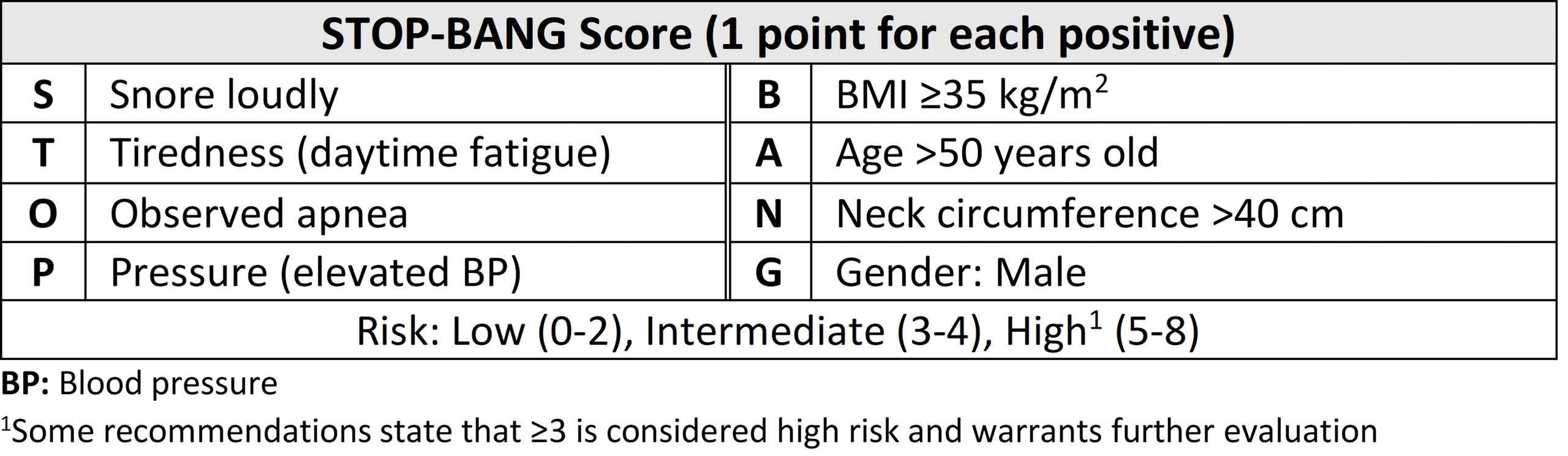
Generally, a STOP-BANG score of 3 or higher warrants further evaluation with a sleep study. If the results confirm OSA, continuous positive airway pressure (CPAP) therapy should be initiated. Patients should also be advised to bring their CPAP machine to the hospital on the day of surgery. Postoperatively, CPAP therapy should be resumed as soon as possible in the post-anesthesia care unit to reduce the risk of pulmonary complications, such as hypoxia. Notably, the use of CPAP immediately after surgery does not increase the risk of anastomotic leaks.
Laboratory work: Labs aim to identify and treat any correctable abnormalities or deficiencies prior to surgery:
- Basic labs: CBC, CMP, fasting glucose, and INR.
- TSH: Often requested by insurers, but routine screening without symptoms is not otherwise indicated. Mild TSH elevations are common in obesity due to leptin’s effect on TRH/TSH. Treat only if true hypothyroidism is confirmed.
- Lipid panel: Fasting lipids should be obtained; statins should be initiated per standard indications.
- Glycemic assessment: Fasting glucose or HbA1c should be checked.
- Micronutrient screening: It is much easier to correct vitamin and mineral deficiencies before undergoing gastrointestinal modifications, particularly with malabsorptive procedures. All patients should have B12, folate, and 25-OH vitamin D levels checked. Additional labs (vitamins A, E, K, zinc, copper, thiamine, pyridoxine, and an iron panel) are indicated for malabsorptive procedures, abnormal screening labs, or clinical suspicion.
- Other endocrine testing: Further labs may be required if PCOS, Cushing syndrome, or other endocrine abnormalities are suspected.
Pregnancy counseling: As discussed in Part 1 of the blog, pregnancy is contraindicated within the first 12–18 months post-op. Women of childbearing age should receive counseling on long-acting contraceptives, including non-oral options, especially if RYGB or malabsorptive procedures are being pursued.
Glycemic optimization: Although there is no absolute HbA1c threshold required prior to MBS, optimization of glycemic control, ideally to an HbA1c below 8%, is associated with reduced perioperative risk. It’s important to remember that HbA1c reflects an average glucose level over the past three months. Therefore, if a patient presents with an elevated HbA1c (e.g., 9%) but has demonstrated significant recent improvement, point-of-care glucose measurements or continuous glucose monitoring may provide a more accurate reflection of current glycemic control. Initiating insulin therapy preoperatively may be required in the short term to achieve better perioperative control. Short-term follow-up with specialists such as endocrinology or clinical pharmacy may be necessary, depending on your clinical workflow and bandwidth.
Smoking cessation: Active tobacco use is a contraindication to MBS. Complete abstinence should be documented for at least 6–8 weeks (ideally 3 months or longer) pre-op. Insurance carriers may require negative urine nicotine testing. Offer pharmacotherapy and behavioral support to assist cessation if indicated.
Gallbladder evaluation: Routine gallbladder evaluation is not indicated in asymptomatic patients. However, if symptoms of biliary colic are present, further evaluation and consideration of concurrent cholecystectomy may be appropriate. Cholecystectomy is not routinely performed in the absence of symptoms. For patients without a prior cholecystectomy, ursodeoxycholic acid may be considered to reduce the risk of gallstone formation during the first six months following surgery.
Cancer screening: Routine, age-appropriate cancer screenings should be completed. Otherwise, expected post-op weight loss may mask unintentional weight loss due to an undiagnosed malignancy.
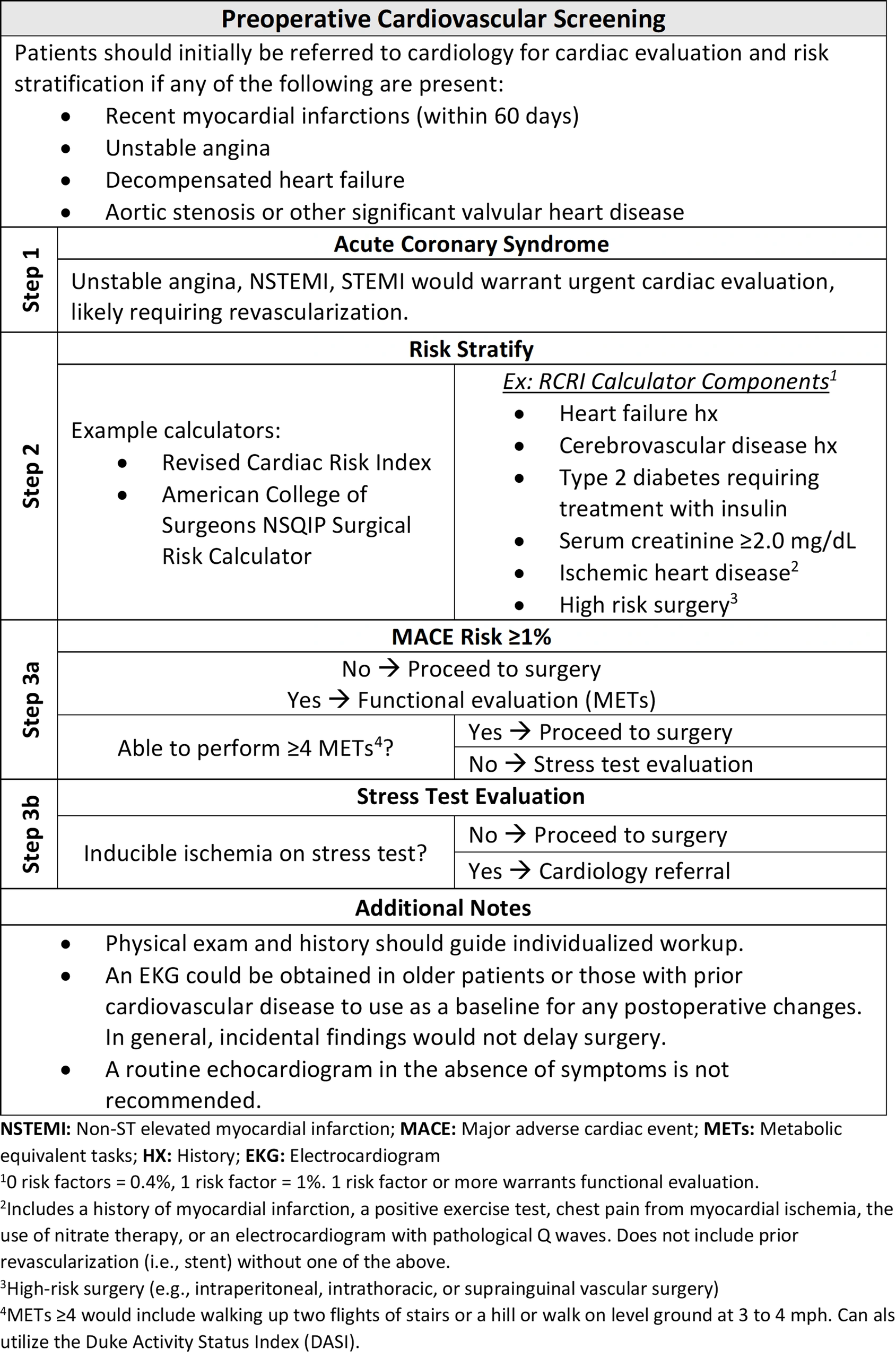
Cardiovascular exam: The preoperative cardiovascular evaluation for patients undergoing MBS follows the same principles as with any other surgical procedure. The goal is to assess and mitigate the risk of major adverse cardiac events during the perioperative period. It is important not to assume that a higher BMI alone significantly elevates surgical risk; in fact, tools such as the Revised Cardiac Risk Index (RCRI) and most other preoperative risk calculators do not include weight as a variable.
Begin by evaluating cardiovascular symptoms and risk factors. Patients with known aortic stenosis, significant valvular disease, anginal symptoms, recent myocardial infarction, or decompensated heart failure should be referred to cardiology prior to surgery. If the patient does not have concerning symptoms and has a normal cardiac exam, proceed with risk stratification using a validated risk calculator. If their calculated risk is <1%, they may proceed to surgery without additional cardiac workup. However, note that for patients undergoing intra-abdominal surgery, one point is added automatically on the RCRI, placing them at ≥1% risk.
For patients at ≥1% risk, assess functional capacity. If they can perform ≥4 metabolic equivalents (METs) without cardiac symptoms, they can proceed to surgery. If their functional status is poor or unclear, further evaluation with cardiac stress testing may be warranted. The ABOM exam is unlikely to test beyond a relatively simplified level. In summary, if patients have any cardiac findings on examination or history, they should be appropriately evaluated. However, patients who are highly active and without concerning symptoms typically do not require further cardiac testing.
Although the guidelines and protocols established by the ASMBS are clear, insurance companies may impose additional requirements before approving surgery. For example, some insurers mandate a specific percentage of weight loss prior to authorization, an approach that is not evidence-based and can delay or even deny patients access to the significant metabolic and health benefits of MBS. While these insurance-specific nuances may be encountered in clinical practice, they are not testable on the ABOM exam. However, the ASMBS guidelines themselves are within the scope of the exam, so it is important to be familiar with them, even if you do not personally perform preoperative evaluations.
Sample Question
A 34-year-old woman with a BMI of 47 kg/m² presents for a preoperative visit prior to undergoing a Roux-en-Y gastric bypass. She has type 2 diabetes managed with metformin and a recent HbA1c of 8.2%. She has been taking a combined estrogen-progestin oral contraceptive for contraception. She denies heat or cold intolerance or brittle hair. She reports working with a dietitian for the past two months to improve her eating habits. Which is the most important step to address before surgery?
A. Delay surgery until a HbA1c of <8% is maintained
B. Adherence to a 6-month dietary plan
C. Screen for hypothyroidism with a TSH
D. Discuss an intrauterine device
Next Week: Pediatrics: Bullying, Stigma, and Food Insecurity
Following Week: Monthly Knowledge Check. This is a review checklist of must-know items for ABOM exams based on the previous four blog topics (nephrology guidelines, functional foods, preoperative eval, and pediatric bullying and stigma). In addition, this will include a brief explanation of the correct answers to previous sample questions.
Upcoming: Phentermine, Microbiome and SIBO, Food Insecurity, and Women and Obesity.
For more practice questions, check out the following:
- Obesity Medicine Board Review Questions (2026): Qs 172, 214, 257, and 267.
- Obesity Medicine Practice Tests (2026): Qs 7, 163, and 289.
(Copyright 2026) Obesity Medicine Board Review Questions, LLC: obesitymedicinereview.com
Featured image: Modified from VectorStock (image license purchased)
Copyediting by Kelly Smith
Now available: A full line of ABOM study resources with 775+ challenging questions in a mobile or book format. Access to both formats is available in a discounted Ultimate Package, which also includes a Pass Guarantee (if you fail the exam in 2026, you get the 2027 edition free), 50 bonus questions released in August, and the newest book, Obesity Medicine: Sample Questions and Study Blogs, which includes all the updated previous study blogs in a paperback format. Check it out here!
