
Cohen syndrome, a secondary genetic etiology of obesity, is a prime target come test day. Although incredibly rare, with only 200 individuals diagnosed to date, its diagnostic incidence increases exponentially on the board exam. Knowing the defining clinical manifestations and inheritance pattern, similar to other genetic causes of obesity, will be key on test day.
Cohen syndrome is inherited in an autosomal recessive manner, with the defect occurring on the 8q22.2 gene locus. Although first recognized in the 1970s, its overall prevalence is likely higher than reported. A study of 1,070 children with unexplained intellectual impairment found that 7 of them met molecular and clinical criteria for the diagnosis of Cohen syndrome, the fifth leading cause. Phenotypically, there is some crossover with Prader-Willi syndrome, Angelman, and Bardet-Biedl syndrome.
Some of the more pronounced clinical findings are summarized below:
- Neutropenia: Mild to moderate neutrophil reduction is commonly seen in those with Cohen syndrome. Although the neutropenia is typically non-life-threatening, many will experience repeated infections such as pneumonia (average of 2.5 lifetime pneumonias), early childhood otitis media (80% had 5+ infections per year prompting tympanostomy tubes), recurrent gingival infections, and aphthous ulcers.
- Microcephaly with intellectual delay: All children will have early-onset developmental delay, which helps differentiate it from monogenic causes of obesity. The degree of delay is variable in severity, with 20% unable to verbally communicate. Importantly, this is not progressive or regressive, so if therapy is started earlier, it can significantly improve outcomes. Microcephaly is not universal, but if present, it would be seen in the first year of life and continue into adulthood.
- Ophthalmologic: The two most prominent ocular findings include retinal dystrophy and myopia, which are progressively severe over time.
- Facial findings: Like other syndromic conditions, distinctive facial features can be seen. Although there is variation amongst ethnicities, the related features include thickened eyebrows and hair accompanied by a low hairline. A smooth/short philtrum, prominent nasal bridge, and high palate lead to an “open mouth” expression. In addition, prominent and widely spaced incisors are seen.
- Musculoskeletal: Hypotonia is common, along with the classic findings of narrow hands and feet. In addition, often, there is joint laxity leading to hypermobility and even potential joint dislocations.
Like Prader-Willi syndrome (PWS), those with Cohen syndrome display failure to thrive in infancy and early childhood, with significant increases in weight, especially truncal obesity, in early adolescence. Unlike PWS, this weight increase is not due to hyperphagia. Short stature is prevalent. The growth chart pattern of an increase in weight with a stagnant stature is a hallmark of endocrinopathies and many genetic etiologies of obesity (with melanocortin 4 receptor deficiency being an exception). In contrast, growth charts displaying proportional increases in height and weight are consistent with excess caloric intake.
Treatment is focused on supportive measures to improve the quality of life for these individuals and promote milestone accomplishments, albeit delayed. Corrective lenses with close ophthalmological surveillance and early global therapy (physical, speech, occupational, etc.) to narrow the developmental delays are key and should be initiated early. Hematologic surveillance to monitor neutropenia severity is recommended, with administration of granulocyte-colony stimulating factor having mixed results but available as an individualized option based on the frequency of infections.
A little knowledge can go a long way regarding genetic conditions linked to obesity. To summarize, Cohen syndrome is inherited in an autosomal recessive pattern, with key clinical characteristics including a small head size (microcephaly), narrow hands and feet, joint hypermobility, “open mouth” expression, low white blood cell count, retinal dystrophy, and thickened hair and eyebrows. A table with a memory aid is provided below.

Sample Question
A 6-year-old boy presents to the pediatrician for recurrent shoulder dislocations. His joints are hypermobile. He is minimally interactive and does not make eye contact but has an open-mouth expression. His vision is poor. He has thickened hair and eyebrows. This condition is characterized by what genetic abnormality?
A. Autosomal dominant
B. Autosomal recessive
C. X-linked recessive
D. X-linked dominant
Next Week: Hormonally active adipose
Upcoming: Metabolic syndrome and knowledge check
For more practice questions, check out the following:
- Obesity Medicine Board Review Questions (2026): Qs 21 and 28.
- Obesity Medicine Practice Tests (2026): Qs 132 and 215.
(Copyright 2026) Obesity Medicine Board Review Questions, LLC: obesitymedicinereview.com
Featured image: Modified from VectorStock (image license purchased)
Copyediting by Kelly Smith
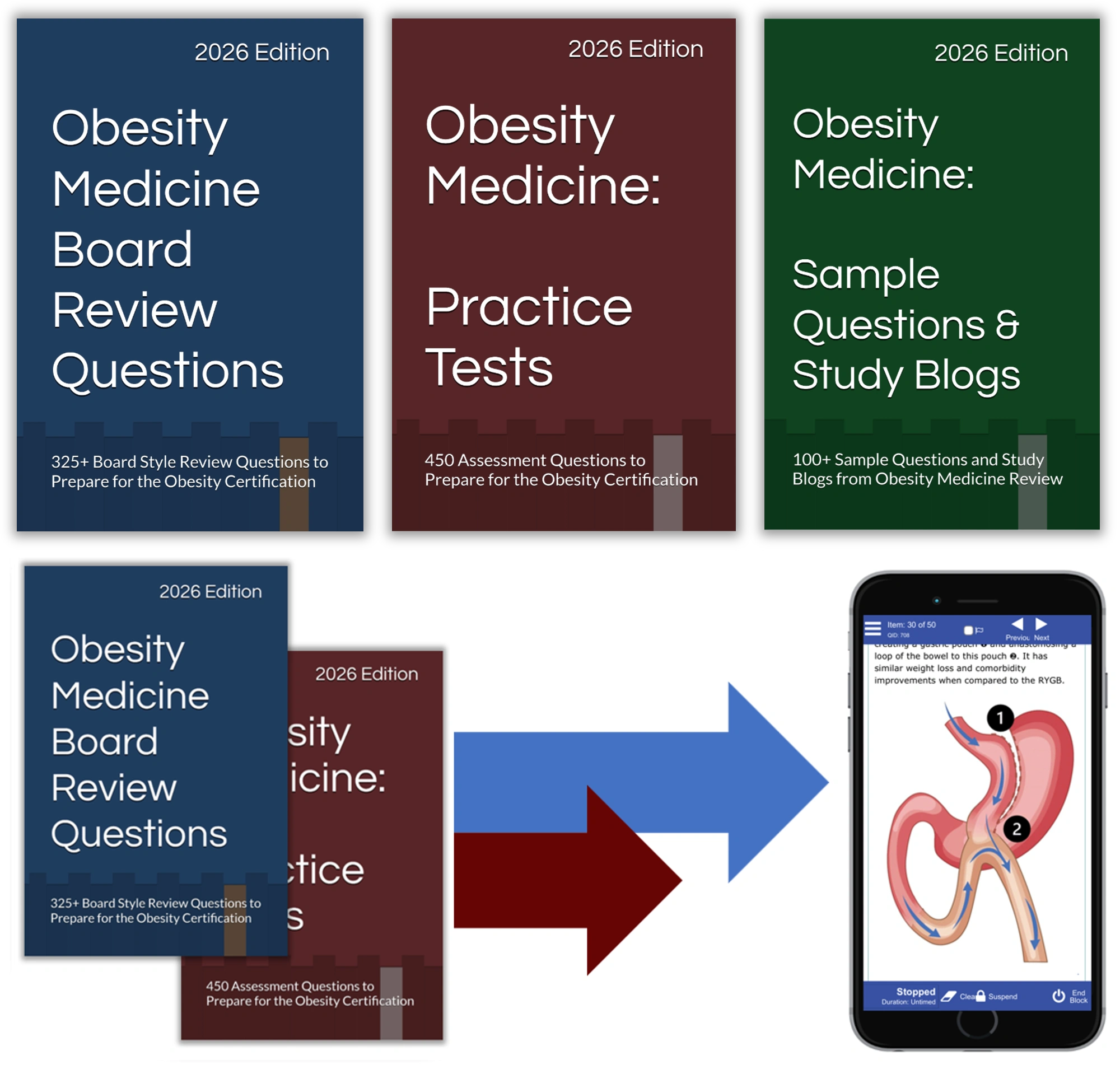
Now available: A full line of ABOM study resources with 775+ challenging questions in a mobile or book format. Access to both formats is available in a discounted Ultimate Package, which also includes a Pass Guarantee (if you fail the exam in 2026, you get the 2027 edition free), 50 bonus questions released in August, and the newest book, Obesity Medicine: Sample Questions and Study Blogs, which includes all the updated previous study blogs in a paperback format. Check it out here!
