

Exercise physiology concepts have become increasingly popular in obesity medicine board review courses, especially in the past few years. In particular, the depth of knowledge required surrounding metabolic equivalents. In this blog, we will cover some of the high-yield principles you need to know come October.
Just to note, many of the recommendations and testable content over exercise physiology come directly from guidelines and position statements from the American College of Sports Medicine (link here), an ABOM-listed exam resource, and The Physical Activity Guidelines for Americans, 2nd edition (click here).
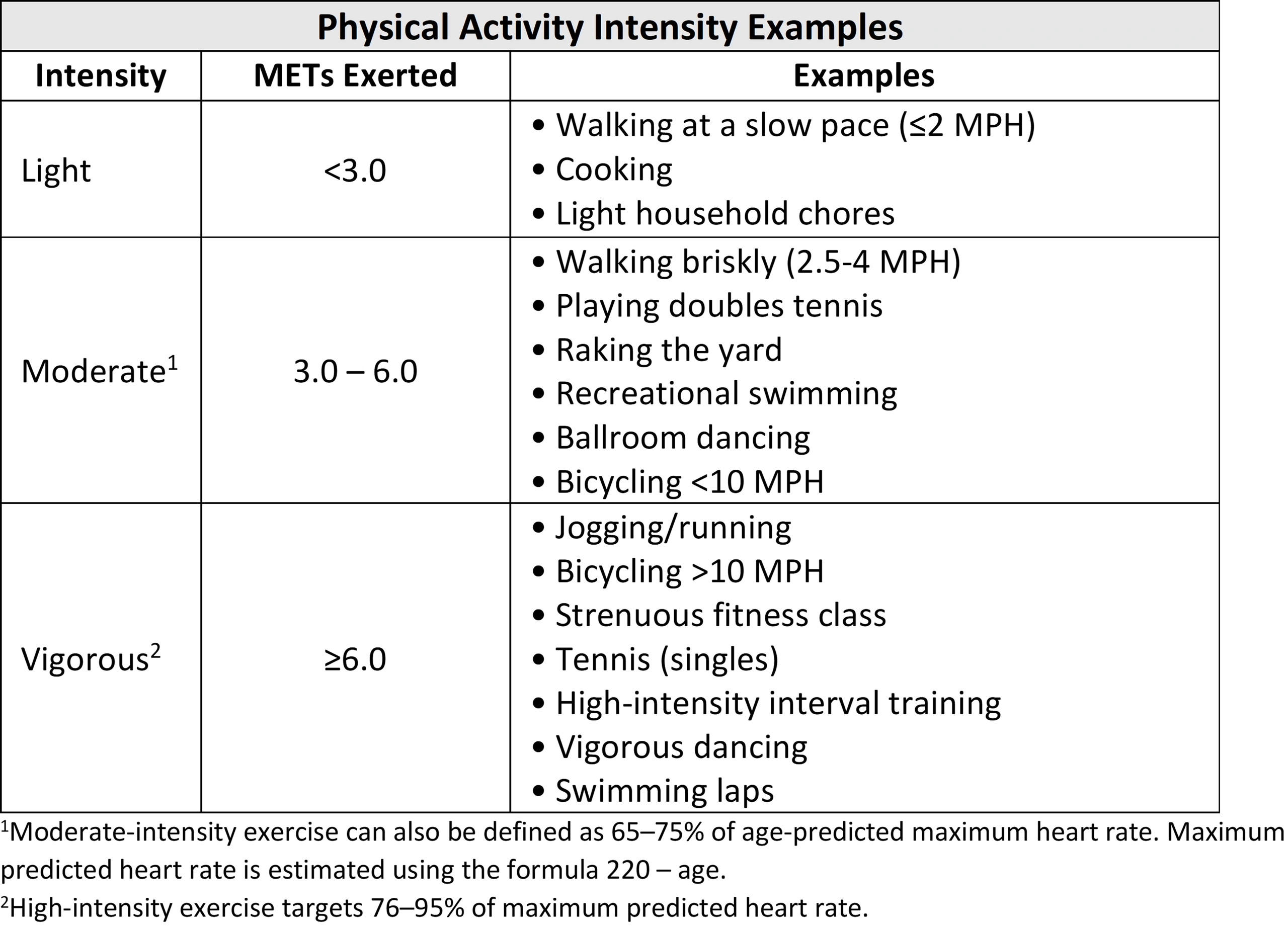
One metabolic equivalent task (MET) is the energy expenditure utilized at rest while lying flat. It equates to 3.5 mL of oxygen consumed per kilogram per minute (i.e., 1 MET = 3.5 mL/kg/min oxygen consumed), closely resembling the resting metabolic rate. Multipliers of this can then be extrapolated based on variable activities performed. For example, if a person is walking at a brisk pace, then they are performing between 3-6 metabolic equivalents, which is consistent with moderate-intensity physical activity. Albeit more along the lines of rote memory, you should know what activities and how many METs fall into light, moderate, and vigorous physical activity levels (see table below).
Variants of measuring METs (actually MET-minutes) were studied to develop the recommendation that individuals who completed a minimum of 150 minutes of moderate-intensity exercise or 75 minutes of vigorous-intensity physical activity reduced their cardiovascular risk. In fact, we can estimate the number of calories utilized per minute by the formula: kcal/min = METS x 3.5 x (weight in kg/200), one of the few formulas I would recommend memorizing for exam day.
Although this blog is short, take the extra time to memorize the table below and become comfortable with it
Sample Question
A patient meets with a personal trainer to discuss exercise options. Her father recently passed away unexpectedly in the setting of heart disease, so she wants to be proactive and begin exercising. She enjoys numerous activities but would prefer outdoor activities. An exercise prescription is written to include performing resistance training two days per week. In addition, the prescription includes performing an outdoor activity of moderate intensity for 30 minutes, five days a week. Which of the following activities would qualify for this exercise prescription?
A. Walking at 2 miles per hour
B. Playing singles tennis
C. Bicycling at 8 miles per hour
D. Jogging at 5 miles per hour
E. Swimming laps
Next Week: Monthly Knowledge Check. This is a review checklist of must-know items for ABOM exams based on the previous four blog topics (Updated pediatric guidelines, PCOS, telogen effluvium, intensity of exercise/METS). In addition, this will include a brief explanation of the correct answers to previous sample questions.
Upcoming: Endoscopic gastroplasty, Cohen’s syndrome, hormonally active adipose, and metabolic syndrome.
For more practice questions, check out the following:
- Obesity Medicine Board Review Questions (2026): Qs 187, 229, and 292.
- Obesity Medicine Practice Tests (2026): Qs 59, 119, 262, and 305.
(Copyright 2026) Obesity Medicine Board Review Questions, LLC: obesitymedicinereview.com
Featured image: Modified from VectorStock (image license purchased)
Copyediting by Kelly Smith
Now available: A full line of ABOM study resources with 775+ challenging questions in a mobile or book format. Access to both formats is available in a discounted Ultimate Package, which also includes a Pass Guarantee (if you fail the exam in 2026, you get the 2027 edition free), 50 bonus questions released in August, and the newest book, Obesity Medicine: Sample Questions and Study Blogs, which includes all the updated previous study blogs in a paperback format. Check it out here!
