

With the common use of metformin for metabolic conditions associated with obesity, you can expect this to be a thoroughly tested subject on the ABOM exam. Testable areas will include metformin’s off-label use, risks, benefits, indications, and other nuances. Today’s blog will give you an overview of these areas.
Metformin is often the initial medication used for insulin resistance and type 2 diabetes mellitus. There is evidence that if initiated in those with pre-diabetes with risk factors, it may help prevent or delay the progression to diabetes (Diabetes Prevention Program trial). Although the only FDA indication is type II diabetes, metformin is often used for other reasons. Prior to current pediatric anti-obesity medication approvals, it was often one of the few, and thus preferred, treatments for pediatric obesity, showing modest efficacy. In adults, although it may be prescribed off-label for weight loss, one of its most non-diabetic efficacious uses is to prevent/treat weight gain with patients on antipsychotic medications. Ideally initiated at the same time as psychotropic medications, metformin can blunt the notorious weight gain seen with this medication class.
Metformin works via a few different mechanisms. First, it improves peripheral utilization and uptake of glucose by reducing insulin resistance. In other words, it improves insulin sensitivity, allowing increased muscle uptake of glucose. Second, it has properties to reduce intestinal absorption of glucose. Finally, hepatic glucose production is reduced. These three mechanisms reduce glucose resistance and thus not only improve glucose levels in those with diabetes but also improve glucose utilization in those with resistance, such as polycystic ovarian syndrome, etc.
Although some can titrate up quickly without side effects, metformin characteristically causes dose-related gastrointestinal symptoms such as diarrhea, abdominal pain, and flatulence, which is the most common reason for its discontinuation. Extended-release (ER) tablets significantly mitigate this effect in comparison to immediate-release (IR) tablets. For example, the incidence of diarrhea on the IR tab is 53%, but only 10% on the ER. Of note, the ER tabs are less efficacious after malabsorptive metabolic and bariatric surgeries, and thus, it is recommended to convert to the IR formulation postoperatively if metformin is to be continued. It is worth noting the maximum dosages of medications for the ABOM; the ER formulation can be titrated up to a maximum of 2g/day, where the IR goes up to 2.55 g/day (divided doses, 850 mg TID), although most commonly the maintenance dose does not exceed 1000 mg BID, barring side effects. As it is renally excreted, dose reduction is required with worsening renal function; the dose should be cut in half if the eGFR drops to less than 45 mL/min, and metformin is contraindicated if eGFR drops below 30 mL/min due to the risk of lactic acidosis.
In contrast to gastrointestinal tolerability, metformin’s safety profile is generally pretty good, with a few high-yield testable exceptions. Most importantly, the black box warning of type B lactic acidosis (non-hypoxic) that can lead to death. Albeit rare, initial symptoms can be subtle, starting as malaise and abdominal pain, leading to hypotension and bradyarrhythmia. This is most likely to occur in those with risk factors such as older age, renal impairment, contrast administration, and hypoxic states such as acute heart failure. For the board exam, a vital risk factor is the use of concurrent carbonic anhydrase inhibitors, with topiramate being the only specifically mentioned example on the label. Utilized for their weight-loss properties, topiramate and metformin are often used in combination, particularly in patients with diabetes. Again, this risk is very low and would most likely occur in the setting of renal failure, but it should be kept in mind.
Finally, long-term metformin use interferes with B12 absorption and can lead to deficiency. It is vital, therefore, not to assume diabetic neuropathy is the reason why patients present with neuropathic symptoms but to also consider this water-soluble deficiency in those on metformin.
There are many nuances to this medication beyond our daily prescribing that boards will expect you to know. Make sure these concepts are fresh in your mind come test day, as you will see this pharmacologic treatment numerous times.

Sample Question
A pharmacist is performing a retroactive medication reconciliation and review process to ensure patients within her medical home are receiving the best care. As part of the process, she is working with informatics to flag contraindications of medications matched with patient characteristics or medical conditions. Which of the following would be flagged with metformin use?
A. Prior Roux-en-Y gastric bypass
B. Concurrent diastolic heart failure
C. A patient over the age of 70 years old
D. A patient on peritoneal dialysis
Next Week: Monthly Knowledge Check. This is a review checklist of must-know items for ABOM exams based on the previous four blog topics (OAGB, Alström syndrome, ketogenic pattern, and metformin). In addition, this will include a brief explanation of the correct answers to previous sample questions.
Following week: Updated pediatric guideline
Upcoming Week: Polycystic ovarian disease, telogen effluvium, and intensity of exercise/METS
For more practice questions, check out the following:
- Obesity Medicine Board Review Questions (2026): Qs 156, 234, 284, and 302.
- Obesity Medicine Practice Tests (2026): Qs 58, 79, 112, 141, 178, 244, 252, and 428.
(Copyright 2026) Obesity Medicine Board Review Questions, LLC: obesitymedicinereview.com
Featured image: Modified from VectorStock (image license purchased)
Copyediting by Kelly Smith
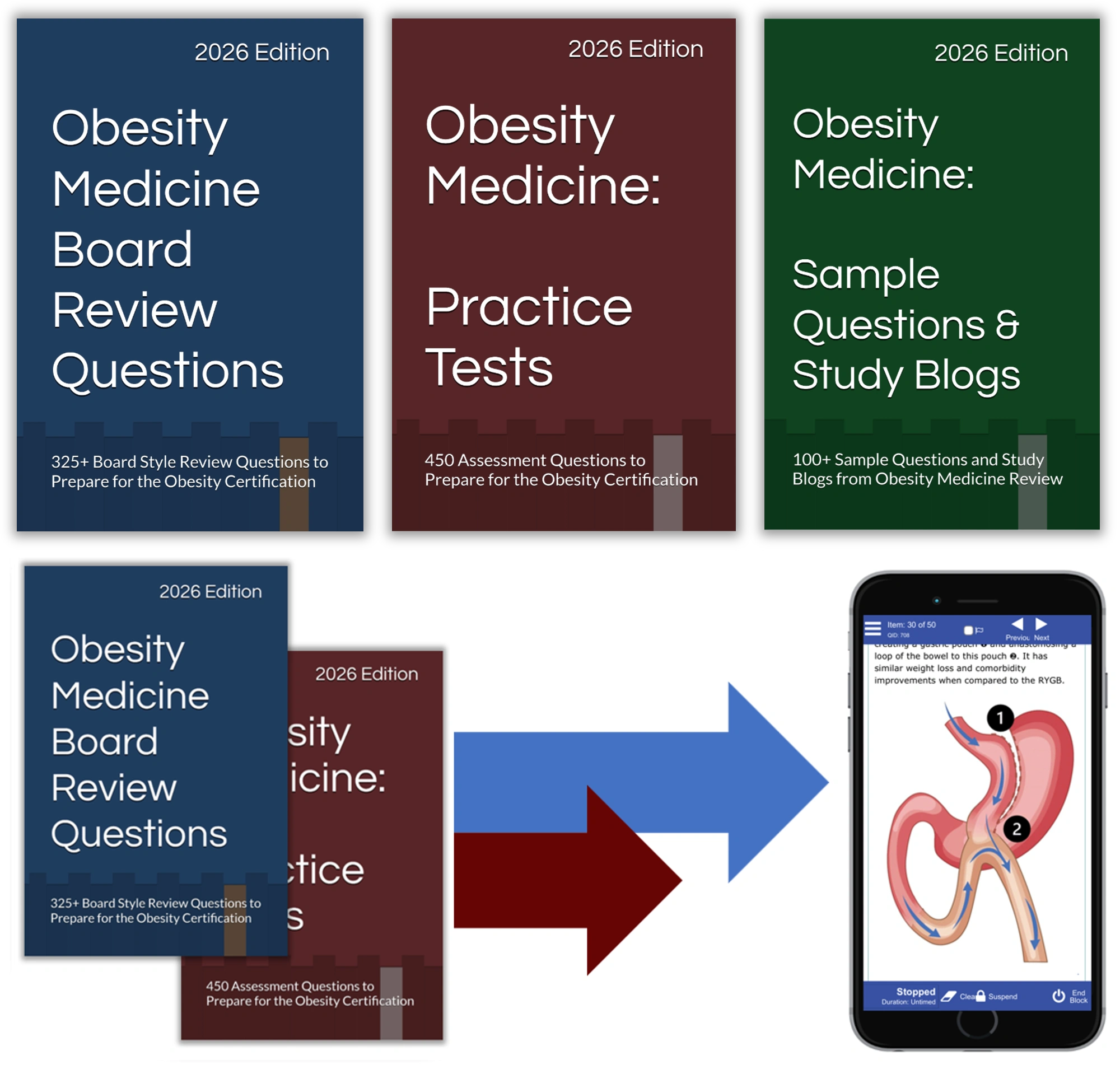
Now available: A full line of ABOM study resources with 775+ challenging questions in a mobile or book format. Access to both formats is available in a discounted Ultimate Package, which also includes a Pass Guarantee (if you fail the exam in 2026, you get the 2027 edition free), 50 bonus questions released in August, and the newest book, Obesity Medicine: Sample Questions and Study Blogs, which includes all the updated previous study blogs in a paperback format. Check it out here!
