

Fragile X syndrome (FXS) is the most common cause of inherited intellectual disability, accounting for 3% of those with neurodevelopmental delays. The full mutation (classic presentation) affects 1 in 7,000 males and 1 in 11,000 females, whereas the pre-mutation (variable to minimal penetrance) is as common as 1 in 750 (males) and 1 in 300 (females). Patients with this condition have a higher prevalence of obesity, thus piquing the interest of the ABOM exam writers.
FXS is an X-linked genetic disorder, thus more commonly affecting males, but also relatively common in females. Unregulated trinucleotide expansion, similar in mechanism to Huntington’s disease, leads to a loss of function of the FMR1 gene found on the X chromosome. More repeats lead to lower levels of the FMR1 gene (and subsequent transcription), ultimately causing a more severe clinical presentation. Those with more than 200 repeats meet the criteria for the full mutation, whereas 50-200 causes ‘premutation’ without the classic findings of FXS, but a propensity to pass the full mutation to future generations (i.e., carrier). In contrast to females, males lack a second X chromosome to potentially compensate for the mutation. Therefore, females tend to have less pronounced phenotypical features, often delaying diagnosis.
It is unlikely that an ABOM board question will provide symptoms other than the typical findings seen in a full mutation, so this will be the focus of the clinical manifestations. Generally, global developmental delay (motor and language milestones) is the first sign noticed by parents, which prompts further workup. Only 10% of individuals with FXS are nonverbal, with the majority experiencing delayed expressive language development, characterized by repetition, poor articulation, and slurred, disorganized speech. Neurobehavioral disorders often occur concurrently and include attention deficits, social anxiety, and autism spectrum disorders. Interestingly, 50% of females who have the full mutation have normal intellect, with the other 50% having milder features.
Many of the classic physical exam findings do not occur until the child is around 8 years of age and include a long and narrow face with a prominent jaw and forehead, large ears, and testicular enlargement (males). In contrast, physical findings in infants and children are more subtle and nonspecific, and thus less likely to be tested, but may include macrocephaly, hypotonia, and strabismus.
Given the variability in presentation and the more pronounced physical findings manifesting later, diagnosis is often delayed. According to the CDC, initial findings are commonly noted by parents at the 12-month mark, with providers not diagnosing developmental delay until the 20-month mark, and an official diagnosis typically occurs on average at the 3-year mark. This delay in diagnosis also often delays important therapies that mitigate developmental delays to some extent and delays genetic counseling to the parents. Therefore, any child with developmental delay, intellectual delay, or a diagnosis of autism is recommended to be molecularly tested. In addition, adults without a clear etiology of cognitive delays, those who have a strong family history of cognitive disorders, or females with primary ovarian insufficiency without reasoning may require testing.
There are several associations that help explain the increased prevalence of obesity in those with FXS. Most notable is metabolic dysregulation, including disruptions in energy metabolism and insulin sensitivity. Some children also exhibit hyperphagia because of the altered hormonal regulation of appetite. Sensory processing issues, attention deficit disorders, and other developmental delays have also been linked to altered eating behaviors (i.e., lack of stimulus control) and preferential food choices (i.e., calorie-dense foods). Lastly, medications prescribed to manage behavioral issues tend to be obesogenic. While this information is of clinical importance, the ABOM exam will likely focus on the distinctive physical features of FXS.
Let’s recap the absolute must-knows for ABOM boards. You must know that FXS is inherited in an X-linked pattern due to a loss-of-function mutation to the FMR1 gene, leading to trinucleotide expansion. The more repeats present, the worse the severity of the condition. Being able to recognize the condition based on characteristic findings and differentiate it from other genetic conditions is vital. A brief summary of the key clinical findings are listed below:
- Large ears
- Testicular enlargement with normal testicular function
- Elongated and narrow face with a broad, prominent forehead
- Prominent jaw
- Strabismus
- Developmental and cognitive delays including autism spectrum disorder
- Behavioral changes (anxiety, attention deficit, hyperactivity)
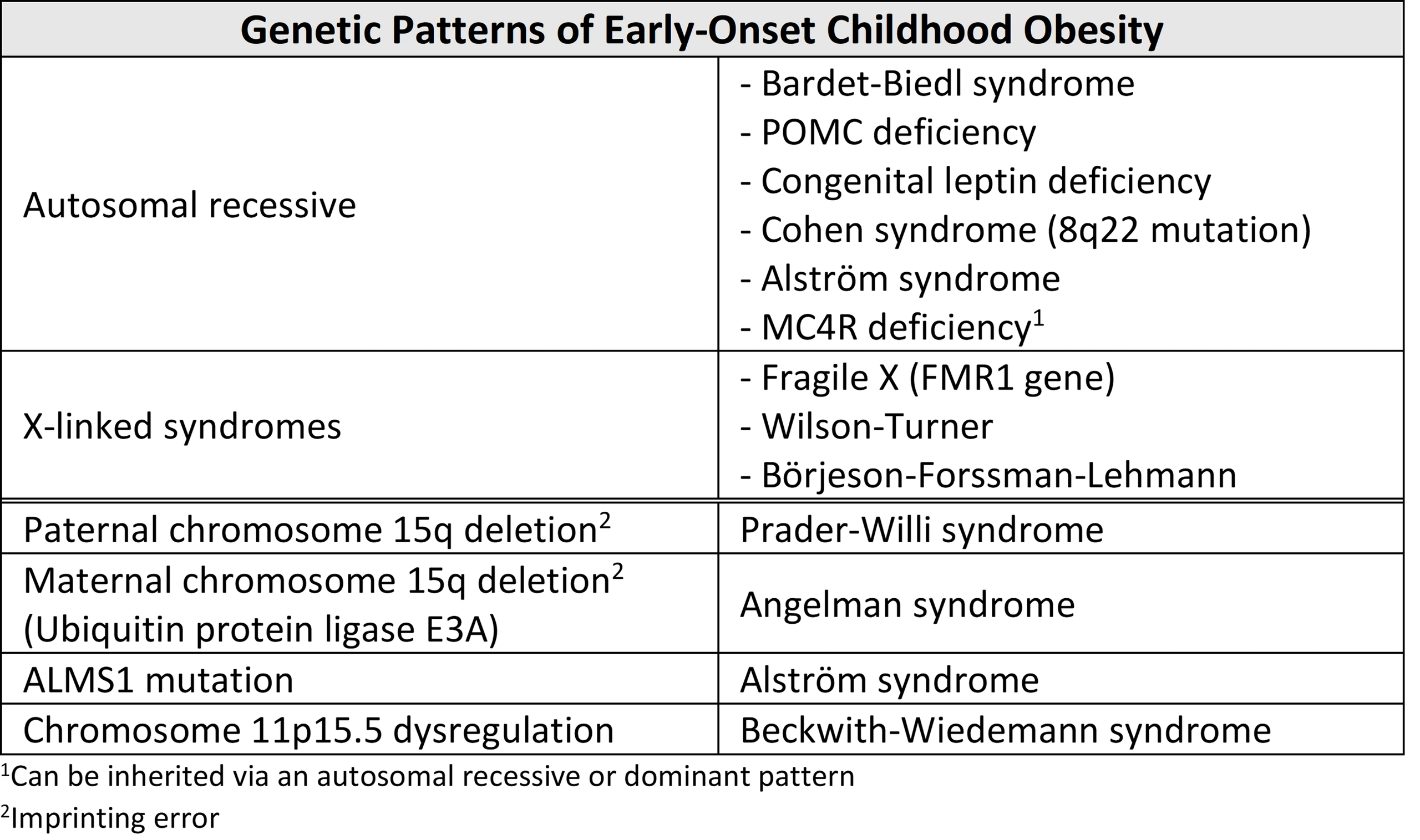
The table below categorizes causes of early-onset obesity by their genetic inheritance or genetic anomaly. Make sure to have these memorized before the test!
Sample Question
A 7-year-old patient presents to his family medicine physician with his father for ongoing obesity management. Physical examination reveals a broad forehead with strabismus. Upon record review, a loss-of-function mutation to the FMR1 gene (Xq27.3) is noted. Which other finding is most likely present in this patient?
A. Polydactyly
B. Decreased testicular size
C. Organomegaly
D. Hypertonia
E. Elongated face
Next Week: Monthly Knowledge Check. This is a review checklist of must-know items for ABOM exams based on the previous four blog topics (Vagal nerve stimulator, copper, and selenium deficiency, pediatric hypertension, and Fragile X syndrome). In addition, this will include a brief explanation of the correct answers to previous sample questions.
Upcoming: Weight gain in pregnancy, measuring dietary intake, viral etiology of obesity, metabolic-associated steatohepatitis
For more practice questions, check out the following:
- Obesity Medicine Board Review Questions (2026): Q 28.
- Obesity Medicine Practice Tests (2026): Qs 259 and 382.
(Copyright 2026) Obesity Medicine Board Review Questions, LLC: obesitymedicinereview.com
Featured image: Modified from VectorStock (image license purchased)
Copyediting by Kelly Smith
Now available: A full line of ABOM study resources with 775+ challenging questions in a mobile or book format. Access to both formats is available in a discounted Ultimate Package, which also includes a Pass Guarantee (if you fail the exam in 2026, you get the 2027 edition free), 50 bonus questions released in August, and the newest book, Obesity Medicine: Sample Questions and Study Blogs, which includes all the updated previous study blogs in a paperback format. Check it out here!
