
Idiopathic intracranial hypertension (IIH), also known as pseudotumor cerebri, is a condition with a higher prevalence in those with obesity, and thus high yield for exam day. As its name suggests, IIH is characterized by increased intracranial pressure, which can lead to permanent vision loss if not treated. Symptoms, diagnostic evaluation, physical exam findings, and treatment are all fair game on the ABOM examination.
IIH most commonly occurs in women of childbearing age with excess weight. The following are characteristic symptoms to look for:
- Headaches: This is the most common presenting complaint and is found in 92% of patients. However, they can present as migraine or tension-type primary headaches, delaying diagnosis. Occasionally, patients may complain of positional headaches or even retrobulbar pain or pain with moving the eyes. Importantly, untreated sleep apnea often causes morning headaches, but no visual changes, and is a great distractor!
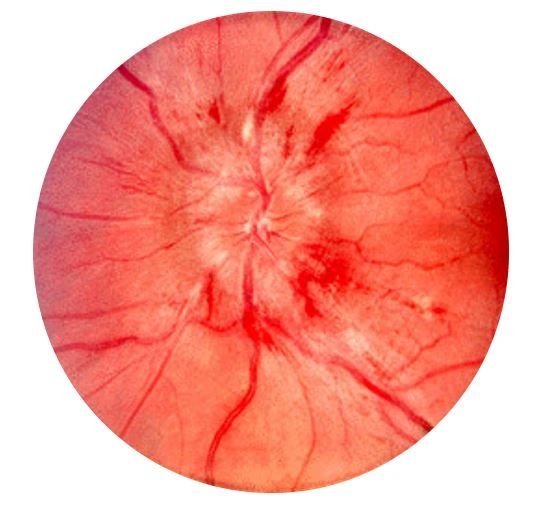
- Visual symptoms: Often the condition is suspected during routine eye exams when incidental, asymptomatic papilledema is seen (see featured image). Visual symptoms commonly associated with papilledema tend to be transient (72% of cases), lasting seconds, such as temporary visual obscurations or flashes, which the patient may not disclose given the short nature. More severe or advanced cases may present with persistent, rapid vision loss (26% of cases), diplopia, or even sixth nerve palsy.
- Pulsatile tinnitus: This is present in over half of patients and is described as a rushing sound like wind. In the setting of a headache, it is very concerning for IIH.
- Other: A variety of other nerve deficits can occur, and even more nonspecific musculoskeletal complaints, such as neck and back pain may be seen. Fortunately, board exams will likely focus on the more common presenting findings mentioned above.
Diagnostic evaluation requires intracranial imaging (MRI with MRV preferred) first to rule out secondary causes of intracranial hypertension, such as mass effect or central venous thrombosis. Once that is completed, a lumbar puncture is the diagnostic test that will display an increased opening pressure, with normal cerebrospinal fluid studies ruling out other etiologies. In addition, an ophthalmologist referral is essential for ongoing management and treatment.
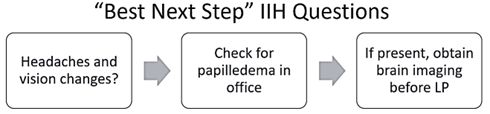
Be cautious of the wording on boards! If IIH is suspected, but symptoms are nonspecific, a fundoscopic examination can assist (i.e., narrow the differential diagnosis). If the patient has papilledema, then further workup to diagnose is needed. In this case, if the question is asking for the next best step in management, it will be neuroimaging. However, if the question asks which test is best to confirm the diagnosis, the answer is a lumbar puncture.
Note: A fundoscopic exam can be completed in the primary care office and can help narrow the differential diagnosis in those with nonspecific symptoms, but it cannot diagnose IIH.
Permanent vision loss is the most concerning feature of IIH and the reason for initiating treatment. Patients with IIH and obesity should be treated aggressively to obtain weight loss, which improves the condition. However, targeted treatment of IIH should be initiated early, as weight loss can take time. Carbonic anhydrase inhibitors such as acetazolamide or topiramate are first-line pharmacotherapy that reduce cerebrospinal fluid production, thereby reducing intracranial pressure. More advanced treatments such as optic nerve sheath fenestration and shunting are beyond the scope of this exam. Regardless, close follow-up with ophthalmology is vital to monitor treatment progress and the need for advanced interventions.
Clinically, IIH is one of those conditions that is good to keep in mind in patients with excess weight, as the sometimes asymptomatic, or nonspecific symptoms can delay diagnosis, or miss it completely, until damage is already done. This topic will show up on test day and likely will be a second or third-order question (i.e., management or diagnostic tools) given the classic presentation.
Sample Question
A 14-year-old adolescent female with a BMI of 39 kg/m² presents to her family physician for recurrent headaches. She states the headaches are pulsatile and occasionally cause loss of appetite. In addition, she now has difficulty seeing the board during school and must sit toward the front of her class. She has intermittent loss of vision and diplopia when standing up. Which of the following would be the best test to determine the cause of her headaches?
A. Orthostatic vital signs
B. Overnight sleep study
C. Ophthalmologic evaluation
D. Brain imaging
E. Cerebral spinal fluid studies
Next Week: Cortisol levels/weight gain with no sleep
Upcoming: Monthly Knowledge Check. This is a review checklist of must-know items for ABOM exams based on the previous four blog topics (Motivational interviewing, adjustable gastric banding, idiopathic intracranial hypertension (i.e., pseudotumor cerebri), and cortisol levels/weight gain with no sleep). In addition, this will include a brief explanation of the correct answers to previous sample questions.
For more practice questions, check out the following:
- Obesity Medicine Board Review Questions (2026): Qs 91 and 111.
- Obesity Medicine Practice Tests (2026): Qs 52 and 101.
(Copyright 2026) Obesity Medicine Board Review Questions, LLC: obesitymedicinereview.com
Featured image (modified): Papilledema.jpg. (2020, October 14). Wikimedia Commons. Retrieved 17:54, November 9, 2024
Copyediting by Kelly Smith
Now available: A full line of ABOM study resources with 775+ challenging questions in a mobile or book format. Access to both formats is available in a discounted Ultimate Package, which also includes a Pass Guarantee (if you fail the exam in 2026, you get the 2027 edition free), 50 bonus questions released in August, and the newest book, Obesity Medicine: Sample Questions and Study Blogs, which includes all the updated previous study blogs in a paperback format. Check it out here!
