

Genetic conditions leading to obesity are high-yield for the ABOM exam. Their characteristics, genetic inheritance patterns, and any available treatments must be committed to memory. This blog post will focus on melanocortin 4 receptor deficiency (MC4R), the most common monogenic cause of obesity. This genetic defect is shared within families and is characterized by tall stature, increased bone mineral density (“big boned”), and high insulin levels with insulin resistance.
The increase in readily available genetic testing has enabled the discovery of additional genes associated with obesity. These genes are often split into two etiologies: syndromic or monogenic. In both categories, the result is similar early-onset hyperphagia (usually before five years old), with a significantly elevated BMI and often other characteristic findings. The MC4R deficiency is commonly inherited in an autosomal dominant pattern, meaning only one mutated copy of the MC4R gene from one parent is needed. While less commonly acquired via an autosomal recessive pattern, it is possible. Below are the characteristics of syndromic and monogenic etiologies:
- Syndromic: Refers to obesity that is part of a broader syndrome or medical condition. These conditions can include genetic disorders such as Prader-Willi syndrome (most common) or Bardet-Biedl syndrome. In these cases, obesity is just one symptom of the underlying condition.
- Monogenic: Refers to obesity that is caused by a single gene mutation. These mutations can affect the body’s ability to regulate appetite, metabolism, or energy expenditure. MC4R deficiency, leptin receptor mutations or deficiency, and POMC deficiency are examples.
MC4R deficiency is a genetic disorder caused by mutations in the MC4R gene located on chromosome 18. The MC4R gene provides instructions for making the melanocortin 4 receptor, which is involved in regulating appetite and energy balance. From the schematic below, if the MC4R receptor is deficient, the anorexigenic pathway cannot be fully activated.
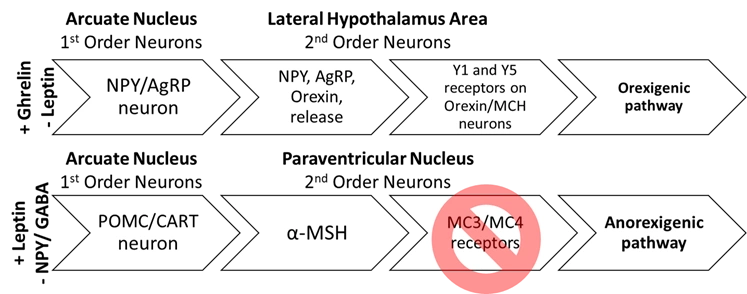
Because MC4R mediates most of the anorectic effects of leptin, an MC4R deficiency leads to early-onset obesity via functional leptin resistance. This increased adiposity leads to increased leptin levels and insulin resistance. Interestingly, leptin is also independently involved in linear bone growth (i.e., not mediated through MC4R), with increased levels stimulating bone growth. This is one of the mechanisms leading to tall stature in MC4R deficiency.
For the board exam, look for taller-than-expected stature, with early-onset obesity, and increased insulin levels with associated insulin resistance. Currently, MC4R does not have a specific treatment beyond those that are typical for other patients with obesity. In addition, it will be important to be able to differentiate this condition from the following other monogenic causes of obesity, with their defining characteristics listed below:
- POMC: Proopiomelanocortin gene mutations lead to an adrenal crisis in neonates due to ACTH deficiency, which is produced from POMC (hypothalamus) along with alpha-melanocyte-stimulating hormone, which is involved in reducing food intake. Although not universal clinically, most board questions will include physical characteristics of hypopigmentation and red hair.
- LEPR: Leptin receptor gene defects (or those who have leptin deficiency) have difficulty suppressing their appetites and insulin resistance but do not have tall stature.
One final note related to genetics and obesity. Variants of the fat mass and obesity-associated (FTO) gene is the most common gene found in those with obesity in the general population. It is associated with obesity and elevated body mass index in multiple studies. Though not fully understood, it is thought to play a role in regulating energy intake and expenditure. FTO is considered a polygenic cause of obesity, similar to other epigenetic, environmental, and lifestyle factors that contribute to the development of obesity. This gene is important and may show up as a distractor on these genetic questions. Know that FTO is associated with obesity, but it is not a monogenic or syndromic cause of obesity such as the ones discussed above.
Sample Question
Two adolescent patients are seen in a tertiary weight management facility. One has a leptin receptor gene defect, and the other has melanocortin 4 receptor deficiency. What will be the most noticeable difference between these two patients?
A. Height
B. Skin pallor
C. Blood pressure
D. Intellectual ability
Next Week: Obstructive Sleep Apnea
Following Week: Monthly Knowledge Check. This is a review checklist of must-know items for ABOM exams based on the previous four blog topics (Hedonic vs. Homeostatic Hunger, Supplements, MC4R deficiency, and OSA). In addition, this will include a brief explanation of the correct answers to previous sample questions.
Upcoming: Wegovy® (semaglutide), obesity paradox/myths, epigenetics, dietary plans (Mediterranean/DASH, etc.)
For more practice questions, check out the following:
- Obesity Medicine Board Review Questions (2026): Qs 2 and 53.
- Obesity Medicine Practice Tests (2026): Qs 175 and 324.
(Copyright 2026) Obesity Medicine Board Review Questions, LLC: obesitymedicinereview.com
Featured image: Modified from VectorStock (image license purchased)
Copyediting by Kelly Smith
Now available: A full line of ABOM study resources with 775+ challenging questions in a mobile or book format. Access to both formats is available in a discounted Ultimate Package, which also includes a Pass Guarantee (if you fail the exam in 2026, you get the 2027 edition free), 50 bonus questions released in August, and the newest book, Obesity Medicine: Sample Questions and Study Blogs, which includes all the updated previous study blogs in a paperback format. Check it out here!
