
While there is a wave of new anti-obesity medications hitting the market, let’s take a look at one of the more established medications, Contrave®. This is an oral combination medication of bupropion and naltrexone, used for their synergistic effects in weight loss through the central craving’s pathway, and is particularly useful for those with food cravings. Alternatively, the FDA indicates bupropion for smoking cessation and naltrexone for alcohol use disorder, which are other conditions involving the cravings pathway. Similar to other updated anti-obesity medication (AOM) indications, Contrave® is FDA-approved for adults with obesity or overweight who have at least one weight-related comorbidity.
The question is, is it effective? After a few completed trials, the company preferentially portrays the COR-BMOD trial, which boasts the most success. This trial showed 80% of participants losing ≥5% (vs. 60% taking placebo) in those who completed the study, with a mean weight loss of 11.5% body weight (25 lb average) vs. 7.3% (16 lb) with placebo. This seems optimistic; however, you may also have noticed the placebo group had great weight loss. This can be explained by the intensive behavioral modifications completed with both groups, which consisted of 90-minute sessions with dietitians, psychologists, and exercise specialists totaling 28 sessions in 56 weeks. This level of intense therapy is unlikely to be obtainable or practical with most patients not in a trial for a variety of reasons.
In contrast, the COR-1 study recommended concurrent lifestyle modifications but did not offer 90-minute sessions. Still, 63% achieved a 5% weight loss (vs. 23% in the placebo group), which is clinically significant weight loss. Interestingly, in the past couple of years, studies on obesity-related phenotypes (Dr. Acosta) have indicated that the effects of weight loss with bupropion/naltrexone may be more significant in subsets of individuals with emotional hunger (i.e., hedonic eating) compared to its use in the general population; a niche that anecdotally seems to be on target. Other strong candidates for this medication (or for bupropion monotherapy) include individuals with depression or those who use tobacco and wish to quit.
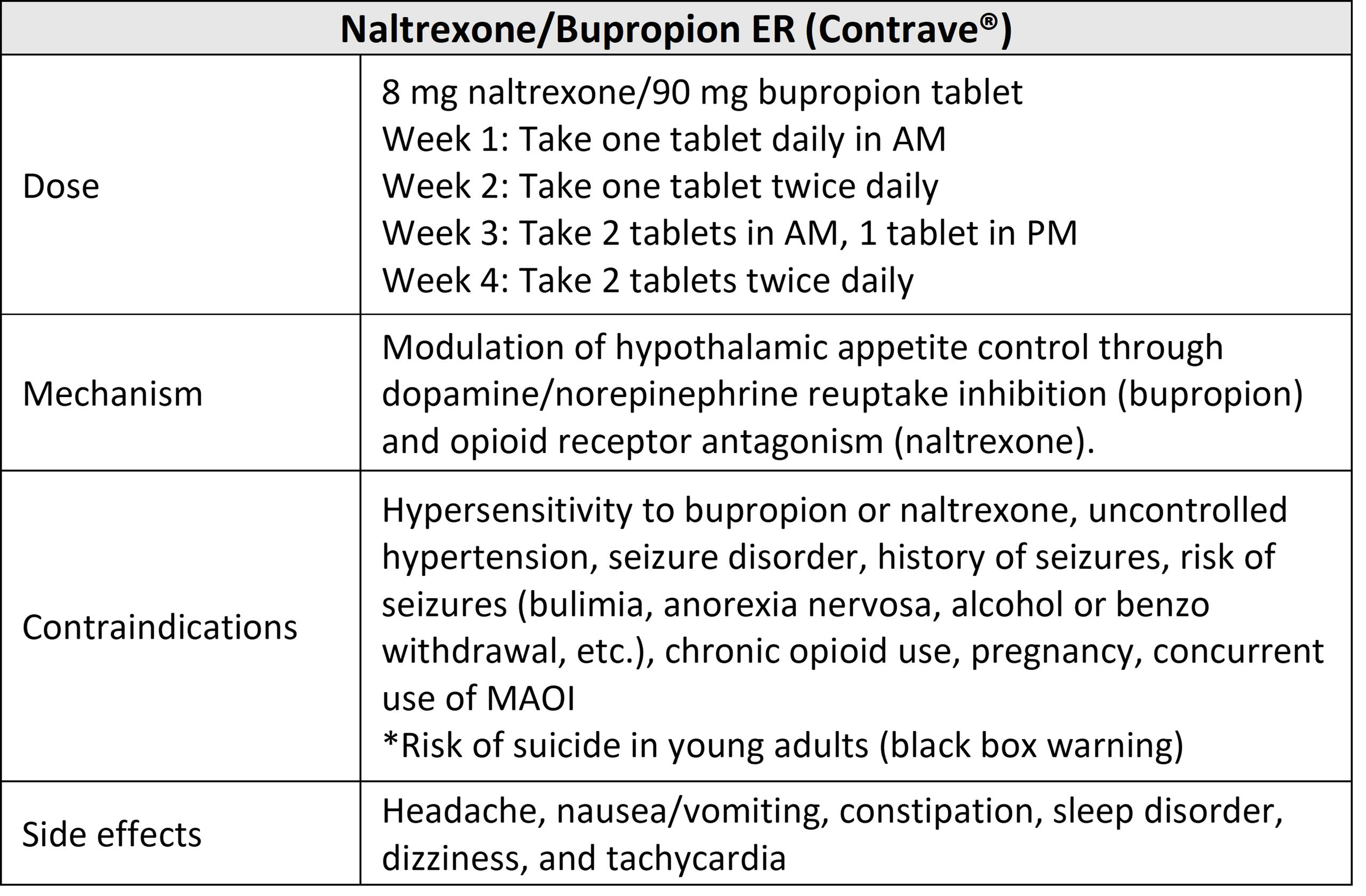
Not surprisingly, the side effect profile and contraindications are similar to their individual components, which is high yield for boards. Some important conditions to watch out for with each component are as follows:
- Naltrexone: This medication blocks the mu-opioid receptor and thus should be avoided in those on opioids, particularly those on chronic opioid therapy, in order to prevent a potential overdose if naltrexone is abruptly stopped. Levels can also increase significantly in those with cirrhosis and thus should be avoided in this population.
- Bupropion: Given the lowered threshold of seizures while on this medication, any history of seizures or predisposing risks to seizures (eating disorders, risk of alcohol withdrawal, etc.) is a contraindication. As it is an antidepressant, it carries a black box warning for an increased risk of suicide, particularly in those less than 24 years old. In addition, in those with bipolar disorder, it can induce mania. This medication should be avoided in those with uncontrolled hypertension, as bupropion is known to increase blood pressure, even in those who lose weight on this medication.
Finally, combination AOMs are usually expensive and are frequently prescribed as separate components. This is considered off-label use but still fair game for boards. Importantly, naltrexone used without bupropion is not very effective for weight loss. One exception is in those with weight gain due to significant alcohol consumption, as naltrexone can decrease the desire for alcohol and thus reduce caloric intake from alcohol. Anti-obesity medications are high yield for the ABOM boards and will likely show up frequently as treatment modalities. Make sure to read the question stem carefully for any subtle contraindications. Likewise, if comorbidities can be concurrently treated with an anti-obesity medicine (e.g., topiramate for migraines, bupropion for depression, etc.), they can be preferred agents for that particular patient.
Sample Question
A 24-year-old woman presents for smoking cessation counseling. She has mild depression symptoms and increased weight gain since starting the night shift. The physician starts her on a single medication that can treat all of these components. Which parameter is most likely to increase once starting this medication?
A. LDL
B. Triglycerides
C. Glucose levels
D. Blood pressure
E. PHQ-9 score
Looking Ahead:
- Tomorrow: The ABOM exam and getting started in obesity medicine: A Zoom webinar and Q&A by Carolynn Francavilla Brown, MD, D-ABOM, FOMA, and Kevin Smith, DO, D-ABOM, FACP. Register in advance for this webinar:
https://us06web.zoom.us/webinar/register/WN_U608qje1TB6tHi28NSFqlA - Next Week: Malabsorptive procedures: SADI vs duodenal switch
- Upcoming: Childhood growth chart curves, obtaining appropriate blood pressure and waist circumference measurements.
For more practice questions, check out the following:
- Obesity Medicine Board Review Questions (2026): Qs 44, 219, 222, 270, and 296.
- Obesity Medicine Practice Tests (2026): Qs 114, 193, 241, 263, 384, 390, 430, and 438.
(Copyright 2026) Obesity Medicine Board Review Questions, LLC: obesitymedicinereview.com
Featured image: Modified from VectorStock (image license purchased)
Copyediting by Kelly Smith
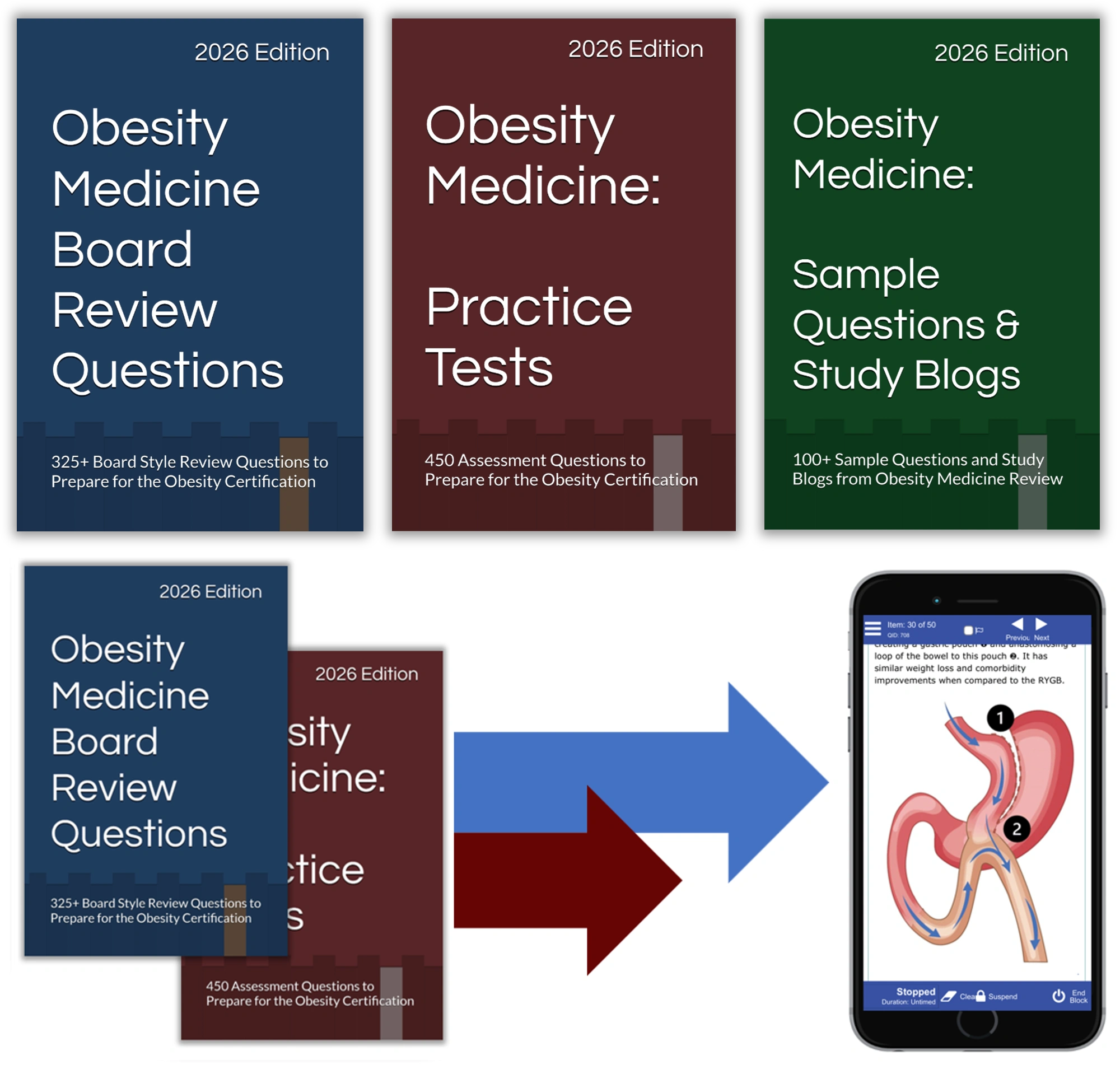
Now available: A full line of ABOM study resources with 775+ challenging questions in a mobile or book format. Access to both formats is available in a discounted Ultimate Package, which also includes a Pass Guarantee (if you fail the exam in 2026, you get the 2027 edition free), 50 bonus questions released in August, and the newest book, Obesity Medicine: Sample Questions and Study Blogs, which includes all the updated previous study blogs in a paperback format. Check it out here!
