

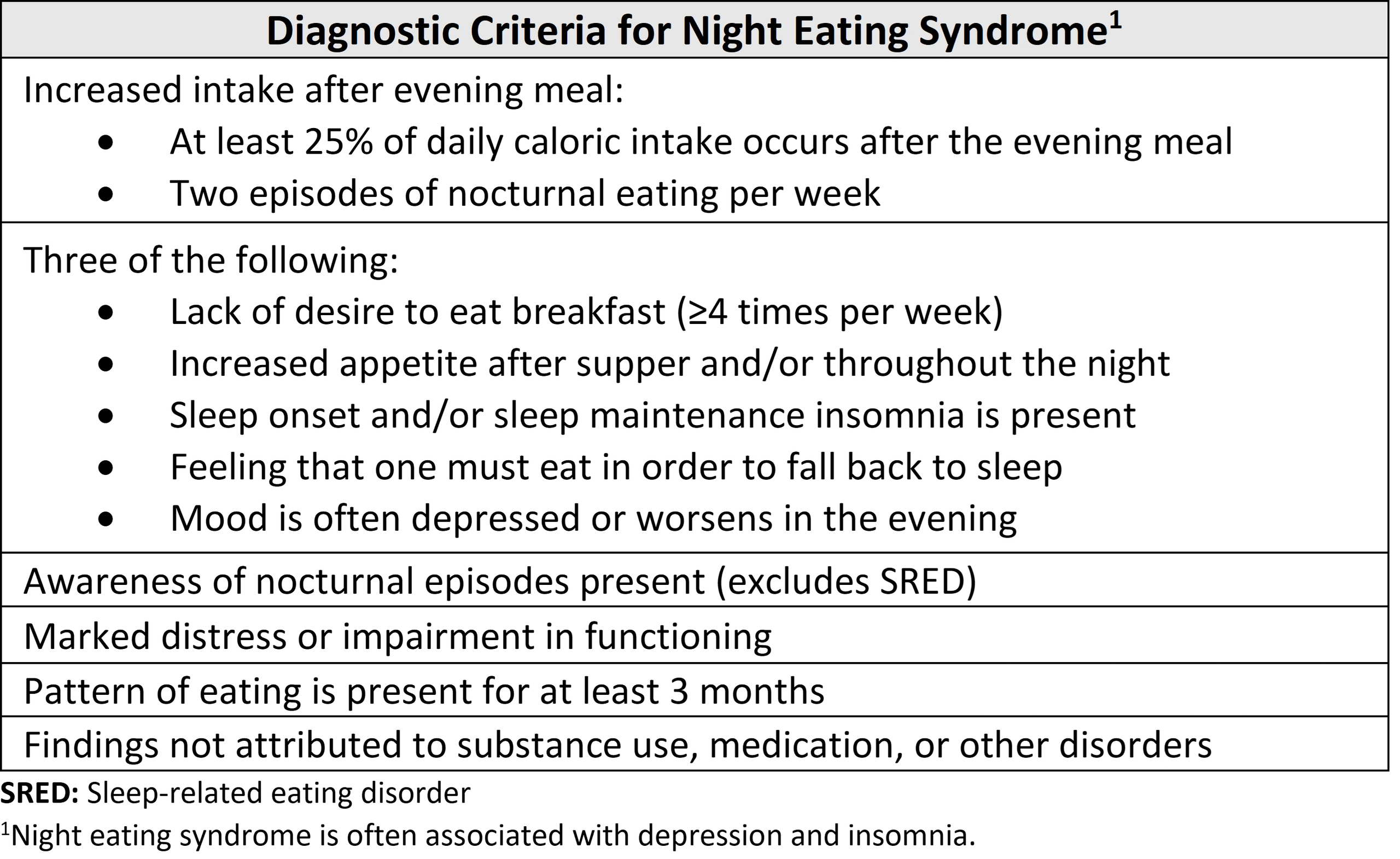
Night eating syndrome (NES) is not as common in the general population, with only a prevalence of about 1.5%. However, some studies suggest up to 30% of patients seeking metabolic and bariatric surgery meet the criteria for NES. Frequently, patients erroneously self-diagnose this condition as binge eating disorder or sleep-related eating disorder, given its overlapping features. However, NES is clinically diagnosed based on thorough questioning of eating habits and recognizing distinguishing characteristics.
NES characteristically presents with morning anorexia and evening hyperphagia. More than 25% of daily calories are consumed after the evening meal, and commonly patients will wake up in the middle of the night for snacks (sometimes multiple times in one night). Given their evening and nighttime caloric intake, they often will skip breakfast. Sleep-onset or sleep-maintenance insomnia is concurrently present, which, given our knowledge of increased ghrelin levels in patients with poor sleep quantity or quality, likely exacerbates the hunger episodes. A dietary history often reveals an elevated carbohydrate-to-protein ratio (approximately 7:1). Depression, anxiety, and other mental health conditions are a frequent comorbidity, and it becomes a chicken-or-egg scenario in determining if it is a risk factor versus a consequence.
So, how do we treat this?
- Increased protein: Patients should be encouraged to increase their dietary protein throughout the daytime to decrease the carb: protein ratio. Protein suppresses appetite for longer and has less rebound hunger than carbohydrates.
- Eating breakfast: Resetting a more normal daytime eating schedule requires the patient to shift their caloric intake to earlier in the day. Eating a healthy breakfast that is higher in protein can help decrease hunger later in the evening and throughout the night.
- Cognitive behavioral therapy (CBT): CBT is a staple in treating many eating disorders and conditions, including NES. In addition, many online or app-based programs can provide CBT for insomnia, which should also be concurrently addressed.
- Pharmacology: Medications, including selective serotonin reuptake inhibitors, may be considered, with a high response rate to sertraline.
- Others: Other options to help treat insomnia can be considered, including phototherapy and melatonin to help re-regulate the circadian rhythm.
Importantly, NES is very different from sleep-related eating disorder (SRED), which is a parasomnia, not a true eating disorder. SRED is a variant of sleepwalking, often associated with sedatives, in which the patient eats food throughout the night, but the patient has no recollection of their eating episodes. In contrast, patients with NES are fully awake during these episodes.
Eating syndromes are high yield on the ABOM boards. Be expected to diagnose them based on their differences, provide lifestyle modification recommendations, and know the effective treatment options.
Sample Question
A 19-year-old man with obesity presents for dietary counseling. He admits to working longer hours during the day and often finds himself frequently snacking on potato chips, peanut butter sandwiches, and soda. When he gets home, he eats a significant amount of calories throughout the evening and occasionally wakes up in the night for a quick snack. Which of the following recommendations would have the most significant impact on his eating habits?
A. Eat breakfast every morning
B. Increase unsaturated fat intake to slow gastric emptying
C. Begin pharmacotherapy with phentermine
D. Change to wholegrain bread
Next Week: NPY/AgRP vs. POMC/CART pathways
Upcoming Topics: Obesity stigma/bias/first-person language.
For more practice questions, check out the following:
- Obesity Medicine Board Review Questions (2026): Qs 75, 108, and 138.
- Obesity Medicine Practice Tests (2026): Qs 6, 73, and 139.
(Copyright 2026) Obesity Medicine Board Review Questions, LLC: obesitymedicinereview.com
Featured image: Modified from VectorStock (image license purchased)
Copyediting by Kelly Smith
Now available: A full line of ABOM study resources with 775+ challenging questions in a mobile or book format. Access to both formats is available in a discounted Ultimate Package, which also includes a Pass Guarantee (if you fail the exam in 2026, you get the 2027 edition free), 50 bonus questions released in August, and the newest book, Obesity Medicine: Sample Questions and Study Blogs, which includes all the updated previous study blogs in a paperback format. Check it out here!
