

On a recent blog, I discussed adiposopathy, also known as sick fat disease. This refers to the adipocyte secretion of inflammatory hormones, such as tumor necrosis factors, interleukins, angiotensin, and estrogen products, ultimately predisposing individuals to atherosclerosis, malignancies, hypertension, and chronic inflammation. However, there are also a few hormones that are secreted from adipose tissue that have a positive effect, such as leptin and adiponectin.
Adiponectin is exclusively produced in the white adipose tissue and is the most abundantly produced and secreted hormone from this tissue. Adiponectin reduces inflammation, particularly within the endothelium of the vasculature, and enhances insulin sensitivity. Higher levels will increase HDL production and decrease triglycerides via lipid-mediated metabolism. It may even have an anticarcinogenic effect.
However, it has a tricky relationship as body weight increases:
- Downregulation: Unfortunately, increased adipose tissue levels also increase adipocyte production of TNF, which ends up downregulating adiponectin levels and its effects on the body. Although it would seem that increased adipose tissue (i.e., increased body fat percentage) would increase adiponectin, this is not the case; rather, the inverse is true.
- Insulin resistance: Adiponectin is an insulin sensitizer via stimulation of glucose uptake. Think of it almost like how metformin works peripherally by allowing endogenous insulin to be used more effectively by the body. This is an important role, but as adiposity increases, or in the setting of diabetes, when this role would seem most important, this insulin sensitizer effect decreases.
In other words, this is a beneficial adipokine released by the adipose tissue, with its highest effects displayed in the setting of low body fat percentage and in the absence of diabetes. However, the times when you would physiologically benefit from it the most are also when its levels are at their lowest. It’s like a friend who is there in the good times, but not the bad.
So how will this hormone be tested? Expect to see questions on the ABOM exam related to its secretion site, its function and role in the body, and what increases or decreases the activity level of the hormone.
Sample Question:
An endocrinologist is discussing with a medical student the vast number of hormones that play a role in obesity and satiety. In particular, one hormone is an insulin sensitizer, whose levels are inversely related to body fat mass. In addition, the endogenous levels of this hormone decrease in the setting of type 2 diabetes. The hormone described above most likely originates from which of the following structures?
A. Adipose tissue
B. Gastric fundus
C. Duodenum
D. Beta cells of the pancreas
E. Alpha cells of the pancreas
Next Week: Monthly Knowledge Check, which is a checklist of must-know items for ABOM exams based on the previous four blog topics (Post-RYGB Hypoglycemia, Bardet-Biedl, Adiponectin, and Edmonton Obesity Staging System). In addition, this will include a brief explanation of the correct answers to previous sample questions.
Upcoming Topics: Vitamin B deficiencies, respiratory quotient and total energy expenditure, sleeve gastrectomy, and dietary changes and their effect on the lipid panel.
For more practice questions, check out the following:
- Obesity Medicine Board Review Questions (2026): Qs 19 and 27.
- Obesity Medicine Practice Tests (2026): Qs 49 and 111.
(Copyright 2026) Obesity Medicine Board Review Questions, LLC: obesitymedicinereview.com
Copyediting by Kelly Smith
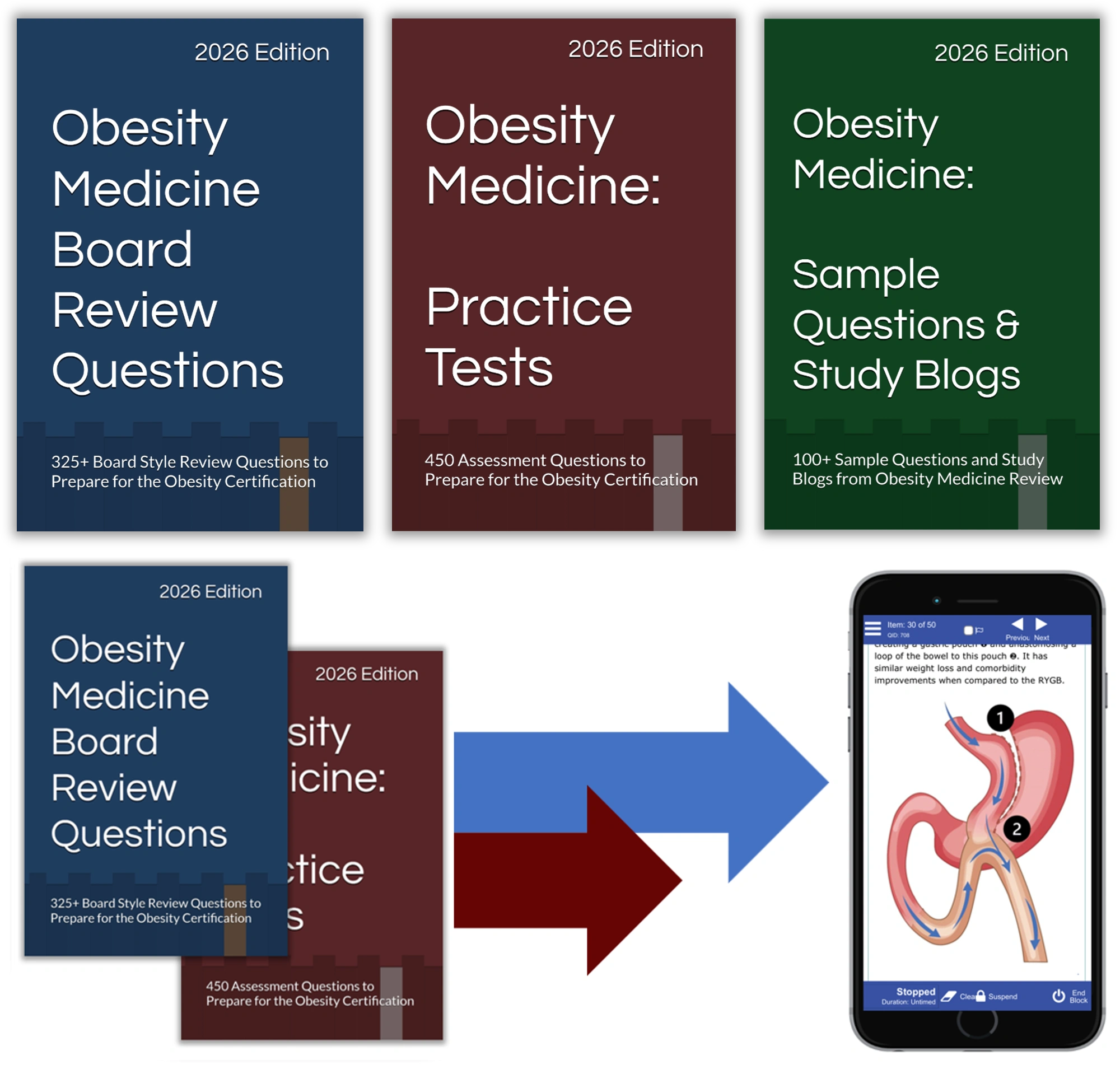
Now available: A full line of ABOM study resources with 775+ challenging questions in a mobile or book format. Access to both formats is available in a discounted Ultimate Package, which also includes a Pass Guarantee (if you fail the exam in 2026, you get the 2027 edition free), 50 bonus questions released in August, and the newest book, Obesity Medicine: Sample Questions and Study Blogs, which includes all the updated previous study blogs in a paperback format. Check it out here!
