
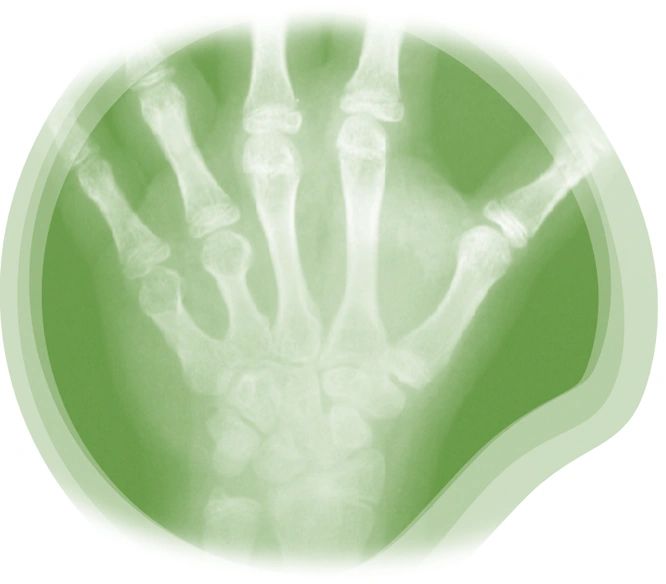
Early-onset hyperphagia and obesity, regardless of any cognitive delay, should prompt a workup for underlying genetic etiologies. Fortunately, many of these conditions, like Albright Hereditary Osteodystrophy (AHO), have distinct “buzz words” related to physical examination findings, which help in their identification.
So, what do you need to know regarding these conditions? The “buzzwords” may help with the diagnosis, but be prepared to take this a step further with second-order questions. Associated physical examination findings, genetic inheritance patterns, surface-level physiology, and treatment (if applicable) should be understood.
AHO is a rare condition, with several unique findings:
- Physical findings: There is a wide range of phenotypical variance, with the classic findings being short stature, a round face, and brachydactyly of the 4th and 5th digits. Although developmental delay is typical, it is often mild.
- Laboratory findings: Pseudohypoparathyroidism, if present (see below), is characterized by renal resistance to parathyroid hormone (PTH), leading to elevated PTH levels (due to lack of negative inhibitory feedback), hypocalcemia, and hyperphosphatemia. It acts just like hypoparathyroidism, only the mechanism is caused by impaired renal receptors, not hypofunctioning parathyroid glands.
- Genetic inheritance: Interestingly, AHO is considered autosomal dominant (50% of offspring will have the condition), whereas the GNAS1 mutation that causes pseudohypoparathyroidism is only seen in the maternal allele. In other words, if the mother passes this condition to the child, you will likely see pseudohypoparathyroidism along with the other characteristic physical manifestations; if the father carries the mutated gene, then the affected offspring will only have the physical findings.
That’s it! You will be ready for any AHO questions on test day if you understand the above!
Sample Question:
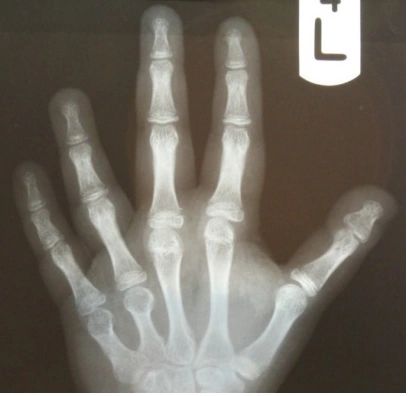
After injuring his finger, a 9-yearold with class III obesity presents to the emergency department. The mother states the child was trying to swing at a local park when his finger got stuck in the chain. The patient has full range of motion but increased swelling of his third digit. An X-ray is shown. Which other finding is most likely?
A. Pseudohypoparathyroidism
B. History of seizures
C. Almond-shaped eyes
D. Microorchidism
A look ahead:
- Tomorrow: Monthly Knowledge Check! A checklist of must-know items for ABOM exams based on the previous four blog topics (Sex Hormone Binding Globulin, Ghrelin, Orlistat, Albright Hereditary Osteodystrophy). In addition, this will include a brief explanation of the correct answers from previous sample questions.
- Next Weeks Topic: Lipedema vs. Lymphedema
- Upcoming in the following weeks: Tirzepatide, Anastomotic Stricture vs. Ulcer (RYGB Complications), and Binge Eating Disorder
For more practice questions, check out the following:
- Obesity Medicine Board Review Questions (2026): Qs 28 and 152.
- Obesity Medicine Practice Tests (2026): Qs 87 and 202.
(Copyright 2026) Obesity Medicine Board Review Questions, LLC: obesitymedicinereview.com
Hand x-ray: Hasani-Ranjbar S, Jouyandeh Z, Amoli MM, Soltani A, Arzaghi SM. A patient with features of Albright hereditary osteodystrophy and unusual neuropsychiatric findings without coding Gsalpha mutations. J Diabetes Metab Disord. 2014;13:56. Published 2014 May 22. doi:10.1186/2251-6581-13-56
Copyediting by Kelly Smith
Now available: A full line of ABOM study resources with 775+ challenging questions in a mobile or book format. Access to both formats is available in a discounted Ultimate Package, which also includes a Pass Guarantee (if you fail the exam in 2026, you get the 2027 edition free), 50 bonus questions released in August, and the newest book, Obesity Medicine: Sample Questions and Study Blogs, which includes all the updated previous study blogs in a paperback format. Check it out here!
