
 Liraglutide (Saxenda®) was the first GLP-1 receptor agonist (RA) medication approved for weight management in 2014, previously only being approved for type 2 diabetes. Although prior blogs discussed the newer options that are available, this blog will circle back to the pioneer of GLP-1 RA-based therapies, discussing some of the drug-specific nuances, as similar contraindications, mechanisms, and side effects have been thoroughly discussed regarding this medication class in prior blogs.
Often overshadowed by its more prominent and effective cousins, semaglutide and tirzepatide, daily liraglutide was the first medication to pique the interest of those treating obesity. Created by Novo Nordisk, its clinical trials and research laid the foundation that led to the development of longer-acting weekly injections (semaglutide), which was approved 7 years later (2021). Below is a timeline of liraglutide approvals.
- 2010: Liraglutide 1.8 mg approved as Victoza® for type 2 diabetes.
- 2014: Liraglutide 3.0 mg approved as Saxenda® for chronic weight management in adults.
- 2020: Saxenda® approval expanded to include adolescents aged 12–17 years with obesity (>60 kg and meeting age- and sex-specific BMI criteria).
- 2024: Liraglutide becomes generic for diabetes management at 1.8mg/day dosing, with Teva being the first approved generic.
- 2025: Liraglutide becomes generic for weight management at 3.0mg/day dosing, with Teva being the company to market for obesity.
Although first to market for this indication, it is last in terms of percentage weight loss when compared to other GLP-1 RAs. The Satiety and Clinical Adiposity–Liraglutide Evidence (SCALE) trials showed an average total body weight percentage loss of 8% (placebo 2.6%), with an average weight loss of 5.6 kg when accounting for placebo over a 56-week period. More granular, 63.2% lost ≥5% weight (27.1% placebo), and 33.1% lost ≥10% of their weight (placebo 10.6%). As a comparison, other weight management trials showed semaglutide averages 15% weight loss, whereas tirzepatide is nearly 20% when accounting for placebo in those without diabetes.
The SCALE trials included other foundational subpopulation analyses. For example, the SCALE Maintenance trial showed that long-term use of a GLP-1 RA provided sustained weight loss above that achieved with lifestyle modifications alone. In fact, in those who achieved ≥5% weight loss with lifestyle modifications, the addition of liraglutide provided an additional 6.2% weight loss (vs. 0.2% placebo). Most interestingly, although tirzepatide (Zepbound®) was the first to gain FDA approval for obstructive sleep apnea (OSA), the SCALE Sleep Apnea trial was the first to show that those with moderate to severe OSA who were not using a CPAP, but were taking liraglutide, had significant apnea-hypopnea index reductions.
In addition to its lower rates of weight loss, it is often last to be considered, as most patients understandably prefer weekly, rather than daily, injections. However, given the shorter half-life of approximately 13 hours, more rapid titration is also possible, meeting the maximum dose of 3.0 mg, escalated in 0.6 mg/weekly up-titrations, in only 5 weeks. With the inconvenience of daily dosing and the lower effectiveness, it would make sense if liraglutide was sold at a lower price point, but this also is not true. As of this blog, the cost via GoodRX.com ranges from $370 -$570 a month, a cost more than the direct-to-consumer cash price offered by the weekly GLP-1 RAs.
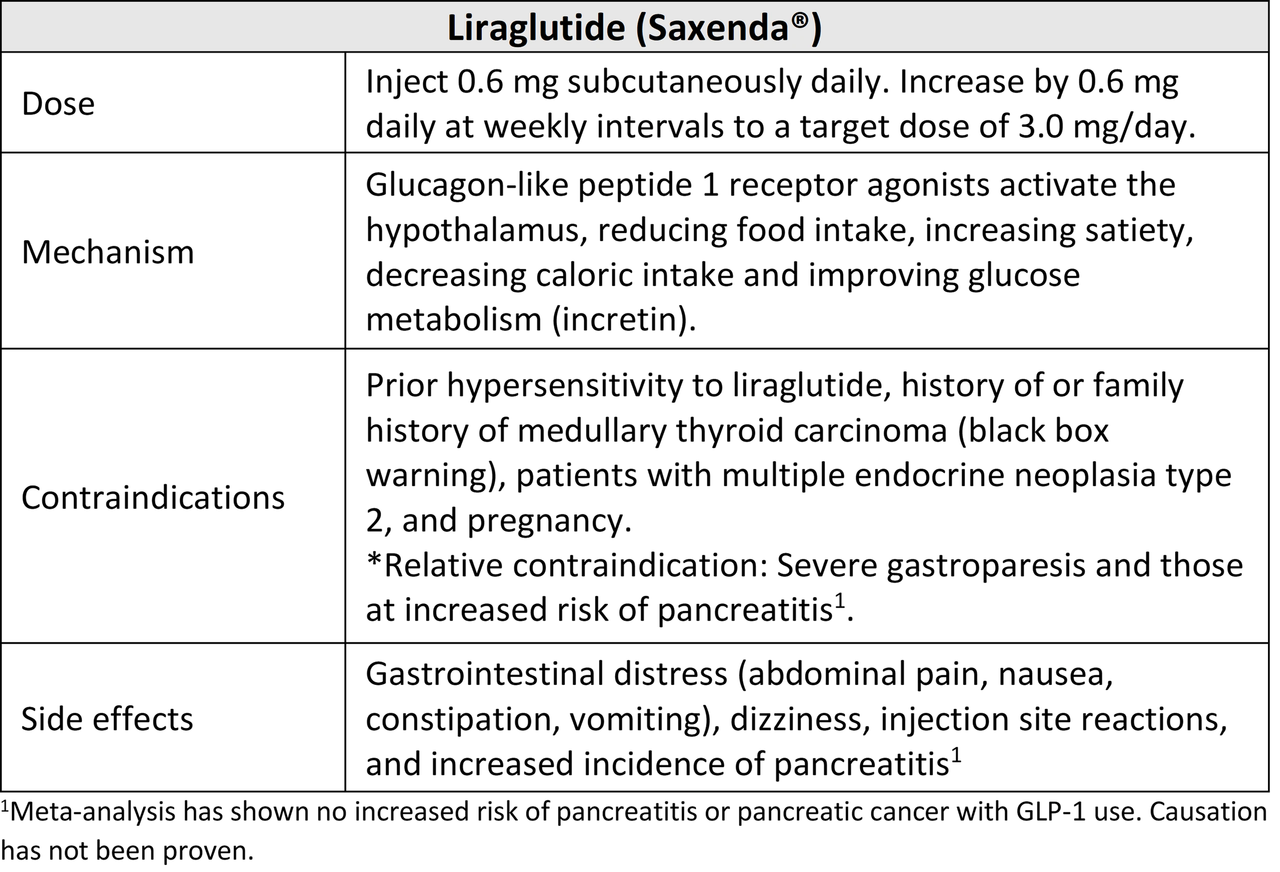
There is no doubt about the importance that liraglutide played in terms of where we are with treatment options for obesity today. It was the forerunner and stepping stone in both research and clinically proven benefits, even outside of obesity. It is also the first GLP-1 RA that is now generic, although pricing still makes it cost-inhibitory, especially given its dollar per pound of weight loss metrics. Although clinically losing market share, its testability and relevance on the ABOM exam are still vital to understand, with the table below summarizing the high-yield points.
Sample Question
A 49-year-old man presents to the clinic to discuss anti-obesity medications. He has significantly altered his eating habits and physical activity over the past 4 months but has now plateaued in his weight loss. His company has liraglutide as a preferential treatment for chronic weight management. What is most accurate regarding this therapy for this patient?
A. It averages 10-12% total body weight loss at one year
B. It is contraindicated in those with anaplastic thyroid cancer
C. It reduces the apnea-hypopnea index in patients with OSA
D. It is approved for weight management in adults only
Next Week: Bonus: Where Should I Start? The Best Way to Use My Study Materials
Upcoming: Lipodystrophy, Special Populations with Obesity (Turner Syndrome, Achondroplasia, and Down Syndrome)
For more practice questions, check out the following:
- Obesity Medicine Board Review Questions (2026): Q’s 116, 174, and 232.
- Obesity Medicine Practice Tests (2026): Q’s 197 and 320.
(Copyright 2026) Obesity Medicine Board Review Questions, LLC: obesitymedicinereview.com
Featured image: Modified from VectorStock (image license purchased)
Copyediting by Kelly Smith
Now available: A full line of ABOM study resources with 775+ challenging questions in a mobile or book format. Access to both formats is available in a discounted Ultimate Package, which also includes a Pass Guarantee (if you fail the exam in 2026, you get the 2027 edition free), 50 bonus questions released in August, and the newest book, Obesity Medicine: Sample Questions and Study Blogs, which includes all the updated previous study blogs in a paperback format. Check it out here!

Comments & Discussion
Responses