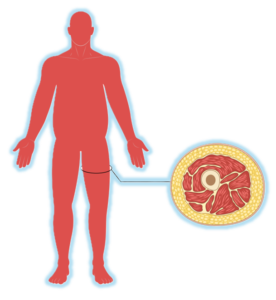
 Sarcopenia refers to a loss of skeletal muscle mass accompanied by decreased muscle strength and/or physical performance. In some patients, the loss of muscle mass may be clinically apparent, particularly when associated with frailty or a low body mass. However, a subset of patients with sarcopenia have excess adiposity, which can mask the underlying loss of muscle mass and make it less visually apparent. This combination of reduced muscle mass and function with excess adiposity is termed sarcopenic obesity and will be the focus of this blog.
Sarcopenic obesity is defined by the coexistence of sarcopenia and excess adiposity; however, as alluded to above, the diagnosis can be challenging because BMI alone does not distinguish between fat mass and lean muscle mass and may therefore fail to identify the underlying body-composition mismatch. In addition, declines in muscle strength and physical function may be erroneously attributed to normal aging rather than recognized as sarcopenia. Diagnosis requires evidence of both components:
- Sarcopenia: Despite dual-energy X-ray absorptiometry (DXA) being considered the gold standard for overall body composition, it is unable to adequately differentiate between muscle and intramuscular fat or water (myosteatotosis), and therefore cannot assess muscle quality, a key factor in functional decline. Thus, in research studies, a CT scan at the L3 vertebral level is considered the gold standard image for sarcopenia, with MRI a close second. However, because routine CT or MRI solely for this purpose is impractical, DXA can be combined with functional assessments such as handgrip strength using a dynamometer and gait speed to evaluate muscle strength and physical performance.
- Obesity: Although BMI has been incorporated into some definitions for sarcopenic obesity, it cannot directly measure adiposity or distinguish fat mass from lean mass. Therefore, body composition-based assessments, such as DXA or bioelectrical impedance analysis or BIA, can be used to quantify excess adiposity and may be useful when evaluating sarcopenic obesity.
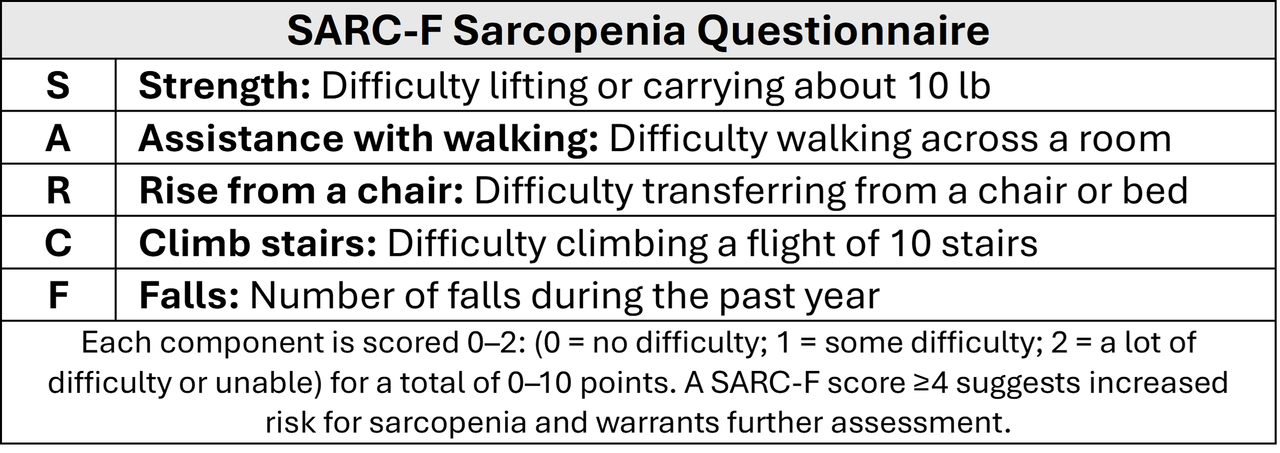
In Europe, a panel of experts from the ESPEN and EASO developed a joint consensus definition and practical diagnostic criteria for sarcopenic obesity that follow a similar approach. Their algorithm recommends initial screening for excess adiposity using ethnicity-specific BMI or waist circumference cutoffs, along with assessment for clinical features or risk factors suggestive of sarcopenia, which may include screening questionnaires such as SARC-F (see table below). If both components are present, diagnosis proceeds in two steps. First, skeletal muscle function is assessed using handgrip strength or the chair stand test. Second, body composition is evaluated to identify increased fat mass and reduced skeletal muscle mass, typically using DXA or bioelectrical impedance analysis (BIA). The presence of both impaired muscle function and altered body composition supports the diagnosis of sarcopenic obesity.
Sarcopenic obesity is associated with an increased risk of all-cause mortality, impaired quality of life, and an elevated risk of falls. In addition to the known risks associated with increased adipose tissue, reduced muscle mass contributes to lower energy expenditure, impaired muscle strength, and decreased muscle function, limiting exercise and physical activity. This creates a cycle promoting adiposity and loss of muscle. Patients with chronic disease, mobility impairment, or those over the age of 60 are at the highest risk of developing sarcopenic obesity.
The foundation of treatment is focused on exercise and nutrition. Physical activity prescriptions are individualized, taking into consideration patient preferences and enjoyment, but with a heavy focus on resistance training. Resistance training is important for preserving and improving muscle mass and strength. Consider group exercise, physical therapy, or exercise trainers when appropriate. Dietary protein is essential, with 1.0-1.5g/kg or body weight per day as an adequate goal. Vitamin D and calcium supplementation may also be beneficial.
Importantly, while weight loss is an essential component of obesity treatment, rapid weight loss can also cause skeletal muscle loss, especially with inadequate protein intake and resistance training, leading to sarcopenia. Pharmacotherapy can sometimes contribute to this with adverse GI effects, further limiting overall nutritional intake. Patient education and follow-up encounters, in addition to monitoring body composition and muscle strength, will be key in monitoring the patient’s risk of developing sarcopenia
For the exam, remember that sarcopenic obesity requires the coexistence of excess adiposity and sarcopenia, characterized by reduced muscle strength along with reduced muscle mass or quality. Intervention focuses on adequate protein intake and regular physical activity, specifically resistance training, to preserve muscle mass and function. And lastly, remember that rapid weight loss can increase the risk of developing sarcopenia.
Sample Question
A 72-year-old woman presents for follow-up after intentionally losing 24 lb (10.9 kg) over the past 5 months through caloric restriction. Her BMI is 31 kg/m², and her waist circumference is elevated. During this time, she has experienced two falls and reports that she has become less physically active due to concerns about falls. Physical examination demonstrates no focal neurologic deficits. Dual-energy X-ray absorptiometry (DXA) demonstrates reductions in both muscle mass and fat mass. Which of the following would be most helpful in further evaluating this patient?
A. Measure serum creatine kinase
B. Measure handgrip strength using a dynamometer
C. Calculate BMI after an additional 5% weight loss
D. Measure resting energy expenditure by indirect calorimetry
E. Refer for occupational therapy
Next Week: Enhanced Recovery After Bariatric Surgery
Upcoming: Physical Examination Findings in Obesity Medicine and Orforglipron
For more practice questions, check out the following:
- Obesity Medicine Board Review Questions (2026): Q 198.
- Obesity Medicine Practice Tests (2026): Q 155.
(Copyright 2026) Obesity Medicine Board Review Questions, LLC: obesitymedicinereview.com
Featured image: Custom created by Sameer M. Copyright owned by Kevin Smith, DO.
Copyediting by Kelly Smith
Now available: A full line of ABOM study resources with 775+ challenging questions in a mobile or book format. Access to both formats is available in a discounted Ultimate Package, which also includes a Pass Guarantee (if you fail the exam in 2026, you get the 2027 edition free), 50 bonus questions released in August, and the newest book, Obesity Medicine: Sample Questions and Study Blogs, which includes all the updated previous study blogs in a paperback format. Check it out here!

Comments & Discussion
Responses