
 Orforglipron, sold under the brand name Foundayo®, is the most recent oral GLP-1 receptor agonist to gain FDA approval. Having the differentiating feature of being a small molecule, this oral option allows for taking indiscriminately with or without food, a feature not available for its oral semaglutide (Wegovy®) competitor, which requires the tablet to be taken on an empty stomach with up to 4 oz of water, and requires at least 30 minutes before taking any other oral medications, food, or additional liquids. This blog will discuss the clinical trials that led to its approval and other relevant high-yield information.
Although orforglipron represents a newer class of nonpeptide GLP-1 pharmacotherapy and departs from the traditional “glutide” nomenclature, it is a GLP-1 receptor agonist and produces the same downstream physiologic effects as peptide-based GLP-1 receptor agonists. In addition, many of the similar prescribing characteristics are the same, as summarized below:
- Indications: The FDA labeling mirrors other similar up-to-date, BMI-eliminated, FDA indications. It is indicated, in combination with a reduced-calorie diet and increased physical activity, to reduce excess body weight and maintain weight loss in the long term in adults with overweight in the presence of ≥1 adiposity-related chronic disease or in adults with obesity. It is not currently approved for use in children.
- Side effects: More than 5% of patients may experience gastrointestinal symptoms such as nausea, constipation, diarrhea, vomiting, dyspepsia, abdominal pain and distention, flatulence, acid reflux, and belching. Others listed include headache, fatigue, and hair loss.
- Contraindications: The only two absolute contraindications include a personal or family history of medullary thyroid cancer or in patients with MEN 2 syndrome (black box warning), as well as known serious hypersensitivity to the medication or components.
- Warnings and precautions: These potential adverse effects match other GLP-1 receptor agonist medications and include risk of thyroid C-cell tumors (with recommendations to counsel patients on symptoms of thyroid tumor- read more here), acute pancreatitis, acute kidney injury due to volume depletion, gallbladder disease due to rapid weight loss, hypoglycemia if combined with other hypoglycemic agents, and potential for pulmonary aspiration with anesthesia.
- Dosing: No faster than monthly dose escalation is recommended, based on treatment response and tolerability. The daily dose-escalation schedule is 0.8 mg, 2.5 mg, 5.5 mg, 9 mg, 14.5 mg, and finally 17.2 mg.
Beyond the above, there are a few other notable medication interactions that I feel would be of particular interest for the ABOM, as well as clinically. Due to slowed gastrointestinal emptying, the absorption of other medications may be affected. Like tirzepatide labeling, it does recommend that those on oral birth control switch to a non-oral contraceptive or use additional barrier protection when starting the medication or within 30 days of up-titration. Also, simvastatin dosing should not exceed 20 mg while taking orforglipron. Interestingly, this medication should be avoided in those with advanced liver disease, a restriction not placed on other GLP-1-based medications.
In addition, there are some interactions with medications that are strong inhibitors or inducers of CYP3A4, as orforglipron is metabolized by this enzyme. Medications that strongly inhibit CYP3A4 should be avoided or used with caution, as they can increase orforglipron concentrations by slowing its metabolism. In fact, the labeling states that the dose of orforglipron should not exceed 9 mg when taken with strong CYP3A4 inhibitors. Two common examples that we may encounter are clarithromycin and azole antifungals (e.g., ketoconazole). Conversely, inducers of this same enzyme would rapidly metabolize it (e.g., rifampin and carbamazepine), making it less effective and should be avoided due to ineffectiveness, not toxicity.
So how effective is it? Two 72-week trials led to its FDA approval, both of which were completed in adults who were also required to participate in lifestyle interventions, including a calorie-restricted diet and 150 minutes/week of physical activity. These lifestyle modifications continued throughout the trials. Average weight loss in those without diabetes averaged 12.3% of total body weight (placebo 1.6%) and in those with diabetes a loss of 10% (2.4% placebo). A summary of these trials is shown in the table below:
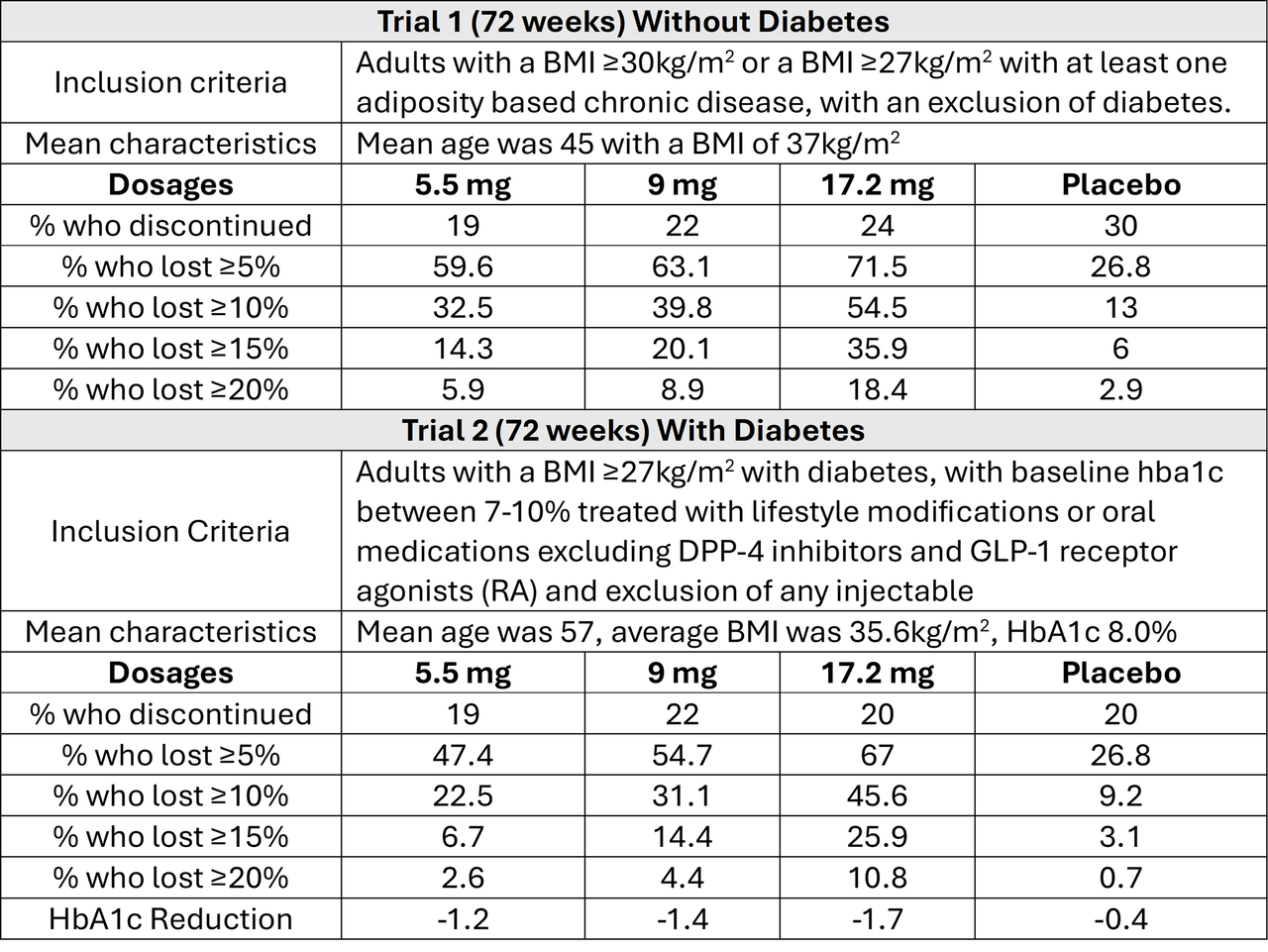
In addition to weight loss and a reduction in hemoglobin A1c, improvements in secondary cardiometabolic parameters were observed, including waist circumference, blood pressure, and lipid levels (total cholesterol, LDL cholesterol, triglycerides, HDL).
Newer medications provide additional tools to combat excess weight, and over the long term, greater competition may help reduce treatment costs. In addition, oral medications may be more cost-effective to manufacture and distribute because they can reduce the logistical costs associated with refrigeration and storage while eliminating the need for injection devices, such as prefilled injector pens. As the options increase, we must also expand our knowledge base. Staying familiar with new therapies, their mechanisms, dosing, and important clinical considerations will be important both in clinical practice and on the ABOM exam.
Sample Question
A 29-year-old woman presents for follow-up for weight management. She is currently taking oral semaglutide and prefers oral medications because of a needle aversion. However, she is paying for the medication out of pocket. She has undergone dose escalation over the past 2 months and, aside from mild abdominal discomfort with dose increases, is tolerating treatment well. She has lost 7 lb (3.2 kg). Her medical history includes hypothyroidism treated with levothyroxine, hypertension treated with hydrochlorothiazide, and use of an oral contraceptive. Her insurance now covers orforglipron, and she would like to transition to this medication. Besides the reduced cost, which of the following is a potential benefit of orforglipron for this patient?
A. Lower risk of medication interactions
B. Lower risk of fetal harm if pregnancy occurs
C. Greater flexibility in administration timing
D. Elimination of gastrointestinal adverse effects
E. Greater expected weight loss
Next Week: Physical Examination Associated with Nutritional Deficiencies
Upcoming: Monthly Knowledge Check: This is a review checklist of must-know items for ABOM exams based on the previous four blog topics. In addition, this will include a brief explanation of the correct answers to previous sample questions.
For more practice questions, check out the following:
- Obesity Medicine Board Review Questions (2026)
- Obesity Medicine Practice Tests (2026)
(Copyright 2026) Obesity Medicine Board Review Questions, LLC: obesitymedicinereview.com
Featured image: Modified from VectorStock (image license purchased)
Copyediting by Kelly Smith
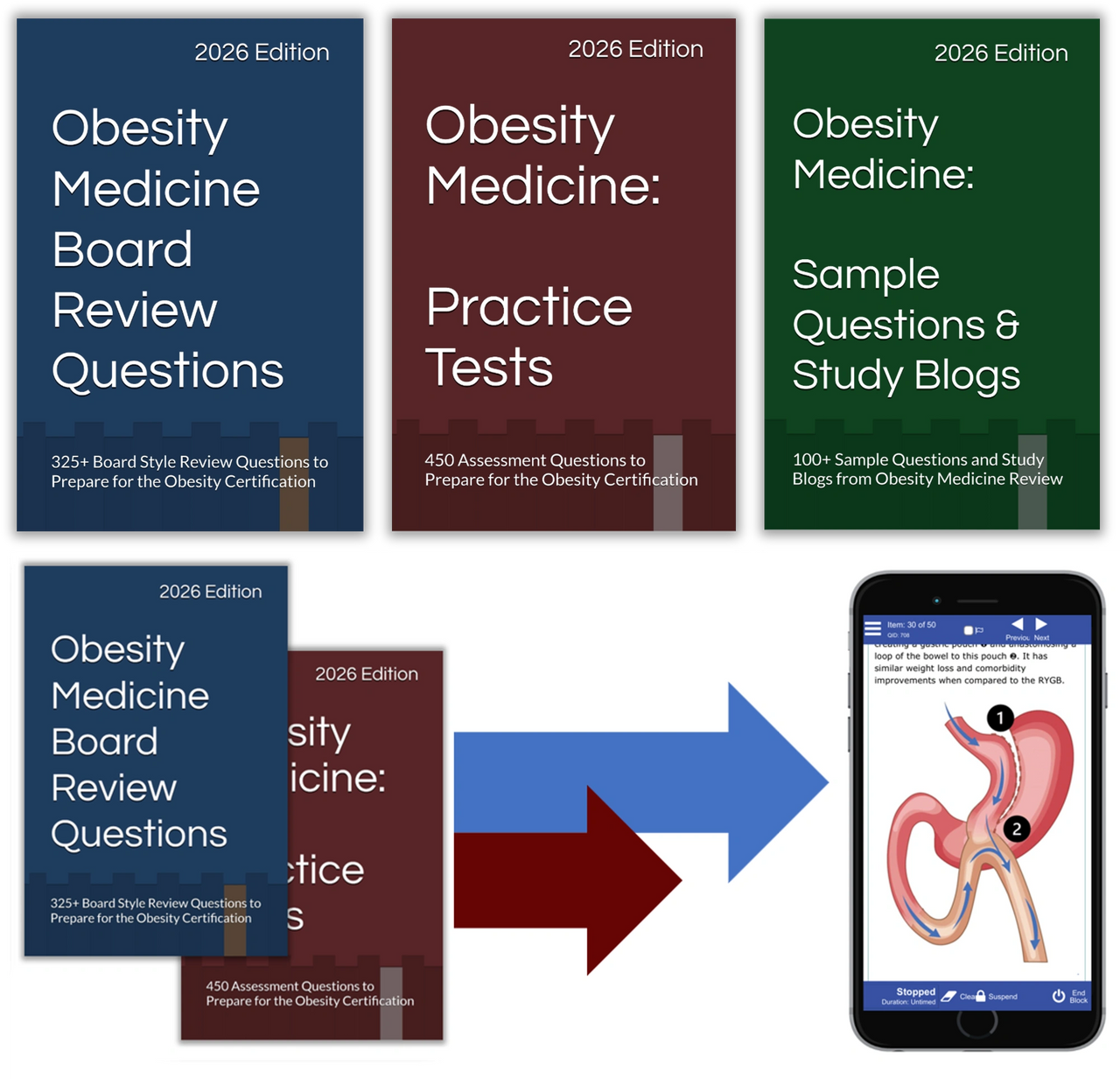
Now available: A full line of ABOM study resources with 775+ challenging questions in a mobile or book format. Access to both formats is available in a discounted Ultimate Package, which also includes a Pass Guarantee (if you fail the exam in 2026, you get the 2027 edition free), 50 bonus questions released in August, and the newest book, Obesity Medicine: Sample Questions and Study Blogs, which includes all the updated previous study blogs in a paperback format. Check it out here!

Comments & Discussion
Responses