
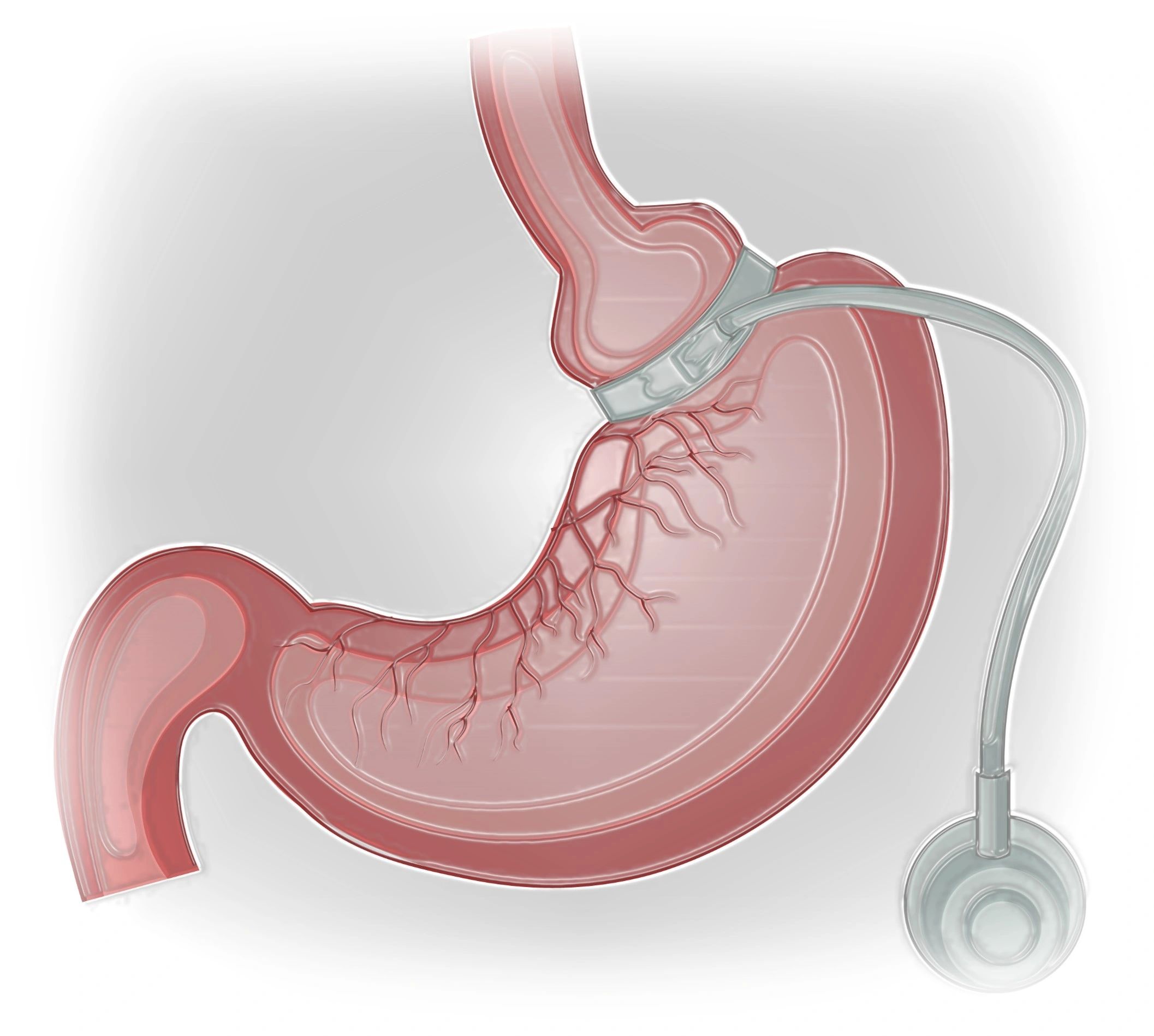
The adjustable gastric band is less likely to be recommended for patients seeking metabolic and bariatric surgery nowadays, even though it has one of the lowest surgical risks. This is because it also has the lowest rates of tolerability, with many patients having the device explanted (25% rate at five years). Still, it is a unique idea that did have some success.
Laparoscopic adjustable gastric banding (LAGB) was first approved in 2001. It is a restrictive procedure in which a silicone band is placed around the superior portion of the fundus of the stomach, creating a stomach pouch. A port is placed superficially and can be accessed with a needle to inject or aspirate saline to adjust the tightness of the band restriction. This helps to decrease food intake by applying increased pressure on the stomach, thereby prolonging the sensation of fullness. This procedure is approved in those with a BMI of 30 kg/m² with an obesity comorbidity. Popularity for gastric banding has plummeted, comprising 20.2% of bariatric surgeries in 2012 to less than 1% currently, with most surgical centers not even offering it as an option given the complication rates.
Important: The LAGB was first approved by the FDA in 2001 for adults with a BMI ≥40 kg/m², or ≥35 kg/m² with at least one obesity-related comorbidity. In 2011, the indication was expanded to include patients with a BMI ≥30 kg/m² who have at least one obesity-related condition, broadening its use to those with class I obesity and metabolic complications. Be familiar with the most up-to-date BMI indication.
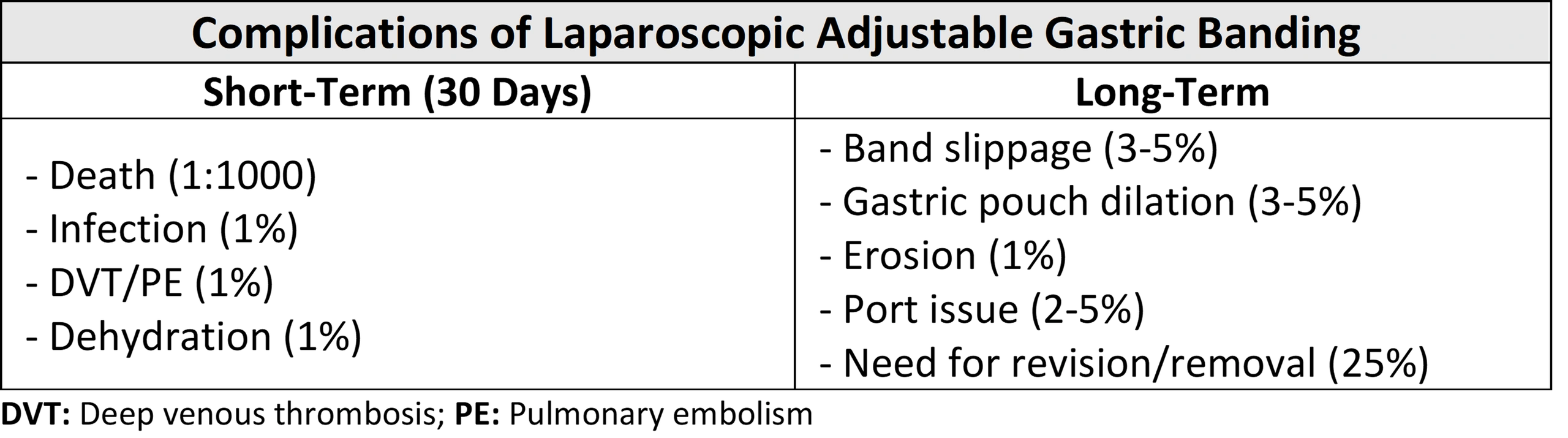
Complications of the LAGB are unlikely to be life-threatening, but rather intolerable, eventually leading to the removal of the device. The routine follow-up required to adjust the band’s tightness was often neglected, thus leading to a lack of satisfaction and efficacy in many patients. Complications include band slippage, which occurs in up to 5% of those who undergo LAGB, with symptoms of nausea, vomiting, inability to tolerate solids, and worsening acid reflux. If this occurs, the saline is completely removed from the port, thereby eliminating the 202 restriction. If this fails to relieve symptoms, surgery is indicated. Slippage could also present with loss of food restriction if the device allows a larger gastric pouch.
Another potential complication after LAGB that must be considered is erosion. This can be asymptomatic and present as a loss of food restriction or conversely present with findings of pain or infection at the port site. The normal peristalsis of the stomach creates friction at the location of the device, leading to erosion. This, unfortunately, makes the banding ineffective, increases the risk of infection, and requires surgical removal.
The LAGB is strictly a restrictive procedure (i.e., preventing significant food intake) and has little to no role in altering hormonal influences within the complex anorexogenic/orexigenic pathways. This is likely the reason patients who have undergone an adjustable gastric band placement typically achieve only 20% of their total body weight loss. These results are similar to newer antiobesity medications, and significantly less than the hormonally involved surgical options, such as the sleeve gastrectomy or Roux-en-Y gastric bypass. Therefore, it is not the preferred option for those with metabolic disease.
Although this procedure has less pronounced short-term complication risks, the intolerability, lack of sustainable long-term weight loss due to complications, lack of hormonal influences, and less availability make other surgical options more desirable over the LAGB. In 2001, laparoscopic surgical weight loss options were limited, making the LAGB a valuable tool at the time. Even though the popularity of adjustable gastric bands has plummeted, for obesity medicine boards, make sure to understand the complications and their treatments, as this is the most likely clinical and testable aspect of this device.
Sample Question
A 28-year-old woman is presenting to her primary care physician’s office six months after undergoing a laparoscopic adjustable gastric banding. She states two weeks ago, she had eaten too quickly, with subsequent nausea and vomiting. Since then, she has been unable to keep solids down and will regurgitate undigested food after small meals. In addition, her acid reflux has significantly worsened during this time. Which of the following is the next best step in management?
A. CT of the abdomen
B. Remove fluid from the band
C. Surgical revision
D. Diet changes
E. Start omeprazole
Next Week: Idiopathic intracranial hypertension (i.e., pseudotumor cerebri)
Upcoming: Cortisol levels/weight gain with no sleep and Knowledge Check
For more practice questions, check out the following:
- Obesity Medicine Board Review Questions (2026): Qs 161, 185, and 285.
- Obesity Medicine Practice Tests (2026): Qs 29, 53, 147, 223, 322, 399, and 416.
(Copyright 2026) Obesity Medicine Board Review Questions, LLC: obesitymedicinereview.com
Featured image: Image custom-created. Copyright owned by Kevin Smith, DO.
Copyediting by Kelly Smith
Now available: A full line of ABOM study resources with 775+ challenging questions in a mobile or book format. Access to both formats is available in a discounted Ultimate Package, which also includes a Pass Guarantee (if you fail the exam in 2026, you get the 2027 edition free), 50 bonus questions released in August, and the newest book, Obesity Medicine: Sample Questions and Study Blogs, which includes all the updated previous study blogs in a paperback format. Check it out here!
