
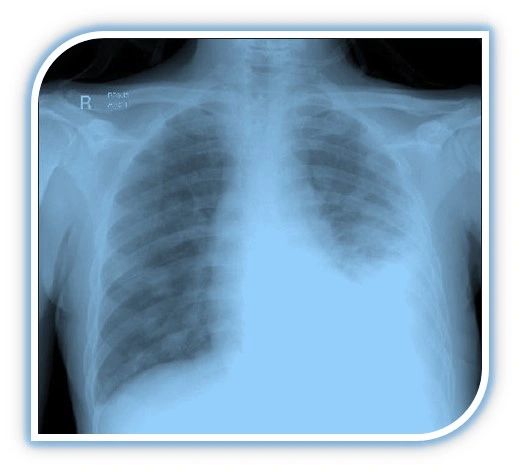
Roux-en-Y gastric bypass (RYGB) is now the second most common metabolic and bariatric surgery performed, accounting for approximately 20% of the market share, with the sleeve gastrectomy accounting for the largest share at 60%. Several theories have been proposed to explain why these two surgeries swapped places on the leaderboard in 2014, including perceived recovery rates, complications, and surgeon comfort levels. Regardless, the RYGB provides more weight loss potential (30-35% vs. 25-30% total body weight loss for the sleeve), is safe (0.09-0.12% 30-day mortality risk), is superior in diabetes remission rates, and is preferred in those with severe gastric reflux or a hiatal hernia.
So, what are some complications from the RYGB? Most commonly, as patients transition and adjust to the newly altered gastrointestinal anatomy, poor oral intake may be seen, ranging from dehydration to even Wernicke’s encephalopathy if persistent nausea occurs. However, there are three other important and commonly tested inpatient complications that should be recognized in order to appropriately intervene:
- Anastomotic leak: This complication usually occurs soon after surgery (within a few days) and becomes increasingly rare after two weeks post-op. It most commonly occurs at the gastrojejunostomy anastomosis site. Clues to this diagnosis include failure to extubate after surgery, reactive left-sided pleural effusion (see chest X-ray as featured image), and leukocytosis. Fever, worsening abdominal or chest pain, and tachycardia may also be present. Immediately contact the attending surgeon if this is suspected.
- Pulmonary embolism: Although some clinical symptoms overlap with an anastomotic leak, including tachycardia, failure to extubate, and chest pain, these patients will not have abnormalities on chest X-ray, and leukocytosis is unlikely. Hypoxia will be the differentiating feature, and a unilateral edematous leg may be present.
- Rhabdomyolysis: Although easily discernable from the two conditions above, this condition is also seen shortly after surgery. This most often will occur in the setting of prolonged surgery, with severe obesity being a risk factor. Muscle breakdown can occur as the patient’s body lies on the minimally padded operating room table. Red urine (myoglobinuria) and decreased urinary output will be the presenting signs. Supportive care with aggressive fluid resuscitation is the treatment.
Sure, there are other complications, including infection, but these three commonly tested immediate postoperative complications should be committed to memory. In summary, failure to extubate should bring anastomotic leak or pulmonary embolism to the top of the differential. In contrast, a vignette describing a prolonged, complicated surgery with urinary changes is concerning for rhabdomyolysis.
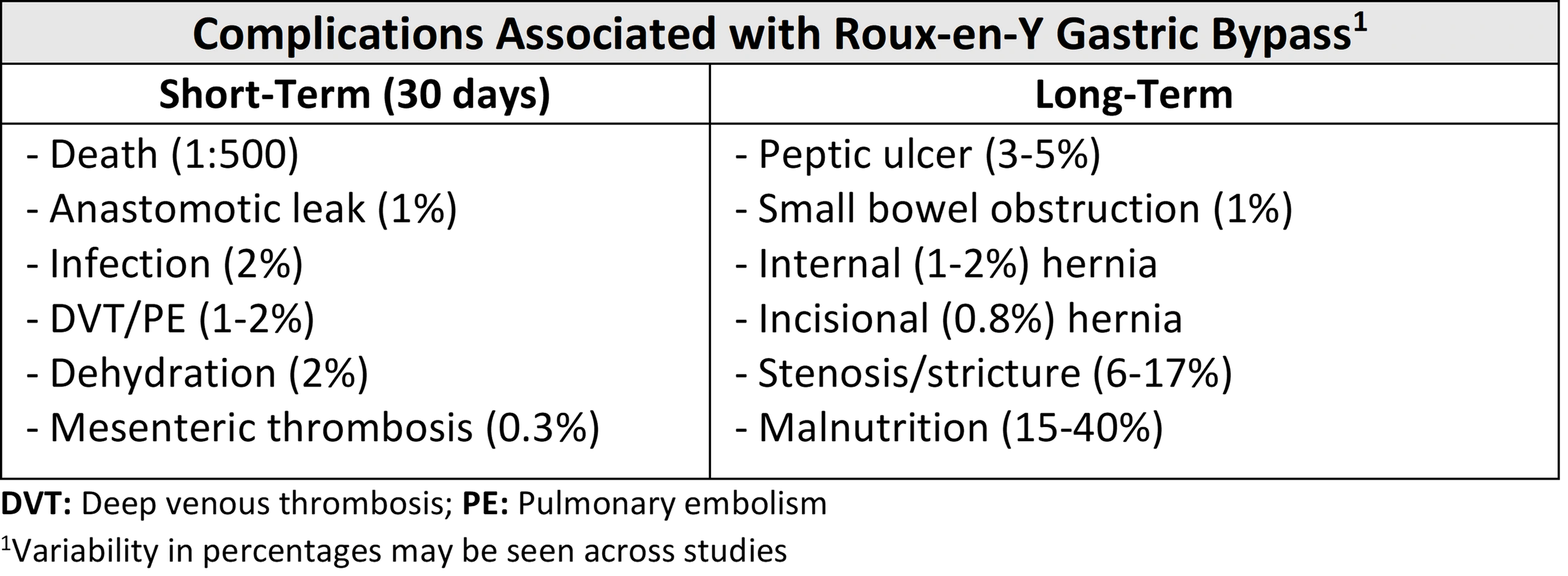
The table summarizes the prevalence of these and other complications post-op RYGB.
Sample Question
A 17-year-old adolescent female underwent a Roux-en-Y gastric bypass. Twenty-four hours postoperatively, she complains of increasing abdominal and chest pain. The heart rate is elevated, and blood counts reveal an elevated leukocyte count. Which of the following is the most likely cause of this patient’s primary pathology causing her symptoms?
A. Pulmonary arteries
B. Pulmonary parenchyma
C. Gastrointestinal anastomosis site
D. Peritoneal and diaphragmatic surface
E. Gallbladder and cystic duct
Next Week: Monthly Knowledge Check (Subscribe!), which is a checklist of must-know items for ABOM exams based on the previous four blog topics: Plenity®, Leg pathology in children with obesity (SCFE), Motivational Interviewing, Anastomotic Leak and other RYGB complications. In addition, this will include a brief explanation of the correct answers to previous sample questions.
Upcoming Topics: Phentermine/Topiramate ER (Qsymia®), 4-tiered approach to pediatric obesity, transpyloric shuttle, and obesity hypoventilation syndrome
For more practice questions, check out the following:
- Obesity Medicine Board Review Questions (2026): Qs 190, 193, 207, and 308.
- Obesity Medicine Practice Tests (2026): Qs 56, 106, 135, 275, 319, 406, and 436.
(Copyright 2026) Obesity Medicine Board Review Questions, LLC: obesitymedicinereview.com
Featured image: (Modified) Left-sided Pleural Effusion.jpg. (2022, September 29). Wikimedia Commons. Retrieved 17:41, November 9, 2024
Copyediting by Kelly Smith
Now available: A full line of ABOM study resources with 775+ challenging questions in a mobile or book format. Access to both formats is available in a discounted Ultimate Package, which also includes a Pass Guarantee (if you fail the exam in 2026, you get the 2027 edition free), 50 bonus questions released in August, and the newest book, Obesity Medicine: Sample Questions and Study Blogs, which includes all the updated previous study blogs in a paperback format. Check it out here!
