
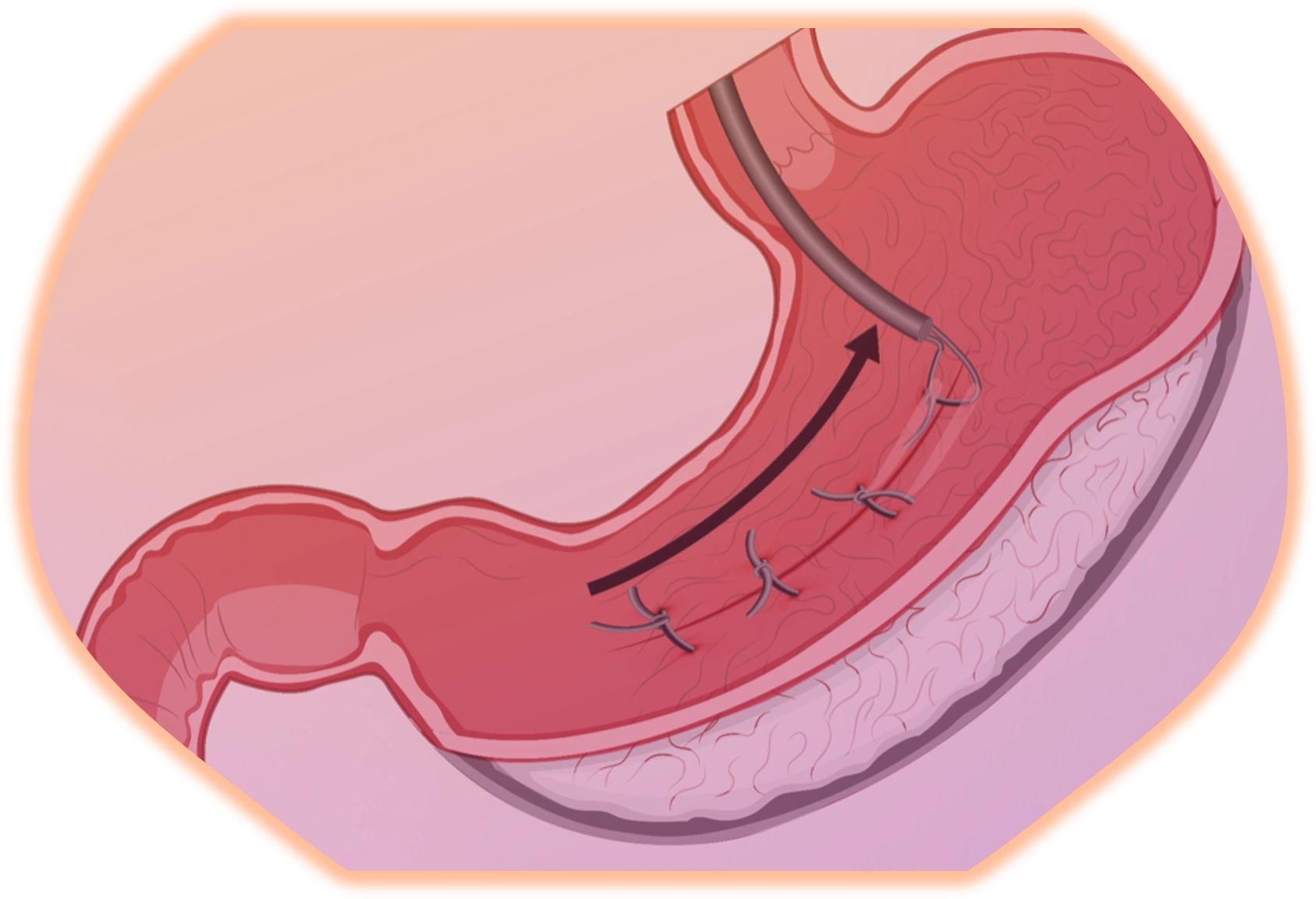
A newer ASMBS-endorsed procedure, the endoscopic sleeve gastroplasty, is gaining popularity and offers a nonsurgical option for those seeking weight reduction. In 2022, the number of procedures performed was 4,600, accounting for 1.6% of all metabolic and bariatric procedures, which was three times the amount performed in 2020. One of the reasons for its continued increase in popularity is that it is a relatively noninvasive option compared to laparoscopic surgery, which is attractive to many. Its effectiveness, physiology, and complications will be discussed in this blog.
The endoscopic sleeve gastroplasty (ESG) is an endoscopic plication procedure in which the stomach is plicated with sutures ❶, thus reducing its original size ❷ by creating a tubular structure, as shown below.
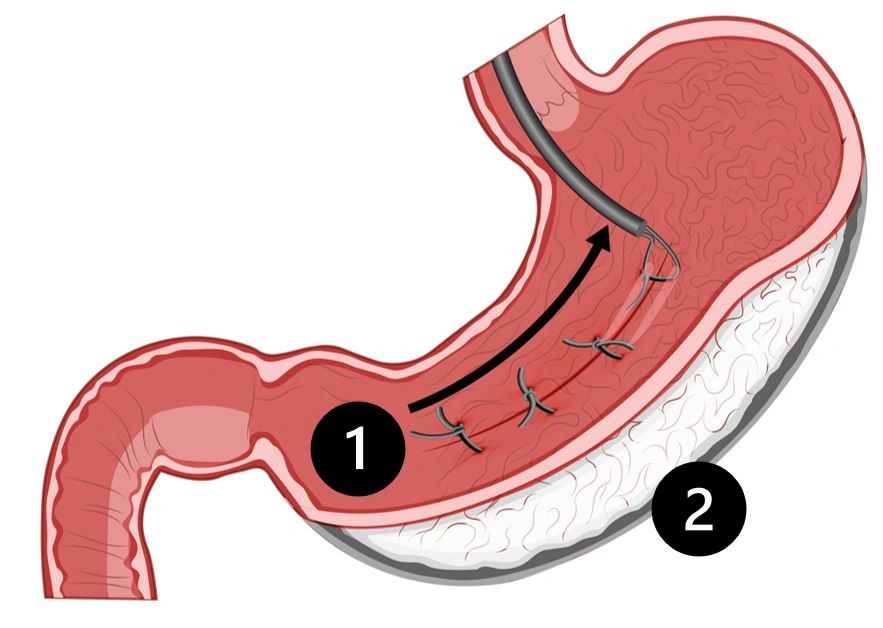
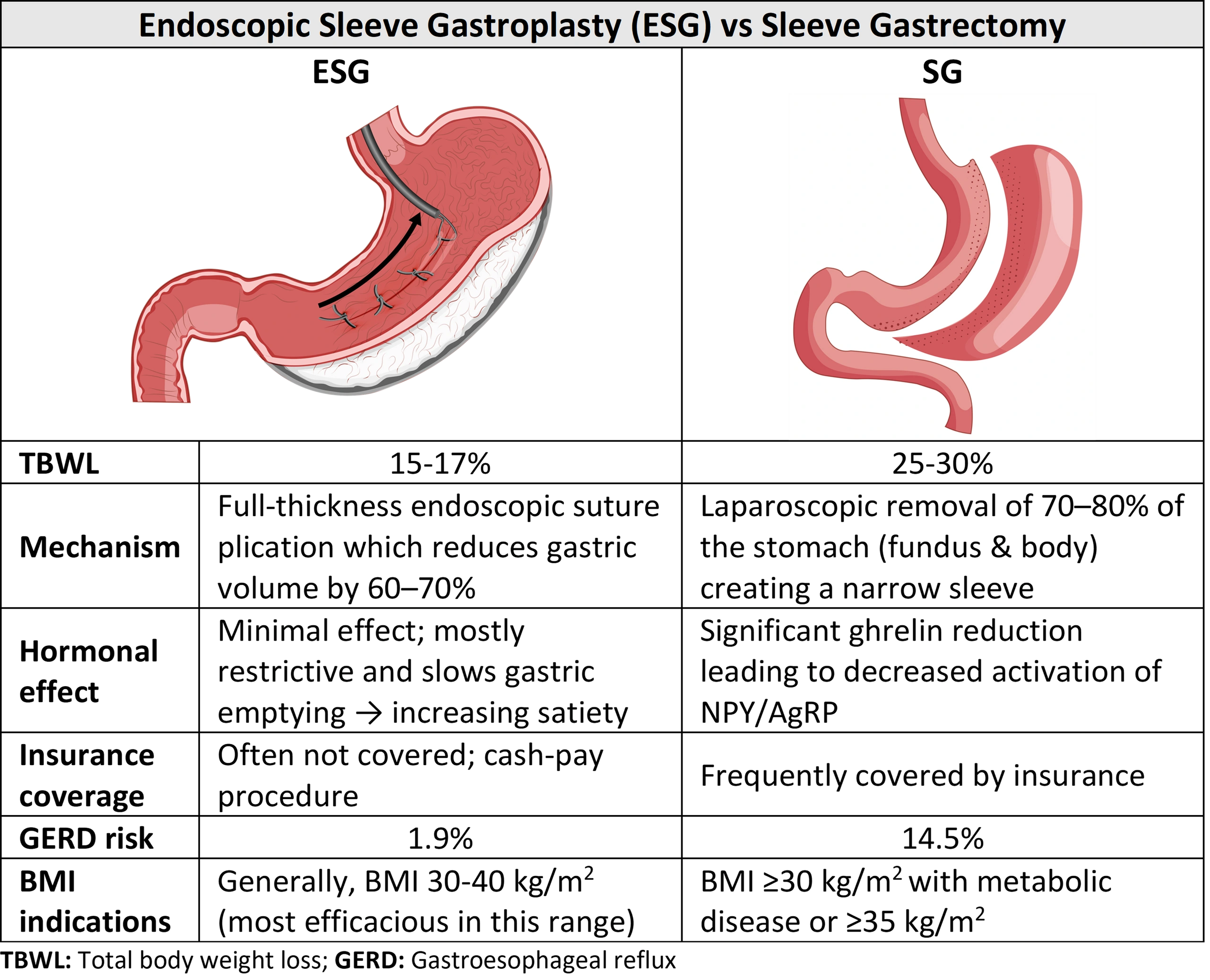
Its effectiveness comes primarily from being a restrictive procedure, although the transmural plication of the muscle layers of the stomach also slows gastric emptying, thus improving satiety. In this role, it has minimal, if any central anorexigenic hormonal impact. In fact, ghrelin, peptide YY, and GLP-1 levels were unchanged at the 6-month post-procedural mark, starkly in contrast to the laparoscopic metabolic and bariatric surgeries. However, as recently presented at the Obesity Medicine Association conference, ongoing trials looking at pre-plication gastric mucosal ablation, which reduces the ghrelin-producing cells, may promote a hormonal influence, likely increasing the efficacy significantly.
One-year data shows those undergoing this minimally invasive procedure achieved a total body weight loss of 20.6% (compared to 14.6% enrolled in high-intensity diet and lifestyle therapy programs). A more recent prospective cohort study showed 1, 3, and 5-year total weight loss of 15.6%, 14.9%, and 15.9%, respectively, indicating longer-term durability.
Currently, there are no definitive BMI indications. However, most studies showed the weight loss benefits were most notable in those with class I and II obesity (BMI <40 kg/m² ) and weakened significantly in those with a BMI ≥40 kg/m² . Similarly, there were no definitive age cut-offs. The generally agreed-upon absolute contraindications include gastric ulcers in the body or fundus, congestive gastropathy, gastric or esophageal varices, gastric polyposis, and uncontrolled psychiatric disease.
Overall, the safety profile of the ESG is excellent. Although most will experience mild abdominal pain, nausea, and vomiting immediately after the procedure, these mostly resolve after 2-3 days. The transmural sutures caused gastric leaks leading to fluid collections in <1% of cases, with most being successfully treated with antibiotics alone, although some did require radiology intervention (and much less commonly surgery). Gastric bleeding was noted in approximately 1% of cases, with most being managed conservatively. Overall, adverse effects were significantly lower than those of laparoscopic procedures, most notably the incidence of new-onset gastroesophageal reflux, which was 1.9% compared to nearly 14.5% at the one-year mark for a sleeve gastrectomy. Importantly, rates of adiposity-based comorbidities improved across the board after ESG.
In conclusion, the ESG meets the criteria for an effective, durable, and safe treatment option for obesity. It appears most efficacious for those with class I or 2 obesity and may be particularly useful for those not wanting to undergo a more invasive approach or those who are higher risk. It can be considered as monotherapy or in conjunction with anti-obesity medications to further reduce adiposity. In the absence of insurance coverage, it also is a more cost-effective option. Finally, being in the wheelhouse of gastroenterologists and endoscopists brings more procedural providers to the forefront of an all-hands-on-deck approach to the obesity epidemic.
Sample Question
A 29-year-old woman presents to a gastroenterologist to learn more about endoscopic sleeve gastroplasty, as she admits to a strong phobia of abdominal surgeries. In terms of hormone changes after surgery, this procedure is most similar to which of the following?
A. Sleeve gastrectomy
B. Laparoscopic adjustable gastric banding
C. Roux-en-Y gastric bypass
D. Single anastomosis duodenal-ileal bypass with sleeve gastrectomy
Next Week: Cohen’s Syndrome
Upcoming: Hormonally active adipose and metabolic syndrome
For more practice questions, check out the following:
- Obesity Medicine Board Review Questions (2026): Qs 182 and 291.
- Obesity Medicine Practice Tests (2026): Q 397.
(Copyright 2026) Obesity Medicine Board Review Questions, LLC: obesitymedicinereview.com
Featured image: Image created by Charu G. Copyright owned by Kevin Smith, DO
Copyediting by Kelly Smith
Now available: A full line of ABOM study resources with 775+ challenging questions in a mobile or book format. Access to both formats is available in a discounted Ultimate Package, which also includes a Pass Guarantee (if you fail the exam in 2026, you get the 2027 edition free), 50 bonus questions released in August, and the newest book, Obesity Medicine: Sample Questions and Study Blogs, which includes all the updated previous study blogs in a paperback format. Check it out here!
