
Welcome to the 2025 ABOM exam blog season! From now until October, I will post a weekly blog covering a variety of high-yield ABOM exam topics with an included sample question. We will start off with a soon-to-be-released weight management option. Space-occupying devices have been trying to gain traction as an anti-obesity treatment option for some time. Plenity®, a superabsorbent cellulose and citric acid hydrogel device that expands to 100 times its size when taken with two cups of water (16 oz) thirty minutes before a meal, has just come back on the market. It was commercially available in late 2021 but discontinued operations in 2024 due to financial constraints. As of 2025, it is again available, but no longer requires a prescription. (Read more here: Cellulose and citric acid hydrogel (Plenity®): A magic pill?) In a similar class, with nearly identical indications, contraindications, etc. Epitomee® is expected to become available soon. This blog will review some of the differences, the studies that support it, and what you would be expected to know on exam day.
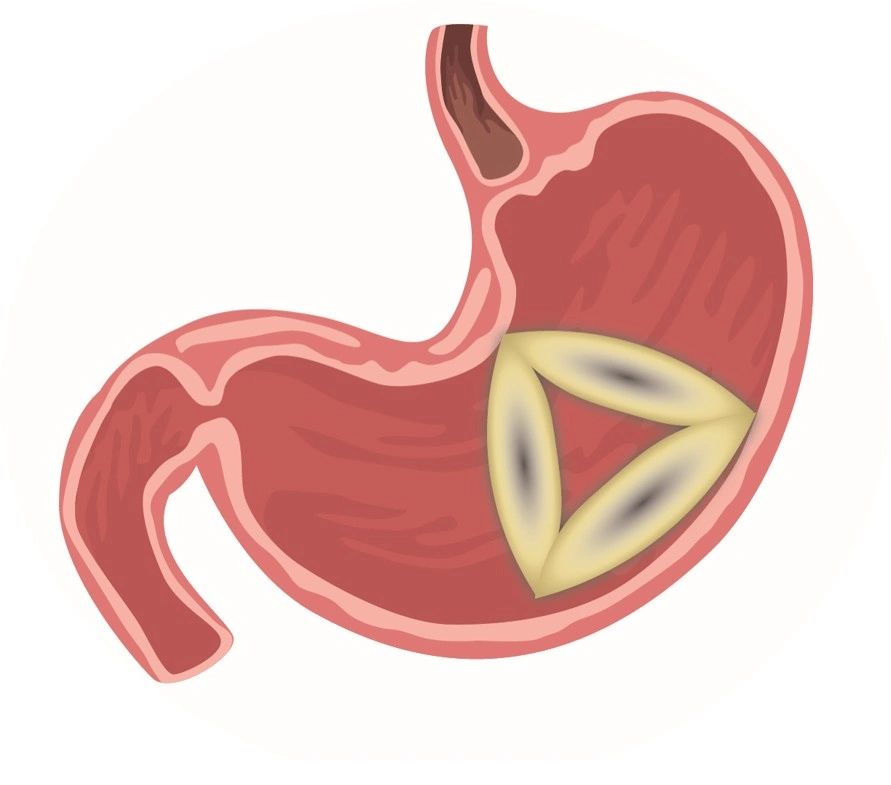
Epitomee® is a three-dimensional, FDA-cleared gastric-occupying device that works similarly to cellulose and citric acid hydrogel by promoting satiety through mechanical expansion in the stomach. However, instead of pills that break open and release an uncontained expandable matrix, the Epitomee® capsule contains expandable particles enclosed in a triangular-shaped, three-dimensional compartment (~2.5 inches per side). This triangular device acts as a mechanical device that pushes against the stomach, decreasing ghrelin secretion and increasing satiety. Hours later, it degrades and moves through the gastrointestinal tract, where the water from the matrix is released and subsequently reabsorbed in the colon.
This standard-size capsule is cleared by the FDA as a device, not a medication. This is important for a couple of reasons. First, it indicates that no chemicals are systemically absorbed; rather, it is the volume-occupying matrix that has its effects mechanically. Therefore, medication interactions are unlikely, and it may be safely used up until conception and shortly post-partum (depending on breastfeeding goals). Secondly, this lowers the BMI indication to 25 kg/m² , specifically for those with a BMI in the range of 25-40 kg/m² . Finally, and less desirable, being classified as a device generally indicates that insurance coverage will be lacking. Although Epitomee® is not currently available for sale, as a reference, Plenity® is around $100 per month. A relatively cheaper option compared to GLP-1 options, but is it effective?
The RESET study (review here) enrolled 279 individuals, 80% women, including those with pre-diabetes, with an average BMI of 34 kg/m² , and followed them for 24 weeks in a double-blinded randomized multi-center trial. In addition to exercise and dietary modifications (14 lifestyle counseling sessions, caloric restriction less than 1800 kcal/day, and exercise increased over time up to 180 mins/week), the patients took the capsule (or placebo) twice daily. An arbitrary threshold goal (primary endpoint) of having 35% of those taking the actual device lose at least 5% of their weight was achieved (56%), marking it a success by their standards. However, the placebo group also met this same threshold (44%). Twenty-seven percent lost at least 10% of their total body weight (placebo 11%), with an aggregate average weight loss of 6.6% in those taking Epitomee®, and 4.4% in those taking placebo, leading to only a 2.2% increase in total body weight loss compared to placebo. However, it was also found to increase the odds twofold of losing 7.5% of their weight and a threefold increase of losing at least 10%. These outcomes nearly mirror the trials seen with Plenity®, with a hypothesis that drinking two cups of water 30 minutes before a meal may produce similar stomach-stretching, ghrelin-reducing effects. Fortunately, given the less-than-flattering results, there were no serious device-related adverse events, with side-effect profiles similar to placebo.
Although not available at pharmacies, cellulose and citric acid hydrogels are fair game for the ABOM exam. The mechanism (including decreasing ghrelin), indications, and contraindications are all potential testable options. Although we do not have the official prescription labeling, the pertinent findings from Plenity®, which would be expected to be similar, are as follows:
- Indications: Compared to anti-obesity medications, cellulose and citric acid hydrogel is indicated down to a BMI of 25 kg/m² in adults, regardless of comorbidities, as it is classified as a device.
- Special populations: Although easy to gloss over if provided with other treatment options, this may be the only option without contraindications in specific people. Some examples may be those with end-stage renal disease, women currently breastfeeding, or those with a lower BMI than FDA-approved for other pharmacotherapy. Tolerance, insurance coverage, and contraindications will likely help guide toward cellulose and citric acid hydrogel on test day. In addition, obesity phenotypes may be considered (maybe more effective in those who specifically eat more at one sitting, etc).
- Contraindications/avoidance: Given the expandability, there is a concern of obstruction in anyone with upper gastrointestinal motility or anatomical pathology. This includes those with dysphagia (imagine this capsule expanding in the esophagus), strictures, or those at risk of strictures like Crohn’s disease. Also, avoid in post-bariatric surgery patients given the altered and restricted anatomy. The only true labeled contraindications to Plenity® are hypersensitivity reactions or pregnancy.
- Side effects: It makes sense that gastrointestinal side effects are likely, including abdominal pain, diarrhea, flatulence, and bloating. Interestingly, these were fairly similar in occurrence amongst those in the placebo group.
Innovation is always appreciated, and an expandable gastric device meets that criteria. Although its effectiveness is not as profound as that of GLP-1 antiobesity medications, it may be useful in a number of patients with costinhibition or tolerability issues with incretin-based therapies. Given that this device’s mechanism is not new, the ABOM is likely to touch on some of its high-yield integrations, and thus, familiarity prior to test day is highly advised.
Sample Question
A group of researchers is designing a randomized controlled trial to assess the efficacy and safety of a space-occupying oral device (e.g., Epitomee®) for weight loss among postpartum women with obesity. This device expands in the stomach to create a sense of fullness and is designed to be taken before meals. The study aims to evaluate outcomes such as weight loss, tolerability, and adherence over a 6-month period. Which of the following conditions would be an appropriate exclusion criterion for this study due to potential safety risks?
A. Plummer-Vinson syndrome
B. Dyspepsia
C. Celiac disease
D. Irritable bowel syndrome
(Answer and explanation will be provided in an upcoming monthly Knowledge Check.)
Next Week: Motivational interviewing vs cognitive behavioral therapy (beyond the basics)
Upcoming: Vital hormone receptors and Guideline-based care: Reviewing the USPSTF ABOM-recommended resource.
For more practice questions, check out the following:
- Obesity Medicine Board Review Questions (2026): Qs 268 and 293.
- Obesity Medicine Practice Tests (2026): Qs 1, 102, and 420.
(Copyright 2026) Obesity Medicine Board Review Questions, LLC: obesitymedicinereview.com
Featured image: Image custom-created by Charu G. Copyright owned by Kevin Smith, DO.
Copyediting by Kelly Smith
