
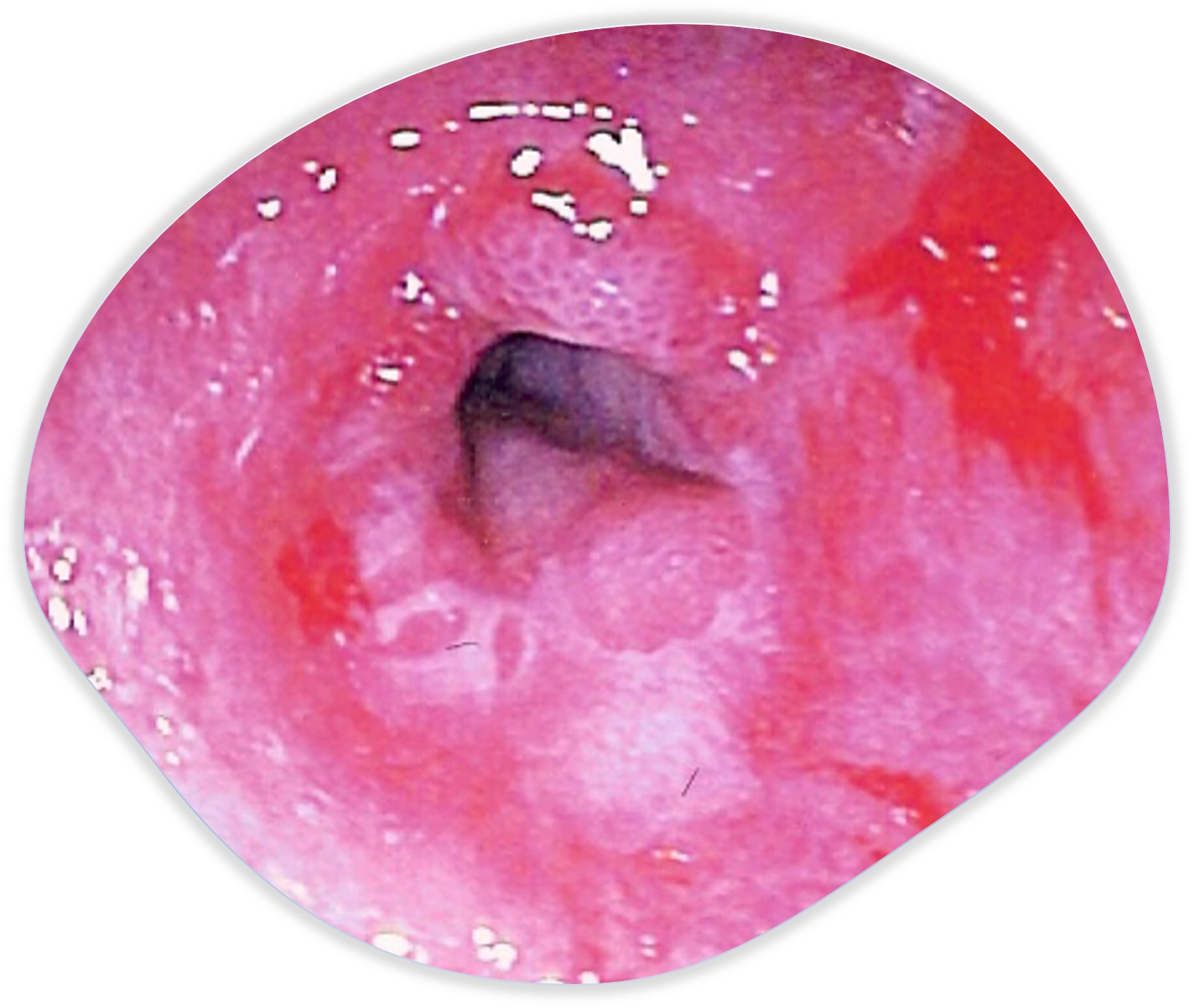
Knowing the short-term and long-term complications after a Roux-en-Y gastric bypass (RYGB) is vital for ABOM boards. It is expected that when you see a post-bariatric surgical patient in the hospital or clinic setting, you have the expertise to quickly identify complications and intervene by alerting the surgeon when necessary.
Although the short-term (within 30 days post-op) complications tend to be more life-threatening and require urgent intervention, the more common longer-term complications can cause morbidity and often will not resolve without treatment. The complications and incidence (in parentheses) after RYGB are summarized below:
- Short-term: Death (1:500), anastomotic leak (1%), infection (2%), DVT/PE (1-2%), and dehydration (2%).
- Long-term: Peptic ulcers (3-5%), small bowel obstruction (1%), internal (1-2%) and incisional (0.8%) hernias, marginal ulcers and anastomotic strictures (varies widely in studies, but up to 20-25%), and malnutrition (15-40%).
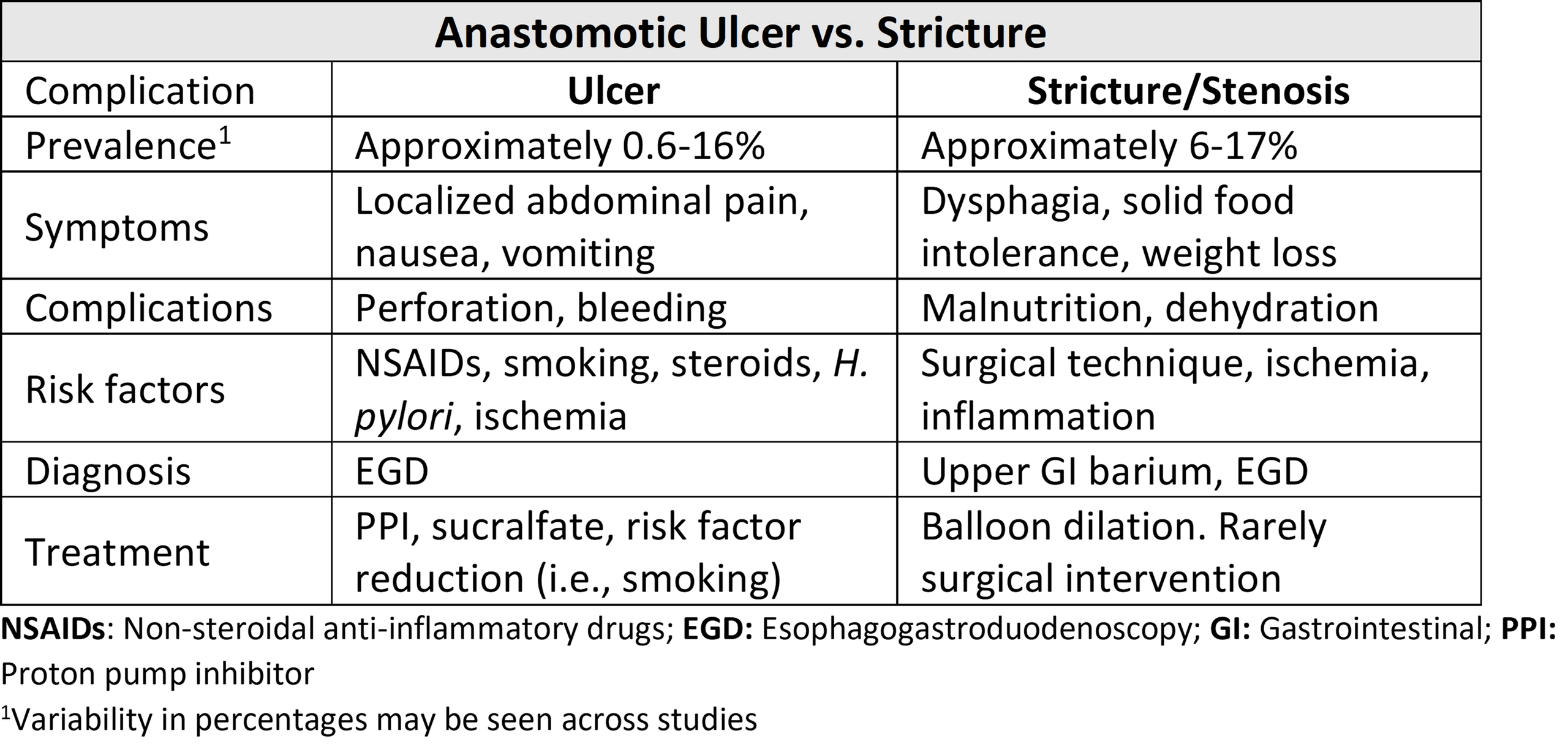
Marginal/anastomotic ulcers occur at the gastrojejunostomy anastomosis site due to acid injuring the acid-naive jejunum. Although these can be caused by surgery if the sutures are too tight, leading to poor tissue perfusion, more commonly, they occur due to NSAIDs, H. pylori infections, or smoking. Diagnosis is confirmed by endoscopy, and treatment is high-dose PPIs and sucralfate. Medical management is effective in up to 95% of patients, but occasionally surgical revision is needed.
Stenosis likely occurs due to the same insults listed above, with marginal ulcers being a risk factor for stenosis. Endoscopic dilation of the stenosis is often successful but may need to be repeated.
So clinically, how do they present? An ulcer will be localized epigastric burning pain. Often, the patient can point with one finger to the site of the underlying ulceration. Patients may experience nausea and vomiting. Prolonged ulceration may lead to perforation or hemorrhage. In contrast, a stricture/stenosis will have dysphagia and eventual inability to tolerate intake given the lack of food that can pass through the constricted stomal site. This can eventually lead to weight loss (food aversion) and malnutrition.
Prevention, prevention, prevention is the key takeaway on boards. Eradicate H. pylori prior to surgery (recommended to test before surgery in endemic areas, which includes most of the U.S. at this point), ensure patients are not taking NSAIDs or alcohol post-operatively, and cigarette use must be permanently ceased at a minimum of 6-8 weeks prior to surgery. A question focused on prevention may revolve around NSAID-sparing options in a patient with chronic pain, such as physical therapy, intra-articular injections, duloxetine, or topical diclofenac.
Sample Question
A 37-year-old woman is following up with her bariatric surgeon after undergoing a successful Roux-en-Y gastric bypass procedure four weeks prior. Overall, she is doing well; however, she points to her mid-epigastric region as having increased constant pain, which is not relieved with famotidine. Also, yesterday she noticed nausea, and today she has had two bouts of emesis. She does admit to starting smoking again, but only 4-5 cigarettes daily. Her last bowel movement was three days ago. Which of the following is the most likely diagnosis?
A. Internal hernia
B. Gastric outlet obstruction
C. Mesenteric ischemia
D. Anastomotic stricture
E. Marginal ulcer
A look ahead:
- Next Weeks Topic: Tirzepatide
- Upcoming: Binge Eating Disorder and Monthly Knowledge Check
For more practice questions, check out the following:
- Obesity Medicine Board Review Questions (2026): Q 236
- Obesity Medicine Practice Tests (2026): Qs 21, 63, and 284.
(Copyright 2026) Obesity Medicine Board Review Questions, LLC: obesitymedicinereview.com
Featured image: Peptic stricture.png. (2021, November 20). Wikimedia Commons, the free media repository.
Copyediting by Kelly Smith
Now available: A full line of ABOM study resources with 775+ challenging questions in a mobile or book format. Access to both formats is available in a discounted Ultimate Package, which also includes a Pass Guarantee (if you fail the exam in 2026, you get the 2027 edition free), 50 bonus questions released in August, and the newest book, Obesity Medicine: Sample Questions and Study Blogs, which includes all the updated previous study blogs in a paperback format. Check it out here!
