

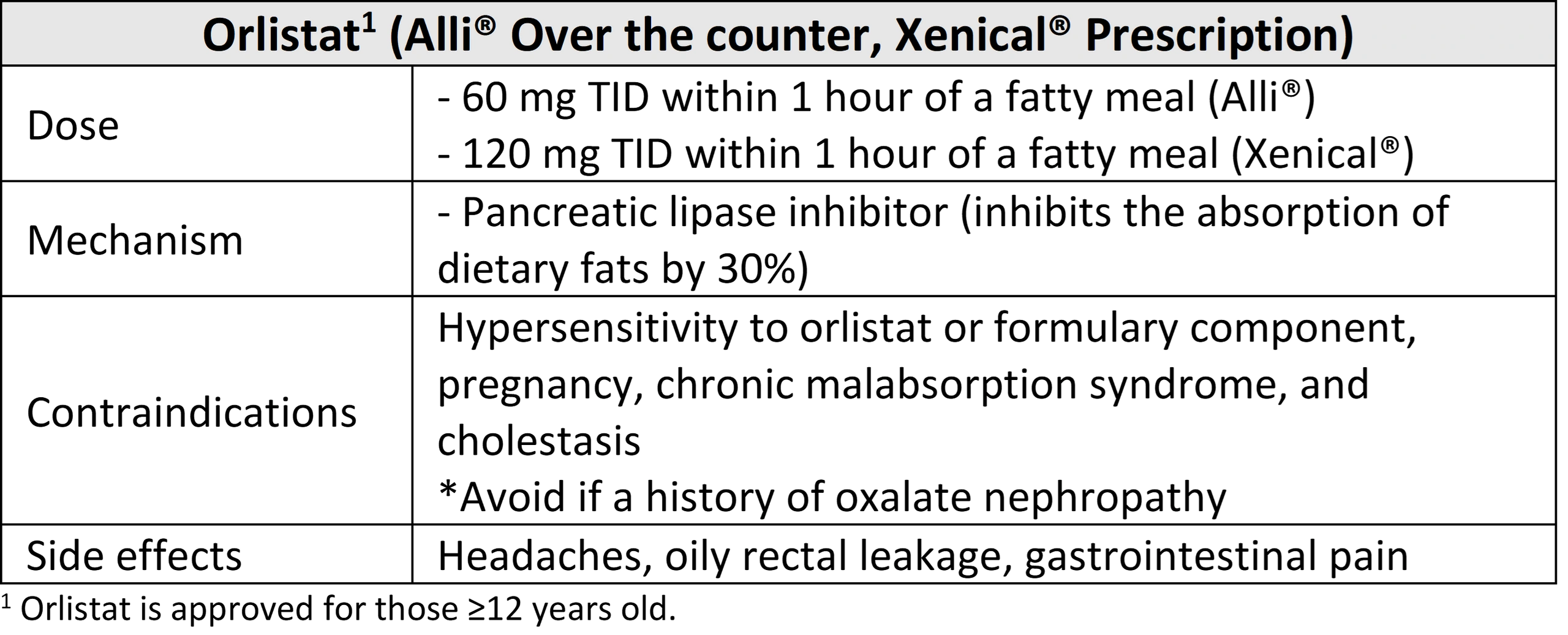
If I could have created an anti-obesity medication 10-20 years ago, before hormonal regulation was understood, I would have made orlistat. It’s an easy sell- you can eat anything you want for a meal and then take a medication that prevents the absorption of fat. Sign me up! However, as we know, side effects like “oily rectal leakage” and “flatulence with discharge” are more difficult to market. Regardless, you can guarantee that this medication will show up on boards frequently because it is readily available over the counter.
Orlistat is one of the few, if not the only, FDA-approved anti-obesity medications that does not utilize the neurohormonal pathway for its efficacy. It has no effect on the POMC/CART pathway, and it does not inhibit any obesogenic hormones; rather, it simply prevents fat absorption via pancreatic lipase inhibition. Although this may be an effective medication for some patients [50.5% lost 5% total body weight loss (placebo 30.7%), and 28.6% lost 10% (placebo 11.3%)], oftentimes, side effects revolving around gastrointestinal distress and fecal incontinence limit its long-term use.
Because this medication is available over the counter (Alli®), we will have many patients who have used it. The ABOM will require knowledge of significant associations:
- Malabsorption: Malabsorption of fat, the primary mechanism of action, may also lead to fat-soluble vitamin (A, D, E, K) deficiencies. Understand symptoms associated with these deficiencies (we will discuss specific vitamin deficiencies in later blogs). Also, it should not be taken within 4 hours of levothyroxine; otherwise, medication absorption will be impaired.
- Fat content of meals: Orlistat, which works by inhibiting gastrointestinal fat absorption, would be ineffective in a patient who does not consume fatty foods. In other words, those with a near-fat-free diet would be least likely to benefit. In contrast, a patient with very high fat intake is more likely to experience significant side effects. Finding the balance is key.
- Oxalate nephropathy: Orlistat can cause oxalate nephropathy. Normally, calcium would bind to oxalate in the intestines, both being excreted in the stool. In the presence of orlistat, fat absorption decreases, allowing fat to bind to calcium, leaving oxalate unopposed, and increasing gastrointestinal oxalate absorption. These high levels of absorbed oxalate can precipitate in the kidney.
So how might these concepts be addressed on boards? A question that would require knowledge of the mechanism of this medication, side effects, and vitamin deficiencies is an ideal example: A patient starts an over-the-counter anti-obesity medication that causes significant diarrhea and steatorrhea. If continued, which of the following side effects is most likely to be seen? Something like follicular hyperkeratosis, night blindness (both from vitamin A deficiency), or easy bruising (vitamin K deficiency) would be correct.
Finally, keep in mind specific patient populations have limited options for pharmacotherapy. Thus, orlistat may be used in higher prevalence (or at least show up in higher prevalence on the ABOM examination) in the pediatric population and those with end-stage renal disease.
Clinical pearl: Some providers use orlistat to help manage constipation associated with GLP-1 receptor agonists. Instead of immediately prescribing polyethylene glycol, consider orlistat as an option to increase bowel movements while promoting weight loss. However, advise patients to try the medication on a non-work day to ensure its gastrointestinal effects are tolerable and not overly aggressive.
Sample Question:
A 39-year-old patient with a history of hypothyroidism, hyperlipidemia, obstructive sleep apnea, and hypertension presents to a family practice clinic with complaints of brittle hair and cold intolerance. In the past 6 months, she has regularly followed with an obesity medicine clinic and was started on a new anti-obesity medication along with incorporating lifestyle and behavioral changes. She initially lost 14 lb (6.4 kg) but has regained half of that in the past two months. Given her presenting complaints, which of the following weight-loss medications was likely prescribed?
A. Orlistat
B. Semaglutide
C. Phentermine
D. Buproprion ER
E. Topiramate
Next Weeks Topic: Albright Hereditary Osteodystrophy
For more practice questions, check out the following:
- Obesity Medicine Board Review Questions (2026): Qs 117 and 206.
- Obesity Medicine Practice Tests (2026): Qs 11, 94, and 391.
(Copyright 2026) Obesity Medicine Board Review Questions, LLC: obesitymedicinereview.com
Featured image: Modified from VectorStock (image license purchased)
Copyediting by Kelly Smith
Now available: A full line of ABOM study resources with 775+ challenging questions in a mobile or book format. Access to both formats is available in a discounted Ultimate Package, which also includes a Pass Guarantee (if you fail the exam in 2026, you get the 2027 edition free), 50 bonus questions released in August, and the newest book, Obesity Medicine: Sample Questions and Study Blogs, which includes all the updated previous study blogs in a paperback format. Check it out here!
