
Note: At the time of the initial blog publication, tirzepatide was not yet available. This has been updated accordingly to maintain relevance. An updated blog will be created in the 2026 blog season.
By now, the exciting news about the SURMOUNT-1 trial has spread widely within the field of obesity medicine. This 72-week, phase 3 trial evaluated the efficacy of tirzepatide in treating obesity, with average weight loss ranging from 16% (at the lower 5-mg dose) to 22.5% (at the higher 15 mg dose), not accounting for the placebo effect of 2.4%.
This weekly GLP-1/GIP dual-receptor agonist subcutaneous injectable medication averages >20% weight loss, which is approaching the weight loss seen with metabolic and bariatric surgery. The earlier SURPASS trials created excitement in a head-to-head diabetes trial displaying tirzepatide more superior to our beloved semaglutide in both levels of diabetes control and weight loss. Whereas the SURMOUNT-1 trial specifically examined the potential for weight loss.
Incretins assist in stimulating the secretion of insulin in the setting of carbohydrate ingestion, while simultaneously inhibiting glucagon production, and do not cause hypoglycemia in the absence of concurrent hypoglycemic agents. The dual agonist tirzepatide acts in a manner similar to the individual components discussed below:
- GLP-1: Glucagon-like peptide 1 is secreted by enteroendocrine L-cells in the distal small intestine and colon in response to nutrient ingestion. It exerts an incretin effect, enhancing glucose-dependent insulin secretion, suppressing glucagon release to reduce hepatic gluconeogenesis, and slowing gastric emptying, which promotes increased satiety.
- GIP: Gastric inhibitory hormone, also referred to as glucose-dependent insulinotropic peptide, is secreted by the duodenum and jejunum (K-cells); it also has an insulin incretin effect and slows gastric emptying.
Combining the mechanisms of anti-obesity medications and/or hitting multiple receptors creates a synergistic effect, which allows for lower therapeutic dosages, leading to fewer side effects (Qsymia® is an excellent example of this). There are several other medications, such as cagrilintide, an amylin analog combined with semaglutide, which are in trials and are expected to induce a similar 20% weight loss or more. As these medications start to compete with surgical weight-loss outcomes, they are enticing for both patients and clinicians; however, their current cost is frequently prohibitive to adequate insurance coverage.
Sample Question
A recently published study has demonstrated weight-loss success and improvements in diabetes management with a subcutaneous injectable medication, which is undergoing continued clinical testing. The medication, through receptor agonism, acts similarly to GLP-1 and another hormone that is endogenously secreted by the K cells in the proximal small intestine. This dual agonism has been shown to have more significant effects on diabetes and weight than with a GLP-1 alone due to its dual incretin effect. The described medication combined with a GLP-1 is
A. amylin
B. oxyntomodulin
C. glucagon
D. gastric inhibitory peptide
E. peptide YY
Next Weeks Topic: Binge Eating Disorder and Monthly Knowledge Check
For more practice questions, check out the following:
- Obesity Medicine Board Review Questions (2026): Qs 200, 213, 279, and 315.
- Obesity Medicine Practice Tests (2026): Qs 293 and 294.
(Copyright 2026) Obesity Medicine Board Review Questions, LLC: obesitymedicinereview.com
Featured image: Insulinspritze 2018.jpg. Wikimedia Commons, the free media repository.
Copyediting by Kelly Smith
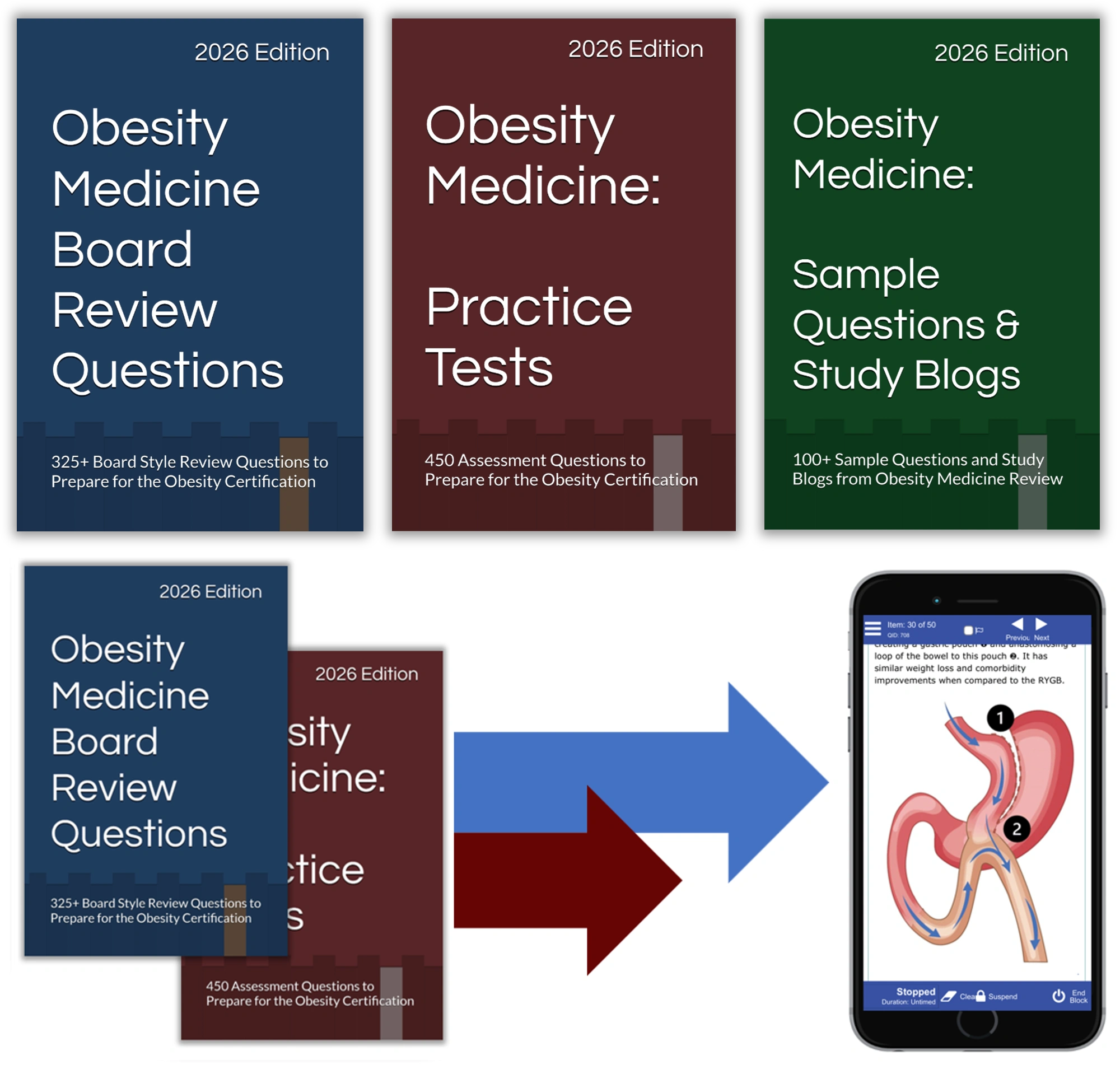
Now available: A full line of ABOM study resources with 775+ challenging questions in a mobile or book format. Access to both formats is available in a discounted Ultimate Package, which also includes a Pass Guarantee (if you fail the exam in 2026, you get the 2027 edition free), 50 bonus questions released in August, and the newest book, Obesity Medicine: Sample Questions and Study Blogs, which includes all the updated previous study blogs in a paperback format. Check it out here!
