
Have you ever had one of those patient cases that bugs you? For me, it was a case of “dumping syndrome” that didn’t quite feel right. Why was a patient who was several years post-Roux-en-Y gastric bypass (RYGB) suddenly developing hypoglycemia hours after meals? It didn’t make sense. Turns out it wasn’t actually dumping syndrome. Instead, it was a condition that presents with similar clinical symptoms but differs in timeframe: postprandial hyperinsulinemic hypoglycemia (PHH).
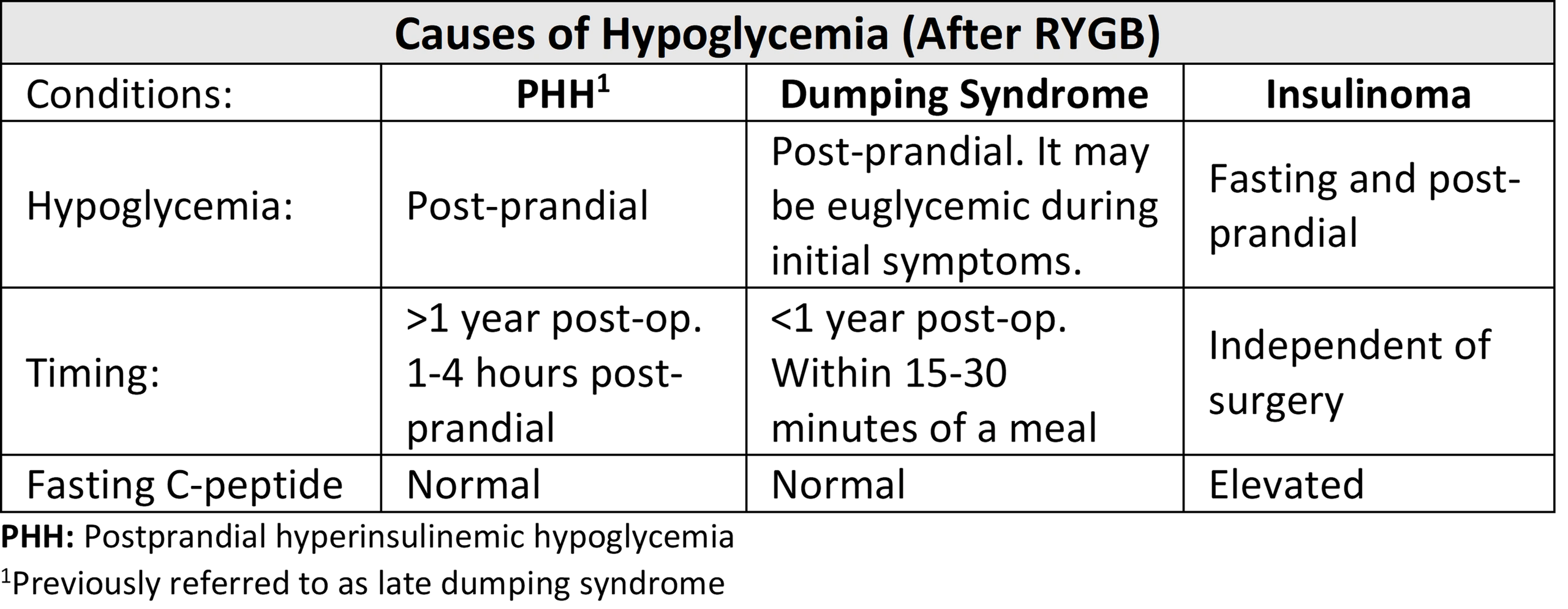
So, what is PHH? It is a predominantly female condition (92% of cases) with many of the same symptoms as dumping syndrome, including flushing, tachycardia, hypoglycemia, and diaphoresis. However, it also may include severe symptoms such as confusion, blurry vision, and seizures, depending on the degree of neuroglycopenia and if concurrent hypoglycemic medications are on board. The most significant differentiating feature from dumping syndrome is the timeline and severity. PHH (previously referred to as late dumping syndrome) occurs hours after meals and often years after RYGB surgery. In contrast, dumping syndrome occurs most commonly within the first 18 months of surgery and within 15-30 minutes post-prandial and would not cause neuroglycopenia (hypoglycemia leading to neurologic dysfunction).
Although the end-product, hypoglycemia, is similar, the mechanisms are quite different:
- Dumping syndrome: Given that the pyloric mechanism is bypassed post-RYGB, the undigested high-carbohydrate loads rapidly empty into the small bowel. The rapid glucose absorption initially leads to hyperglycemia; however, the subsequent exaggerated insulin release can cause symptomatic hypoglycemia with abdominal cramping.
- Postprandial hyperinsulinemic hypoglycemia: The mechanism of this condition is not fully understood but is likely multifactorial, even having some crossover with the etiology of dumping syndrome. In addition, persistently elevated postprandial levels of incretins (GLP-1 and GIP) after a RYGB lead to hyperfunctioning beta-islet cells in some individuals. This, along with improved insulin sensitivity with weight loss and an abnormal glucagon response, likely explains the etiology.
Finally, don’t forget about insulinomas. Although not related to RYGB, these insulin-secreting pancreatic tumors can cause hypoglycemia and may be unmasked after improvements in both weight and levels of insulin resistance. Hypoglycemia in this scenario is independent of meals and can be differentiated from the conditions above by an elevated fasting C-peptide.
Keep these alternative diagnoses for hypoglycemia in mind on test day. It may save you some frustration on boards and may also help your patients as treatment options differ.
Sample Question
A 39-year-old woman presents to the clinic with persistent symptoms of feeling flushed, lightheadedness, and some mild confusion. She underwent a sleeve gastrectomy one year prior but stated she noticed symptoms even before surgery. She is otherwise healthy, although she underwent a parathyroidectomy three months prior with recent electrolytes within normal limits. Which of the following is most likely associated with her findings?
A. Elevated fasting C-peptide
B. Female predominance of this disorder
C. Symptom improvement with increased protein intake
D. Normal fasting glucose with post-prandial hypoglycemia
Next Weeks Topic: Adiponectin (Sunday) plus a monthly Knowledge Check (Monday). The Knowledge Check is a checklist of must-know items for ABOM exams based on the previous four blog topics (Post-RYGB Hypoglycemia, Bardet-Biedl, Adiponectin, and Edmonton Obesity Staging System). In addition, this will include a brief explanation of the correct answers to previous sample questions.
For more practice questions, check out the following:
- Obesity Medicine Board Review Questions (2026): Qs 189, 225, and 251.
- Obesity Medicine Practice Tests (2026): Qs 4, 176, 234, and 403.
(Copyright 2026) Obesity Medicine Board Review Questions, LLC: obesitymedicinereview.com
Featured image: Blausen 0301 Diabetes GlucoseMonitoring.png. (2021, May 14). Wikimedia Commons, the free media repository.
Copyediting by Kelly Smith
Now available: A full line of ABOM study resources with 775+ challenging questions in a mobile or book format. Access to both formats is available in a discounted Ultimate Package, which also includes a Pass Guarantee (if you fail the exam in 2026, you get the 2027 edition free), 50 bonus questions released in August, and the newest book, Obesity Medicine: Sample Questions and Study Blogs, which includes all the updated previous study blogs in a paperback format. Check it out here!
