
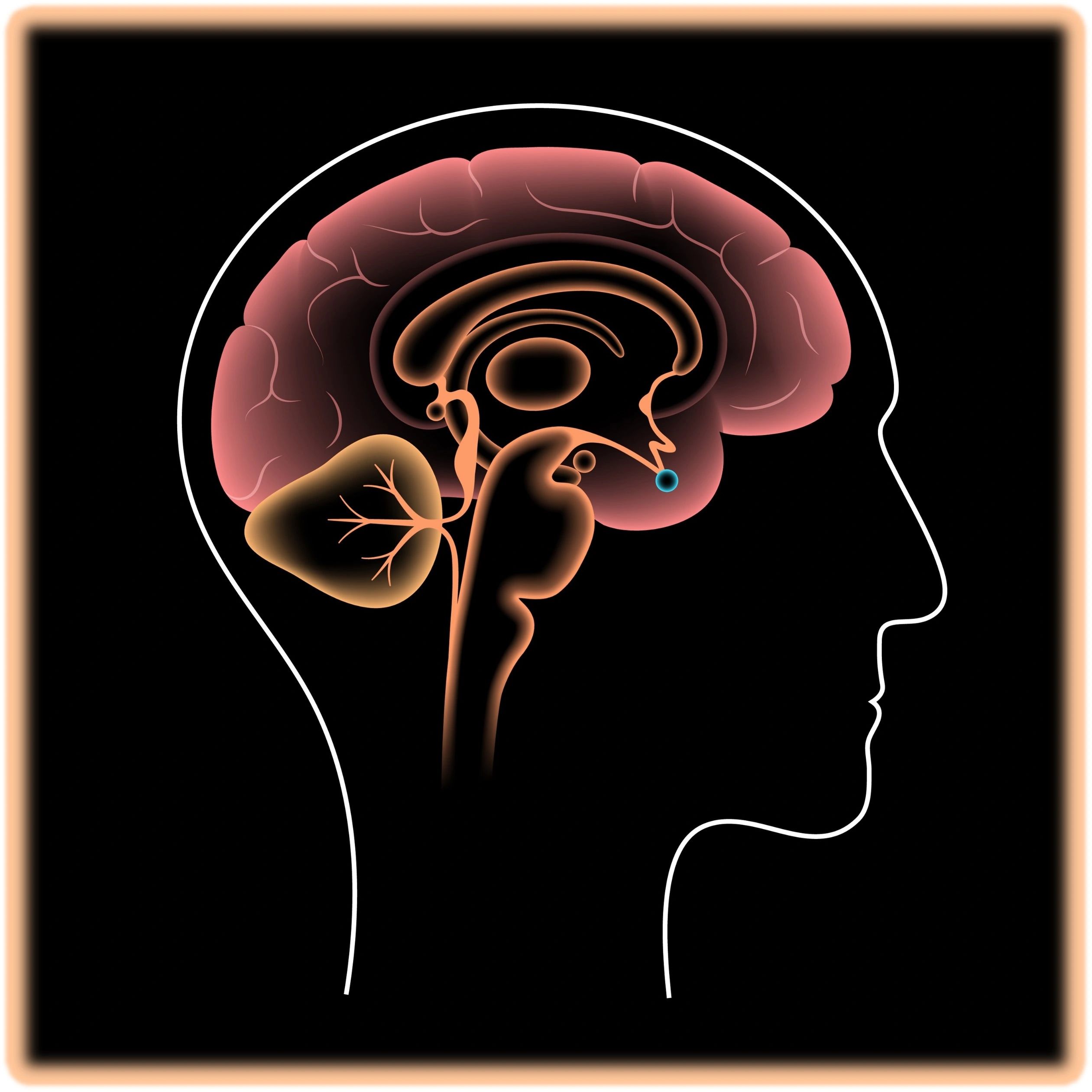
Central nervous system pathophysiology can be one of the more dreaded portions of the ABOM exam. However, your exam preparation does not need to be overly complicated. Let’s start by breaking down the central nervous pathways into two counteracting systems, the orexigenic (hunger) and the anorexigenic (anti-hunger) pathways, also known as the neuropeptide Y/ agouti-related peptide pathway (NPY/AgRP) and the proopiomelanocortin/ cocaine and amphetamine-regulated transcript (POMC/CART) pathway, respectively.
These two pathways have an antagonistic association. When activated, the weight-promoting orexigenic or NPY/AgRP pathway causes appetite to increase and energy expenditure to decrease, thereby promoting increased adipose tissue storage. In contrast, the anorexigenic or POMC/CART pathway acts by increasing satiety, decreasing appetite, and increasing energy expenditure, thereby promoting weight loss.
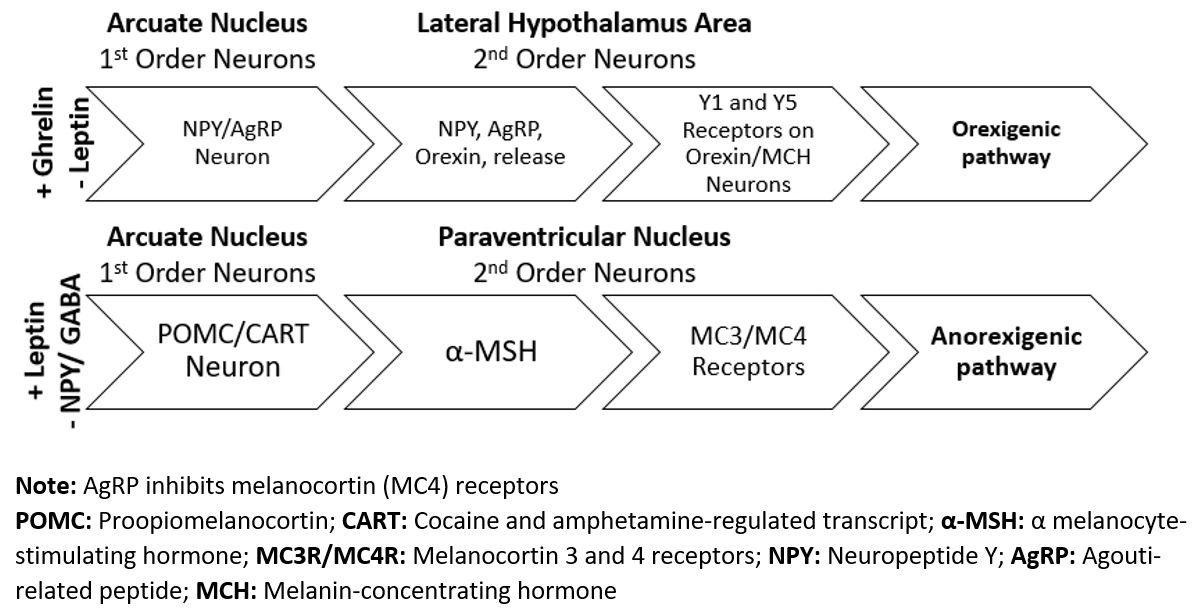
What activates these pathways? Peripheral inputs, such as ghrelin, meal-terminating hormones synthesized in the gastrointestinal tract (CCK, GIP, GLP-1, OXM, and PYY), hormones made in the adipose tissue (most notably adiponectin and leptin) and pancreas, nutrients, and anti-obesity medications, all affect activation and inhibition. First-order neurons, located within the arcuate nucleus of the hypothalamus, which is situated near the permeable blood-brain barrier, become stimulated upon sensing these peripheral inputs. These neurons then activate second-order neurons located deeper within the hypothalamus. Second-order neurons then initiate a cascade of other neurons throughout the brain, promoting weight gain or weight loss, respectively.
- NPY/AgRP: Second-order neurons are located in the lateral hypothalamus.
- POMC/CART: Second-order neurons in this pathway are located in the part of the hypothalamus right next to the third ventricle, termed the paraventricular nucleus.
For a simple example, after eating a meal, ghrelin is suppressed while the meal-terminating hormones increase, which inhibits the NPY/AgRP pathway and stimulates the POMC/CART pathway, leading to satiety. In contrast, if someone is fasting, ghrelin becomes increased, activating the NPY/AgRP pathway and suppressing the POMC/CART pathway, thus increasing appetite and promoting caloric intake.
One final note regarding the peripheral stimulation of these pathways and leptin. Leptin is a longer-term hormone secreted by adipose tissue; the more adipose tissue present, the higher leptin levels are, and vice versa. Notice in the image below that leptin activates the anorexigenic pathway as a feedback system to the brain, letting the brain know that adequate stored calories are present. However, with weight loss, leptin decreases, and you lose some of this stimulation, leading to increased hunger and decreased energy expenditure in an attempt to return to the prior normal level. Decreased leptin plays a part in why patients may eventually regain some weight after initial weight loss. In addition, pathological deficiencies or mutations in these leptin receptors can lead to insatiable hunger and significant weight gain at young ages.
The ABOM will expect you to have a solid understanding of these two pathways and their components, as shown in the flow chart below. You will need to know that orexin and Y1 and Y5 receptors are associated with the orexigenic system, while α-MSH and MC3/MC4 receptors are associated with the anorexigenic pathway. Know the names of where the first and second-order neurons are located within the hypothalamus. Finally, know that stimulation of one pathway causes inhibition of the other, similar to a gas and brake pedal. The ABOM may ask which pathway is stimulated after a meal or which area of the hypothalamus is stimulated with weight gain. If you have these pathways delineated in your mind, you can reason through many of these pathophysiology questions.
Sample Question:
A research study is being conducted in which patients fast for 8 hours, followed by the consumption of a meal consisting of 500 kcal. Several hormones are monitored every 2 hours during the fasting and postprandial period for a total of 12 hours. Six hours into the fast, ghrelin hormone levels are found to be at their peak. What other finding would most likely be present during this time?
A. Y1 and Y5 receptor stimulation
B. Leptin hormone elevation
C. Suppressed agouti-related peptide hormone levels
D. Activation of the POMC/CART pathway
E. Orexin A and B hormone suppression
Next Week: Obesity stigma/bias/first-person language
Upcoming: Monthly Knowledge Check. This is a review checklist of must-know items for ABOM exams based on the previous four blog topics. In addition, this will include a brief explanation of the correct answers to previous sample questions
Bonus (November 2nd): I took the Exam…. NOW WHAT?? Carolynn Francavilla, MD, FOMA, ABOM
For more practice questions, check out the following:
- Obesity Medicine Board Review Questions (2026): Qs 8, 14, 23, and 69.
- Obesity Medicine Practice Tests (2026): Qs 9, 116, 236, 285, and 431.
(Copyright 2026) Obesity Medicine Board Review Questions, LLC: obesitymedicinereview.com
Featured image: Modified from VectorStock (image license purchased)
Copyediting by Kelly Smith
