
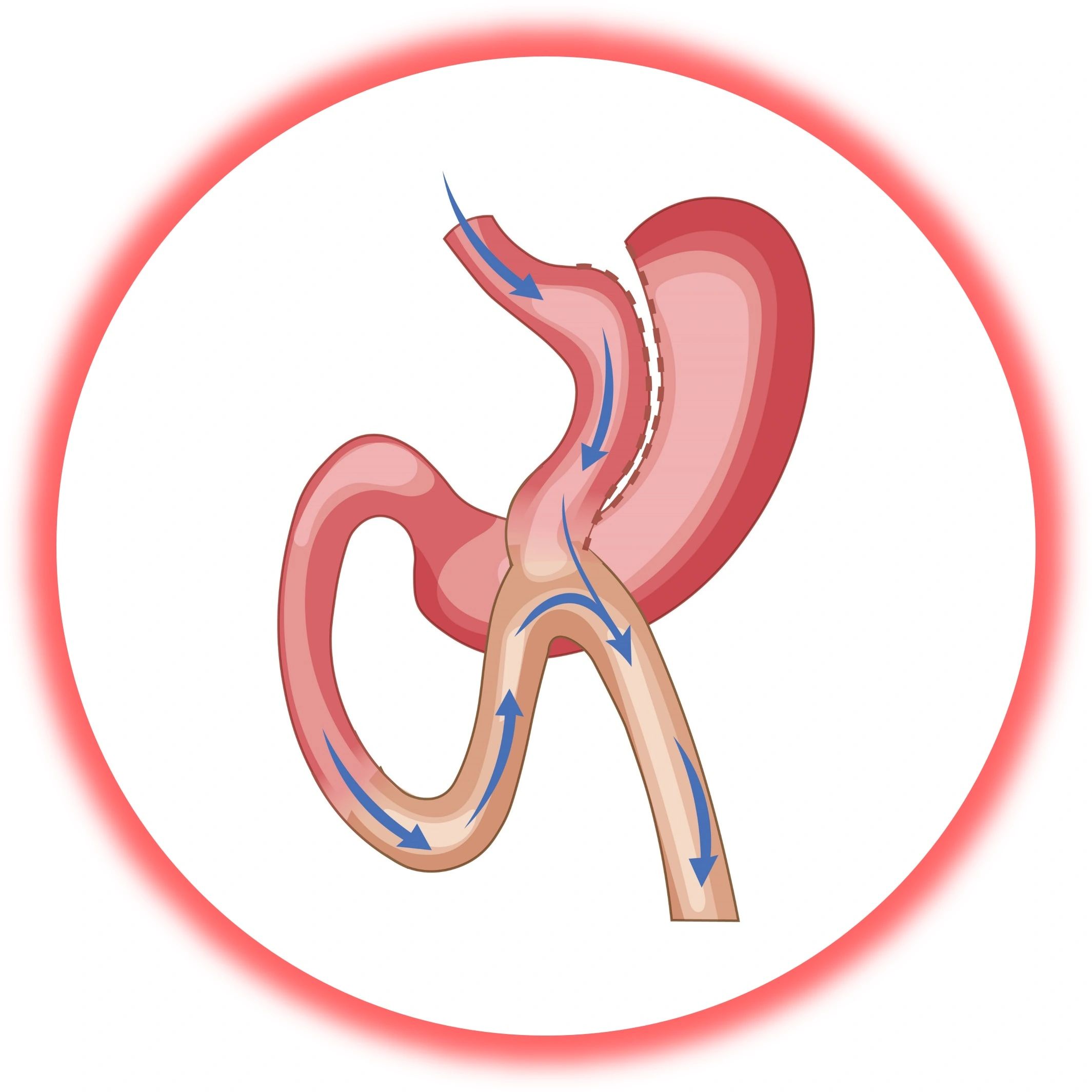
One-anastomosis gastric bypass (OAGB), also known as the single-anastomosis gastric bypass or mini-bypass, is one of the more recent (2022) surgical options endorsed by the American Society for Metabolic and Bariatric Surgery (ASMBS). You can expect to see this malabsorptive procedure on test day and will need to have a basic understanding.
In contrast to the traditional Roux-en-Y gastric bypass (RYGB), the OAGB only requires one anastomosis. First, a stomach pouch is created, with a subsequent loop of bowel anastomosed to this newly formed pouch. This pouch is generally larger in the OAGB than the RYGB, with variability in the length of the looped limb. The general concept is the same amongst most malabsorptive procedures. The digestive enzymes produced in the distal stomach and proximal small intestines (biliopancreatic loop) are delayed in meeting with the food (alimentary limb). Where these come together is called the common channel. The risk of malabsorption is based on the lengths of the loops and the common channel. This surgically induced anatomical change has two main effects. First, there is less bowel area available for digestion and absorption, as often the duodenum and a portion of the jejunum are bypassed. Secondly, and most importantly, the mid and distal portions of the small intestine are not used to seeing undigested food, particularly carbohydrates. This causes the intestine to produce and secrete significantly increased levels of the incretin GLP-1 in comparison to normal gastrointestinal anatomy in an effort to delay intestinal motility in a futile attempt to allow the more proximal (and bypassed) intestines to digest the food more thoroughly. These high levels of secreted GLP-1 hormone have positive central anorexigenic effects, leading to significant metabolic and weight loss effects by increasing satiety and increasing energy expenditure via the POMC/CART pathway.
With the singular anastomosis, compared to two in the RYGB, the OAGB is generally considered a technically simpler and faster surgical procedure. With similar weight loss effects and adiposity-based comorbidity improvements as the traditional RYGB, why is this not the gold standard? With its more recent ASMBS endorsement, it just doesn’t have the track record and long-term research as the decades-old RYGB. Long-term effectiveness, complication risk, and sustained weight loss are unknown at this time, although one would suspect with similar hormonal changes, one would have similar long-term effectiveness. Related to the relatively recent endorsement, many seasoned surgeons may be less comfortable performing this newer procedure as it may not have been part of their formal residency/fellowship training. Also, there are no standardized limb lengths, and thus, variability amongst surgeons in their techniques may lead to varying results or malabsorption risks.
In addition to the above, this procedure increases the complication risk of bile acid gastritis due to biliary reflux. Bile acids are highly corrosive and can injure the gastric mucosa, leading to inflammation, damage, and eventual malignant metaplasia. The risk is 5x higher with the OAGB than the RYGB (3.5% vs. 0.7%). Bile reflux occurs near the anastomotic site in approximately 4% of patients undergoing this procedure, with endoscopic (and histologic) findings nonspecific, thus making it a diagnosis of exclusion. It should be suspected when patients complain of acid reflux that is recalcitrant despite proton pump inhibitor therapy. Treatment often requires conversion to a traditional RYGB.
As more long-term safety and outcome data becomes available, it is very possible that this procedure will increase in popularity. As we have seen in the last decade, patients prefer simplicity, causing the sudden rise in the popularity of the sleeve gastrectomy. Less anastomotic connections mean fewer surgical complications, leading to an inverse relationship with the popularity of the procedure. Independent of patient popularity, expect this surgical procedure to show up on test day, and have an understanding of the associated hormonal effects and potential complications.
Sample Question
A 26-year-old woman underwent a one-anastomosis gastric bypass and has since had a persistent burning sensation in her mid-epigastric region. She states that proton pump inhibitors have not helped, and sucralfate provided no relief. She denies any other symptoms, including fever, nausea, or vomiting. Endoscopic evaluation reveals no strictures or anastomotic ulcers, and a histologic sample shows mild stomach inflammation. A CT of the abdomen is unremarkable. Which of the following is the most likely cause of her symptoms?
A. Cardiac ischemia
B. Bile acid gastritis
C. H. pylori infection
D. Recalcitrant acid reflux
E. Esophageal spasm
Next Week: Alstrom’s disease
Upcoming: Ketogenic diet and everything to know about metformin
For more practice questions, check out the following:
- Obesity Medicine Board Review Questions (2026): Q 299.
- Obesity Medicine Practice Tests (2026): Q 223.
(Copyright 2026) Obesity Medicine Board Review Questions, LLC: obesitymedicinereview.com
Featured image: Image created by Charu G. Copyright owned by Kevin Smith, DO
Copyediting by Kelly Smith
Now available: A full line of ABOM study resources with 775+ challenging questions in a mobile or book format. Access to both formats is available in a discounted Ultimate Package, which also includes a Pass Guarantee (if you fail the exam in 2026, you get the 2027 edition free), 50 bonus questions released in August, and the newest book, Obesity Medicine: Sample Questions and Study Blogs, which includes all the updated previous study blogs in a paperback format. Check it out here!
