

Approved in 1959 for short-term use in obesity, phentermine remains one of the oldest and most widely prescribed weight management medications in the United States, with hundreds of thousands of prescriptions filled each month. Despite its widespread use and the substantial cumulative weight loss it has produced, phentermine remains a medication that sparks strong opinions. Much of this stems from public relations setbacks, such as the fen-phen era, when phentermine was incorrectly conflated with fenfluramine, the agent responsible for heart valve defects and pulmonary hypertension. The rise of “pill mills” further eroded trust, as indiscriminate prescribing without proper evaluation or monitoring damaged its reputation, a concern now mirrored by some online GLP-1 receptor agonist prescribing practices. Nevertheless, when used appropriately and discussed as a treatment option and prescribed after a thorough evaluation by an obesity medicine specialist, phentermine can serve as both an effective and cost-conscious tool in the management of obesity. Given its decades of use and continued relevance, expect this medication to make an appearance multiple times on the ABOM exam.
Phentermine is a sympathomimetic amine that stimulates the release of norepinephrine (and, to a lesser extent, dopamine) in the hypothalamus, activating the anorexigenic pathway that reduces appetite, increases satiety, and modestly enhances energy expenditure. Because of its structural similarity to amphetamines, concerns were initially raised about potential stimulantrelated abuse. However, when used at therapeutic doses for obesity treatment, phentermine has not been associated with physiological dependence or withdrawal. Nonetheless, it remains a schedule IV controlled substance and is considered contraindicated in patients with a history of substance abuse.
Other labelled contraindications include hypersensitivity to phentermine or sympathomimetic amines, use within 14 days of monoamine oxidase inhibitors (risk of hypertensive crisis), agitated states, in those with arrhythmias, uncontrolled hyperthyroidism, glaucoma, history of drug abuse, history of coronary artery disease (importantly, it does not cause this), heart failure or stroke, pregnancy (although not teratogenic), and breastfeeding.
Phentermine monotherapy is FDA-approved only for short-term use in those 17 years of age and older (up to 12 weeks), a limitation that conflicts with the long-term goals of obesity management. This restriction reflects the absence of longterm safety and efficacy trials rather than evidence of harm. In contrast, its combination counterpart, phentermine/topiramate ER (Qsymia®), is FDA-approved for long-term use in those as young as 12 years of age. The discrepancy likely stems from the lack of financial incentive for a generic drug manufacturer to pursue the costly studies needed to update phentermine’s labeling. Despite this, multiple professional societies endorse the off-label, long-term use of phentermine in appropriately selected patients. For example, the Endocrine Society outlines the following criteria that patients should meet before considering longer-term use of phentermine:
- Lack serious cardiovascular disease
- Do not have major psychiatric illness or a history of substance misuse
- Understand that phentermine is approved only for short-term use and are informed about alternative FDA-approved long-term weight-loss medications with established safety and efficacy
- Do not develop clinically significant increases in heart rate or blood pressure while on therapy
- Achieve meaningful weight loss during treatment, confirming clinical benefit
Important: Providers should note that prescribing regulations may vary by state, and consultation with state medical boards is advised to confirm local requirements.
Although clinical judgment may justify exceptions in practice, board exams generally adhere closely to FDA labeling and society recommendations. If a patient does not meet these criteria and other treatment options exist, phentermine should be avoided. In real-world care, certain situations may warrant flexibility, for example, a patient with remote coronary artery disease where the benefits of weight loss outweigh the risks, or an individual with well-controlled bipolar disorder who tolerates stimulants. However, on exam day, unless no alternatives are available or the question specifically notes coordination with the patient’s specialist and close monitoring, the safest choice is to move away from phentermine in these scenarios.
There are notable differences between phentermine monotherapy and the phentermine/topiramate ER combination, underscoring the synergistic benefits of using both agents together. In short-term, eight-week trials, phentermine alone was associated with an average systolic blood pressure (SBP) increase of approximately 1.5 mmHg, whereas the combination therapy produced an average SBP decrease of 3.2 mmHg. Heart rate increases were also more pronounced with phentermine monotherapy (mean +7.2 BPM) compared with the combination (mean +3.6 BPM). Importantly, these represent averages, and individual responses may vary considerably; thus, regular monitoring of heart rate and blood pressure is recommended. Longer-term studies suggest that these cardiovascular effects attenuate over time, with less persistent heart rate elevations observed during chronic use.
Phentermine monotherapy produces modest weight loss, averaging 3–5% in short-term trials and about 7-8% sustained weight loss at 24 months. Roughly 10–15% of patients achieve ≥10% weight loss with monotherapy. In contrast, phentermine/topiramate ER (Qsymia) delivers more robust and durable outcomes, with average losses of 9–10% at one year and nearly half of patients achieving ≥10% weight loss, making it one of the most effective oral antiobesity combination medications currently available. Although the combination seems to be the more potent option and has fewer side effects when compared to monotherapy, on exam day, be aware of the contraindications of topiramate (ex., history of calcium phosphate nephrolithiasis, etc.) in which phentermine monotherapy is preferred over the combination.
Overall, phentermine is generally well tolerated at standard or lower doses, but dose escalation can be limited by side effects. Common adverse effects reflect its sympathomimetic properties and include headache, elevated heart rate, palpitations, tremor, restlessness, and insomnia (which is why it should be taken in the morning). Dry mouth and constipation are also frequently reported and can impact adherence, and in men, be aware that some may experience erectile dysfunction. Most of these effects are mild to moderate in severity and often improve with time or dose adjustment.
One final consideration: due to phentermine’s sympathomimetic action, there is a potential interaction with anesthetic agents. The American Gastroenterological Association (an ABOM-listed resource) recommends discontinuing phentermine at least four days prior to anesthesia to reduce the risk of intraoperative blood pressure fluctuations. In most cases, the medication can be safely resumed shortly after the procedure once the effects of anesthesia have worn off.
Given its long history and widespread use, phentermine is a high-yield topic on the ABOM exam. Expect questions on pharmacotherapy, indications, contraindications, dosing, and clinical effectiveness. Spending a little extra time reviewing this sympathomimetic amine now may help you avoid some of its side effects (tremor, anxiety) on exam day.

Sample question:
A 42-year-old woman with class II obesity, rheumatoid arthritis, depression, recent anxiety, and type 2 diabetes presents to discuss anti-obesity pharmacotherapy. She feels motivated to continue to work on her health as she has recently lost 6 lb without recent changes in diet, medications, or physical activity. She reports prior success with phentermine and wishes to restart it. Her review of systems is positive for diarrhea and occasional tension-like headaches. Current medications include methotrexate, metformin, semaglutide, escitalopram, and buspirone. She has an intrauterine device in place. Vital signs reveal a BP of 152/65 mmHg, HR 103/min, RR 22/min. A hemoglobin A1c three months ago was 9.1% (reference range <5.7%). Before considering initiation of phentermine, which of the following should be completed first?
A. Improved diabetes control
B. Initiation of antihypertensives
C. Thyroid function testing
D. Resting ECG
E. Discontinuation of interacting medication
F. Pregnancy test
Next Week: Food Insecurity
Following Week: Microbiome and SIBO
Upcoming: Women and Obesity
For more practice questions, check out the following:
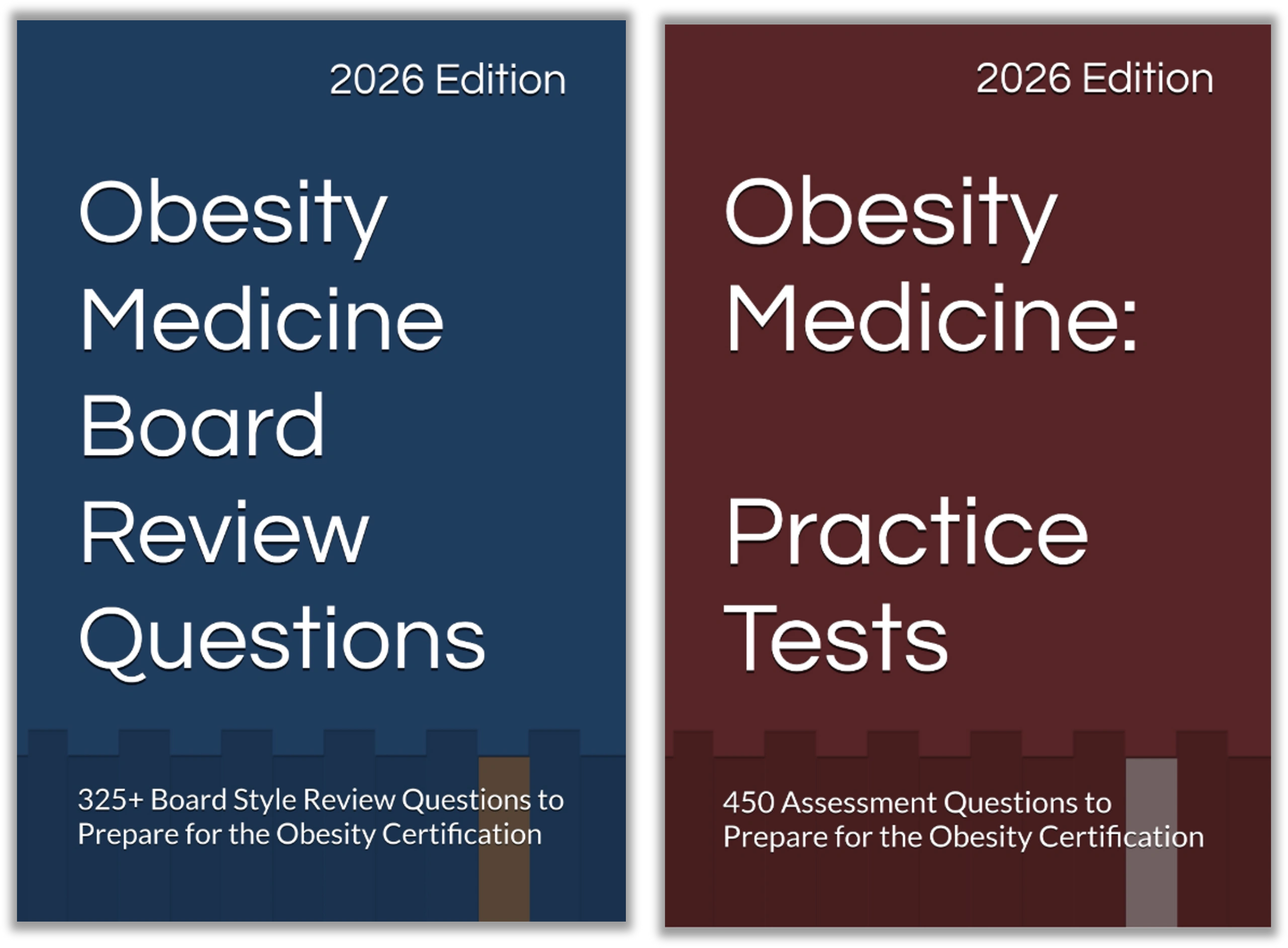
- Obesity Medicine Board Review Questions (2026): Qs 238 and 303.
- Obesity Medicine Practice Tests (2026): Qs 75 and 117.
(Copyright 2026) Obesity Medicine Board Review Questions, LLC: obesitymedicinereview.com
Featured image: Modified from VectorStock (image license purchased)
Copyediting by Kelly Smith
