
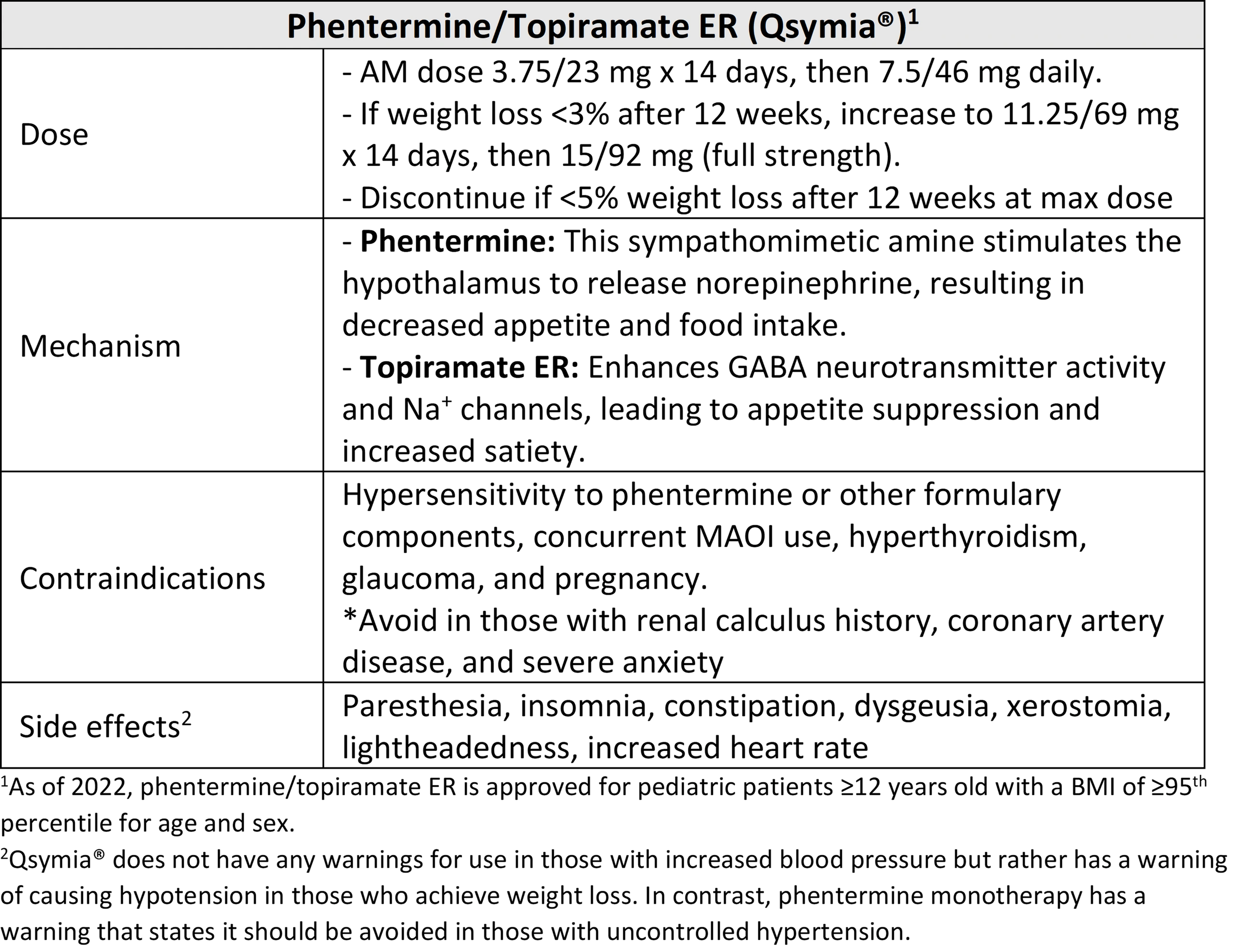
Phentermine/topiramate ER (Qsymia®) is one of the most effective oral anti-obesity medications (AOM) available, with up to 70% achieving clinically sufficient weight loss of 5% and 48% losing 10% of total body weight (vs. 21% and 7%, respectively with placebo) at the maximum dose with concurrent lifestyle modifications as per the CONQUER trial. Notably, blood pressure, heart rate, insulin resistance, and lipid profiles also all improved from baseline after titrating up to the maximum dose. These two combined medications work synergistically, allowing for reduced dosages of both components, which lessens side effects and improves tolerance while maintaining efficacy.
Updated FDA indications include adults with obesity or overweight with at least one weight-related comorbidity. This shift away from strict BMI-based criteria broadens eligibility by allowing alternative diagnostic measures (e.g., body composition and waist circumference) and accommodating ethnicity-specific risk thresholds. As of 2022, phentermine/topiramate ER is now approved for pediatric patients ≥12 years old with obesity, expanding the arsenal against obesity in adolescent populations.
Just as important to know are contraindications, with reasons to avoid this medication discussed below:
- Pregnancy or potential pregnancy: Medications containing topiramate increase the risk of fetal cleft lip and palate. Topiramate can also increase the metabolism of estrogen-containing oral contraceptives, potentially reducing contraceptive effectiveness. Although Qsymia® labeling notes that concomitant use with estrogen-containing oral contraceptives may cause irregular uterine bleeding without increasing pregnancy risk, topiramate labeling warns that increased estrogen metabolism at higher doses may impair contraceptive effectiveness and is associated with fetal harm if pregnancy occurs. Due to this teratogenic risk, topiramate-containing medications are subject to a Risk Evaluation and Mitigation Strategy (REMS), which includes counseling on effective contraception and routine pregnancy testing to minimize the risk of pregnancy during treatment.
- History of glaucoma: Both phentermine and topiramate should not be used in those with a history of glaucoma due to the increased occurrence of acute angle closure glaucoma.
- Nephrolithiasis: Topiramate increases the risk of calcium phosphate stone formation within the urinary tract and should be avoided in those with a prior history of nephrolithiasis. If a previous stone was an isolated event or in the setting of isolated risk factors, the addition of potassium citrate could be considered to mitigate this risk.
- Additional: Other recommended reasons to avoid phentermine, alone or in combination, include uncontrolled anxiety, pulmonary hypertension, recent coronary artery disease (phentermine does not cause coronary disease; however, increased sympathetic cardiac strain after an acute coronary syndrome is undesirable), and a history of substance use disorder (assessed on a case-by-case basis).
So, what are some side effects? Topiramate uniquely causes dysgeusia (altered taste), especially with carbonated beverages. This may be a good thing for those with an addiction to soda. In addition, topiramate can cause paresthesia and dizziness given the multiple channels and receptors it acts upon in the central nervous system (the same reason it is used as a seizure medication). Phentermine can commonly cause dry mouth, constipation, insomnia (should be taken in the morning), and mood changes (mostly anxiety). Finally, this combination of medications may worsen depression, and in adolescents, could decrease height velocity.
There is a lot to know about this medication, as there are limited FDA-approved anti-obesity medications available; hence, the available options tend to be tested more heavily. You should also understand the dosing parameters (when to titrate up and the maximum dose) and when to dose-adjust in renal and liver disease. Importantly, the generic individual components are more commonly prescribed due to costs (considered off-label) rather than prescribing brand-name Qsymia®, and this is fair game on the ABOM exam, as it is encompassed in their test outline content.
Sample Question
A 59-year-old man presents to his internist with the desire to start pharmacotherapy for weight loss. The physician is interested in starting a particular combination medication but first inquires about any history of calcium phosphate stones, as this medication should be avoided in those with a history of renal nephrolithiasis. Given the most likely medication alluded to, what is a contraindication of this medicine?
A. Chronic malabsorption syndrome
B. Family history of medullary thyroid cancer
C. Concurrent history of glaucoma
D. History of epilepsy or risk of seizures
E. Uncontrolled hypertension
Upcoming Topics: Transpyloric shuttle and obesity hypoventilation syndrome
For more practice questions, check out the following:
- Obesity Medicine Board Review Questions (2026): Qs 171, 191, 240, and 304.
- Obesity Medicine Practice Tests (2026): Qs 92, 160, 182, 290, 327, and 333.
(Copyright 2026) Obesity Medicine Board Review Questions, LLC: obesitymedicinereview.com
Featured image: Modified from VectorStock (image license purchased)
Copyediting by Kelly Smith
