

A common topic that some struggled with while studying for obesity medicine boards was polycystic ovarian syndrome (PCOS). Regardless of your specialty, you will be expected to know the basic concepts regarding this condition. Screening questions for this condition should be included for any woman with increased weight.
Although the underlying cause of PCOS is difficult to pinpoint, it is a relatively common condition affecting 6-10% of reproductive-age women and is the most common cause of infertility. It is characterized by ovulatory dysfunction and increased androgen levels that clinically present with findings of hirsutism, acne, anovulation and oligomenorrhea, insulin resistance, and obesity. Although these findings are commonly seen, the prevalence of each is heterogeneous amongst women and may increase the difficulty in recognizing this condition initially, delaying diagnosis.
Although different criteria are available for diagnosis, the Rotterdam criteria is the most accepted. This criteria requires 2 of the following for diagnosis:
- Hyperandrogenism (biochemical or clinical): Clinical findings of hirsutism (thickened pigmented body hair in a male distribution), male-pattern hair loss, and acne may all be seen. Virilization, including clitoromegaly and a deepened voice, may occur but is less common. Elevated serum androgen levels, such as total testosterone, are often detected.
- Menstrual irregularities (anovulation): This is often present early in the teenage years, often presenting with delayed menarche and oligomenorrhea (less than 9 periods in a calendar year).
- Polycystic ovaries by ultrasound: Transvaginal ultrasound showing 12 or more follicles in either ovary meets the criteria, although this is nonspecific and may be seen in normal cycling women. Importantly, if the other two criteria above are met, imaging is not necessary.
Other laboratory findings consistent with PCOS, although nondiagnostic, often include an increased luteinizing hormone: follicular-stimulating hormone ratio and lower amounts of sex hormone-binding globulin (SHBG) (read more on SHBG here).
Why is it important to screen and diagnose PCOS? As stated above, the increased risk of insulin resistance, diabetes, and metabolic syndrome ultimately increases cardiovascular risk. This risk can be mitigated with treatment. Up to three-quarters of patients with PCOS have increased weight or obesity, and even those with normal body mass indexes often have increased insulin resistance. The most sensitive test to diagnose early type II diabetes or insulin resistance in this population is the two-hour, 75-gram oral glucose tolerance test, which is recommended by the American College of Obstetrics and Gynecology and the American Association of Clinical Endocrinologists to be completed at the time of the initial diagnosis. Higher associations with metabolic-associated dysfunctional liver disease, sleep apnea, disordered eating, and mood disorders also necessitate prompt diagnosis and intervention.
Treatment options are often tested. Although lifestyle modifications are vital and should be used concurrently, especially to promote weight loss, the first-line pharmacological treatment for PCOS is a combined estrogen-progestin oral contraceptive (OCP). There are a few reasons why this is considered the first-line treatment:
- Endometrial protection in the setting of anovulation (progestin component). Endometrial hyperplasia and malignancy risk are reduced when an OCP is started.
- Contraceptive protection for those not seeking pregnancy is provided. Treating PCOS includes helping with weight loss with lifestyle modifications and more advanced options. Weight loss independently promotes fertility and increases the chances of pregnancy.
- Improvement of hyperandrogenic manifestations
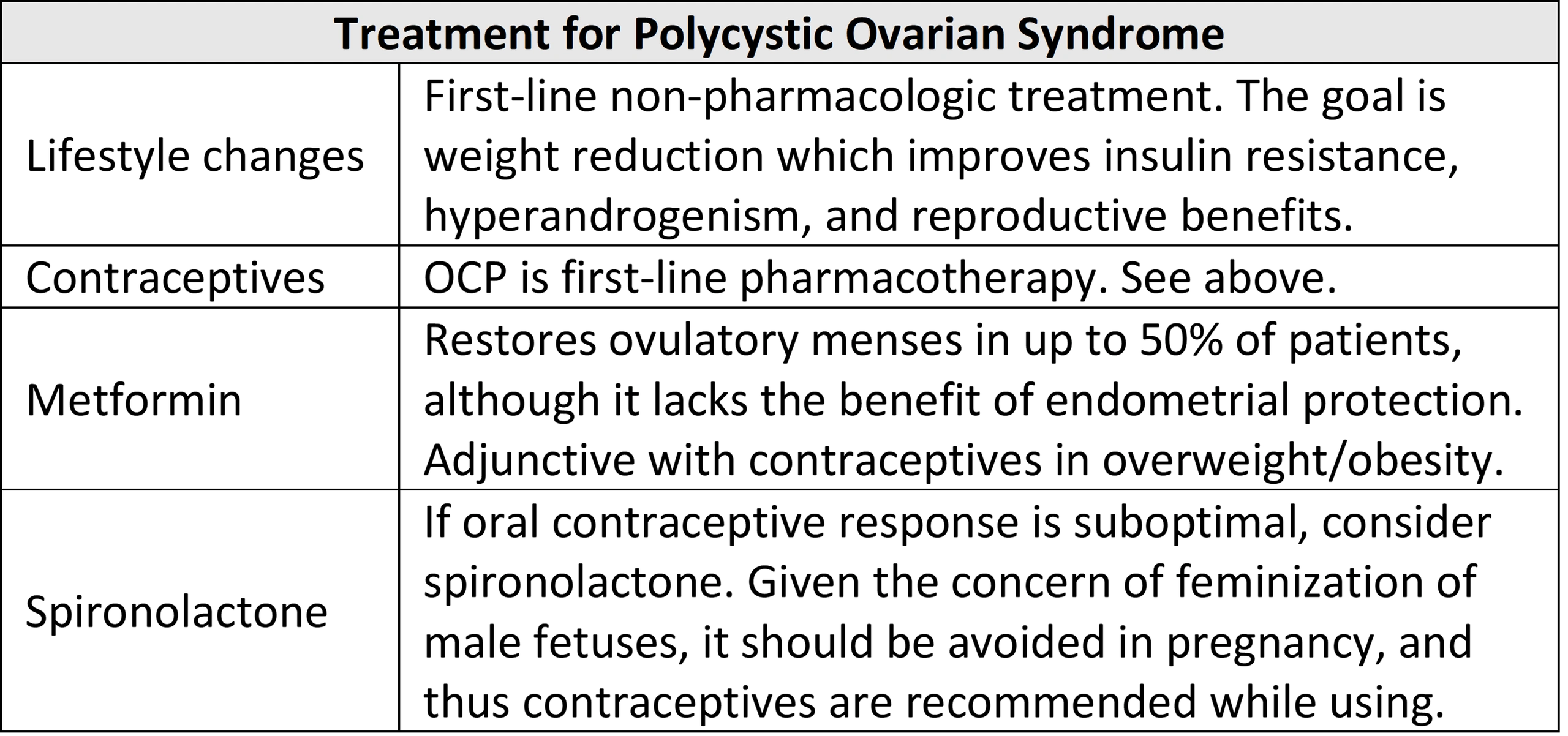
Other treatment options are summarized in the table below. Be ready and familiar with PCOS.
The ABOM is targeted toward those treating obesity and its manifestations, which include PCOS. Given the variability in presentation, with some patients presenting with milder findings, our knowledge as obesity medicine specialists can be vital in recognizing and initiating treatment. One study showed that one-third of patients with PCOS have a delayed diagnosis of 2 years, while nearly 50% saw 2 to 3 providers before a diagnosis was made. Given our role in obesity care, despite our underlying specialty, our ability to recognize symptoms and screen and treat appropriately can not only improve the quality of life for our patients but also reduce cardiovascular disease, thus increasing the quantity of life. The ABOM recognizes this vital role, and thus, you will likely be tested accordingly. Take the extra time to review this topic, as it will improve your board scores, but more importantly, your patients’ outcomes.
Sample Question
A 26-year-old woman was recently diagnosed with polycystic ovarian syndrome (PCOS) following a workup for abnormal menstrual cycles. She has noted worsening hirsutism which is bothersome. She is sexually active and uses barrier protection intermittently. A recent pregnancy test and oral glucose tolerance test were negative. She is interested in treatment for PCOS. Which treatment is most appropriate?
A. Oral contraception
B. Metformin
C. Spironolactone
D. Intrauterine device
E. Clomiphene
Next Week: Telogen effluvium
Upcoming: Intensity of exercise/METS and Knowledge Check
For more practice questions, check out the following:
- Obesity Medicine Board Review Questions (2026): Qs 123, 130, 154, 186, 202, and 227.
- Obesity Medicine Practice Tests (2026): Qs 62, 140, 203, and 298.
(Copyright 2026) Obesity Medicine Board Review Questions, LLC: obesitymedicinereview.com
Featured image: Modified from VectorStock (image license purchased)
Copyediting by Kelly Smith
Now available: A full line of ABOM study resources with 775+ challenging questions in a mobile or book format. Access to both formats is available in a discounted Ultimate Package, which also includes a Pass Guarantee (if you fail the exam in 2026, you get the 2027 edition free), 50 bonus questions released in August, and the newest book, Obesity Medicine: Sample Questions and Study Blogs, which includes all the updated previous study blogs in a paperback format. Check it out here!
