
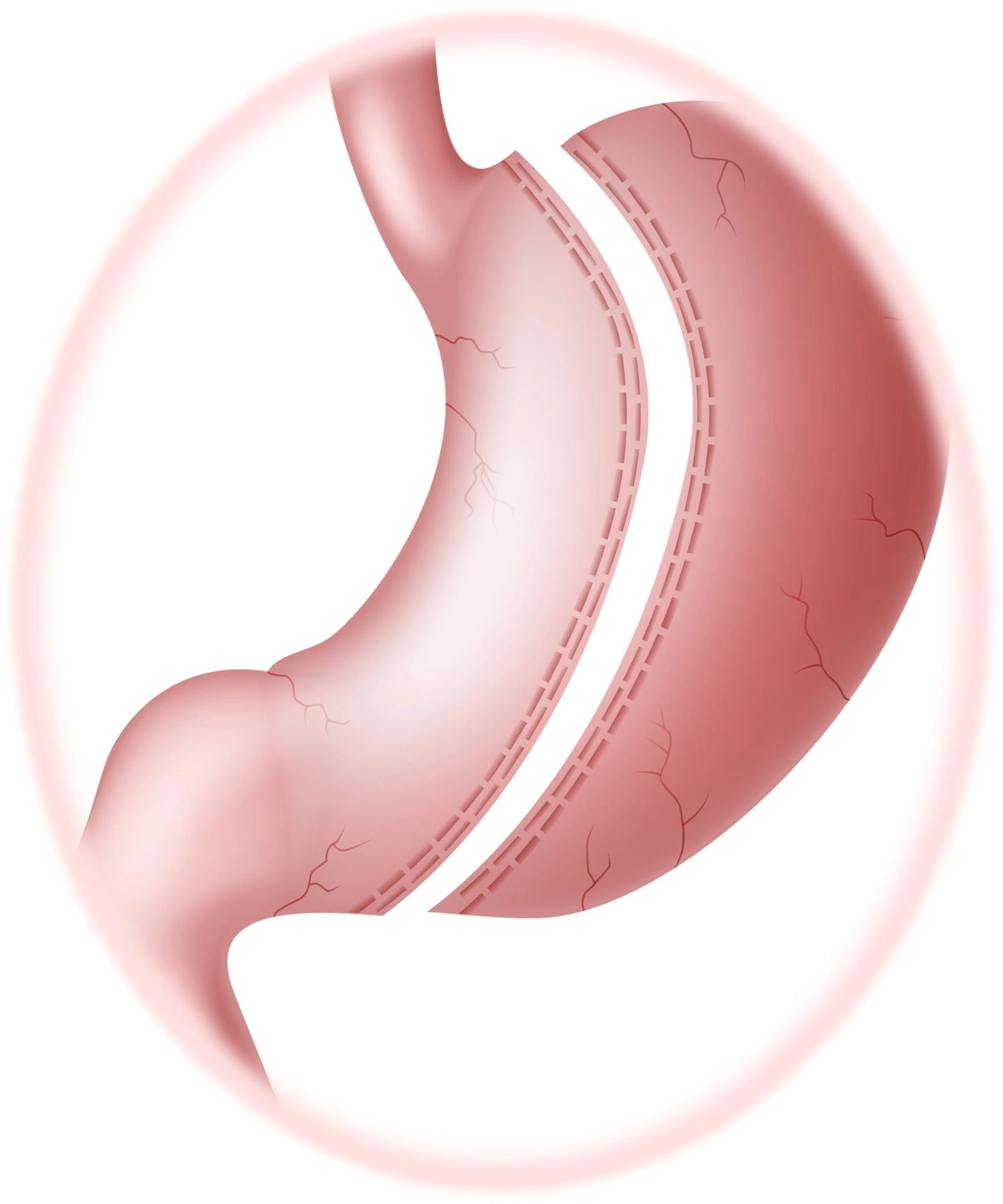
Obesity medicine specialists will often talk with patients about different metabolic and bariatric surgery (MBS) options – the benefits, contraindications, and risks. Although not required to explain in the same detail as a surgeon, it is important to be able to confidently provide patients with the necessary information to make an informed decision. This is especially true of the most commonly performed metabolic and bariatric surgery: vertical sleeve gastrectomy (VSG).
Initially, the VSG was planned to become a bridge procedure. For those patients not medically optimized enough to undergo a Roux-en-Y gastric bypass, a VSG would allow sufficient weight loss to undergo a “higher-risk” procedure. As we know, this did not become the standard; rather, it became the most performed stand-alone MBS in the world. So, what is the appeal of this procedure? Likely multifactorial, but I often hear patients stating they want the surgery with less risk, fewer surgical reconnections, and minimal absorption issues.
Note: The overall risk of mortality from MBS is very low- similar to that of cholecystectomy. There is a stigma about the risk of gastric bypass, most often from physicians and patients who have seen adverse events prior to the initiation of laparoscopic surgeries and incorporation of MBSAQIP standards.
The procedure itself is relatively simple, at least from an internist’s standpoint, in describing this procedure to prospective patients. Laparoscopically, up to 80% of the gastric body and fundus is removed, leaving a stomach ‘sleeve’. Although this reduces the amount of intake a patient can consume, more importantly, this reduces the amount of ghrelin (the hunger hormone) secreted from the now-removed gastric fundus. This leads to a significantly decreased appetite via decreased activation of the NPY/AgRP orexigenic pathway. There is also an increase in GLP-1, although not to the level as seen in a Roux-en-Y gastric bypass.
Characteristics of this procedure are discussed below:
- Contraindications: In addition to other general contraindications of MBS (psychosis, substance/alcohol use, pregnancy, etc.), the biggest complaint after a gastric sleeve surgery is the increased prevalence of acid reflux, seen in anywhere from 10-30% of those after surgery. So, alternative options may be indicated for those already having uncontrolled GERD. Similarly, individuals with Barrett’s esophagus or a hiatal hernia should avoid this procedure, as the narrow remnant of the stomach can slide more easily past the diaphragm.
- Absorption: Fortunately, without re-routing the gastrointestinal anatomy as in a Roux-en-Y, the absorption of medications and nutrients is generally not affected. However, it is essential to remember that vitamin B12 deficiency can occur after a sleeve gastrectomy because intrinsic factor production is reduced. Intrinsic factor is produced by gastric parietal cells, which are significantly decreased due to resection of the gastric fundus and body in a VSG.
- Prevalence: VSG has become the most common MBS performed (doubling), accounting for nearly 60% of MBS today.
- Pediatrics: This procedure is highly effective for pediatric patients and is often considered the preferred surgery, as it does not affect absorption later in life, but provides similar efficacy as seen in Roux-en-Y in this population.
Although a VSG is slightly less effective for adults compared to a Roux-en-Y gastric bypass (25-30% vs. 30-35%), this surgical option remains popular, effective, and offers significant metabolic benefits.
Sample Question:
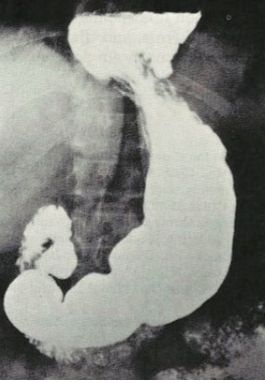
A 45-year-old man with a past medical history of acid reflux, class III obesity, hypertension, and osteoarthritis presents for metabolic and bariatric surgery evaluation. Medications include a twice-daily proton pump inhibitor, and he admits that he regularly still has gastroesophageal symptoms. A barium swallow evaluation is performed, as shown. If bariatric surgery is pursued, which of the following should be recommended?
A. Sleeve gastrectomy
B. Biliopancreatic diversion with a duodenal switch
C. Adjustable gastric banding
D. Intra-gastric balloon
E. Roux-en-Y gastric bypass
Next Week: Dietary changes and their effect on the lipid panel
The Following Week: Monthly Knowledge Check.
For more practice questions, check out the following:
- Obesity Medicine Board Review Questions (2026): Qs 14, 165, 188, 210, and 313.
- Obesity Medicine Practice Tests (2026): Qs 67, 201, 223, 325, 431, and 432.
(Copyright 2026) Obesity Medicine Board Review Questions, LLC: obesitymedicinereview.com
Featured image: Modified from VectorStock (image license purchased)
Copyediting by Kelly Smith
Now available: A full line of ABOM study resources with 775+ challenging questions in a mobile or book format. Access to both formats is available in a discounted Ultimate Package, which also includes a Pass Guarantee (if you fail the exam in 2026, you get the 2027 edition free), 50 bonus questions released in August, and the newest book, Obesity Medicine: Sample Questions and Study Blogs, which includes all the updated previous study blogs in a paperback format. Check it out here!
