

The popularity of fad diets and the numerous dietary patterns available can make finding the right plan difficult. How is a patient supposed to know which is best for them? By the time many patients seek help from obesity medicine specialists, they have already trialed many plans and experienced barriers and failures. Understanding why these dietary plans have failed can help develop new goals and strategies for successful weight loss. Customizing a plan for each patient based on preferences, sustainability, and comorbidities is the best approach.
The American College of Cardiology recommends a consistent caloric deficit of 500 kcal/day to improve the odds of weight loss. Long-term studies have shown that sustainability, not macronutrient intake, is one of the most substantial players in weight loss. In other words, a Mediterranean diet is the most practical option if a patient enjoys fish, wine, and olive oil. In contrast, a keto diet should be avoided if a patient cannot sustain this plan for longer than 3 months or has a contraindication such as the risk of ketoacidosis if taking a concurrent SGLT-2 inhibitor. Another factor is the importance of comorbidities. A patient with a prior history of coronary artery disease may benefit from an anti-inflammatory diet, whereas patients with diabetes benefit from education on a low-carbohydrate diet. Importantly, although heavily promoted, a DASH diet (Dietary Approach to Stop Hypertension) improves blood pressure via decreased sodium intake but has little effect on weight loss in the absence of a caloric deficit.
For the ABOM exam, remember that specific dietary plans (I am explicitly avoiding the term diet given its negative connotation) are helpful with specific comorbidities. Many of these are discussed in the table below.

Regarding boards, understand caloric/macronutrient components, meal replacements, very low-calorie diets, and the effects of diet on comorbid conditions (discussed above). A caloric-deficient diet is one in which energy expenditure exceeds caloric intake by about 500 kcal per day. For women, this range typically falls between 1200-1500 kcal/day, and for men, between 1500- 1800 kcal/day. Anything under 800 kcal/day is considered a very low-calorie diet (VLCD), which increases the risk of nutritional deficiencies, gallstones (unless adequate fat intake is preserved), and gout attacks and requires more frequent monitoring.
Meal replacements are commonly utilized as they provide significant protein intake, which reduces ghrelin and subsequent hunger, while having minimal caloric intake. Many standard options include 30 grams of protein, with less than 200 kcal per shake; they are commonly used to replace up to two meals per day when desiring weight loss and one daily if maintaining weight loss. One of the significant advantages includes convenience. Someone who often goes out to eat for convenience may find meal replacements as a viable option. In addition, frequent travelers may benefit from this resource, as alternatives like fast food are not conducive to weight-loss goals.
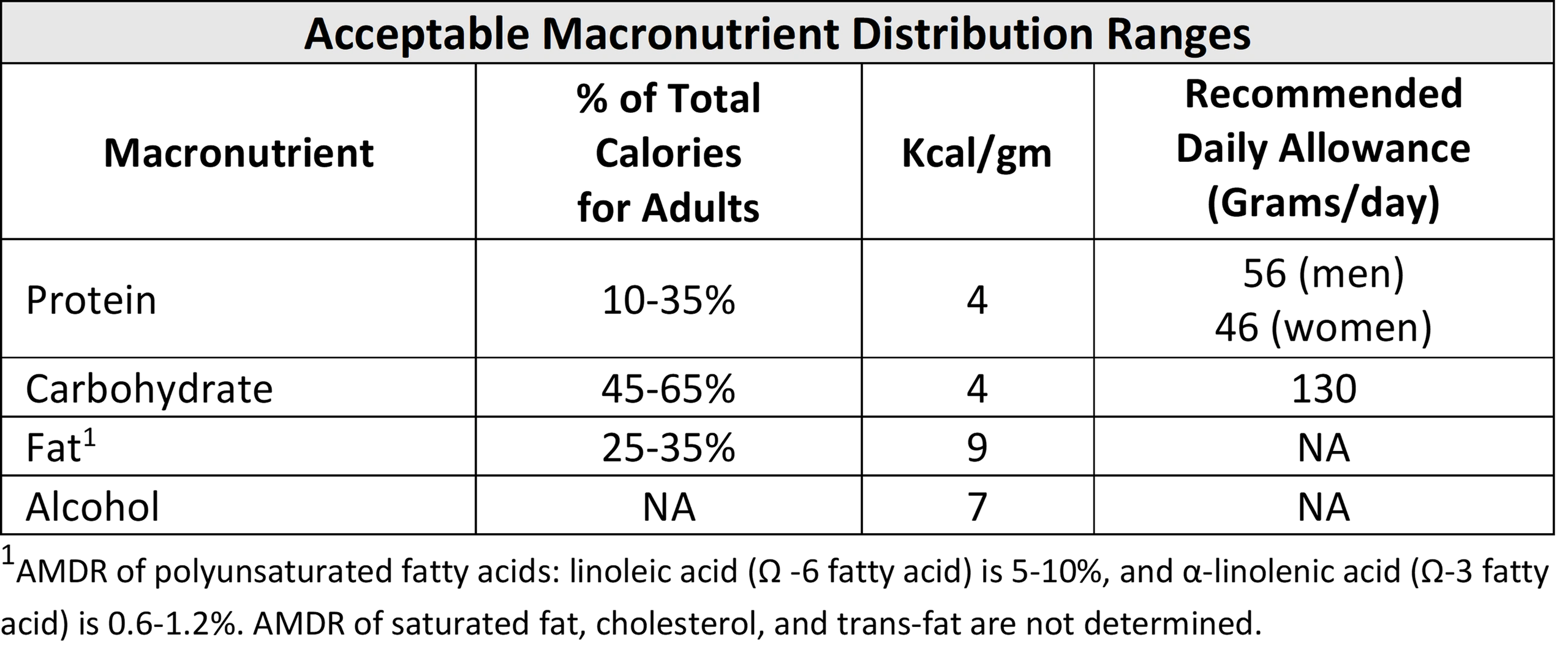
As for macronutrients, the bar is set low. Intaking less than 45% of calories from carbohydrates based on acceptable macronutrient distribution ranges set by the United States Department of Agriculture is considered a low-carbohydrate diet. These macronutrient ranges are shown below.
Note: For more information on macronutrient effects on the lipid panel, click here.
In summary, the dietary plan must be customized based on patient preference and comorbidities and knowledge of the benefits of each dietary plan. In addition, some patients have issues with significant cost, inconvenience, or the lack of long-term sustainability with some plans, which must be considered when discussing caloric restriction with patients.
Finally, the benefits of meal replacements and the definitions of caloric deficit (and very-low-calorie deficit) must be committed to memory, along with the acceptable macronutrient distribution ranges.
Sample Question:
A 48-year-old woman with obesity presents for a follow-up appointment regarding increased liver enzymes. She recently completed a right upper quadrant ultrasound that revealed fatty liver infiltration. She denies any significant alcohol use. Which of the following dietary plans would be most appropriate to recommend to her at this time?
A. Mediterranean-style
B. DASH diet
C. Low glycemic index
D. Low-fat
E. High protein
Next Week: Monthly Knowledge Check. This is a review checklist of must-know items for ABOM exams based on the previous four blog topics (Wegovy® (semaglutide), Obesity Paradox/Myths, Epigenetics, and Dietary plans (Mediterranean/DASH, etc.)). In addition, this will include a brief explanation of the correct answers to previous sample questions.
Upcoming: Hypothalamic obesity, gastric balloons, setmelanotide, and VO2 max
For more practice questions, check out the following:
- Obesity Medicine Board Review Questions (2026): Qs 3, 209, and 217.
- Obesity Medicine Practice Tests (2026): Qs 83, 100, 192, 314, and 427.
(Copyright 2026) Obesity Medicine Board Review Questions, LLC: obesitymedicinereview.com
Featured image: Modified from VectorStock (image license purchased)
Copyediting by Kelly Smith
Now available: A full line of ABOM study resources with 775+ challenging questions in a mobile or book format. Access to both formats is available in a discounted Ultimate Package, which also includes a Pass Guarantee (if you fail the exam in 2026, you get the 2027 edition free), 50 bonus questions released in August, and the newest book, Obesity Medicine: Sample Questions and Study Blogs, which includes all the updated previous study blogs in a paperback format. Check it out here!
