
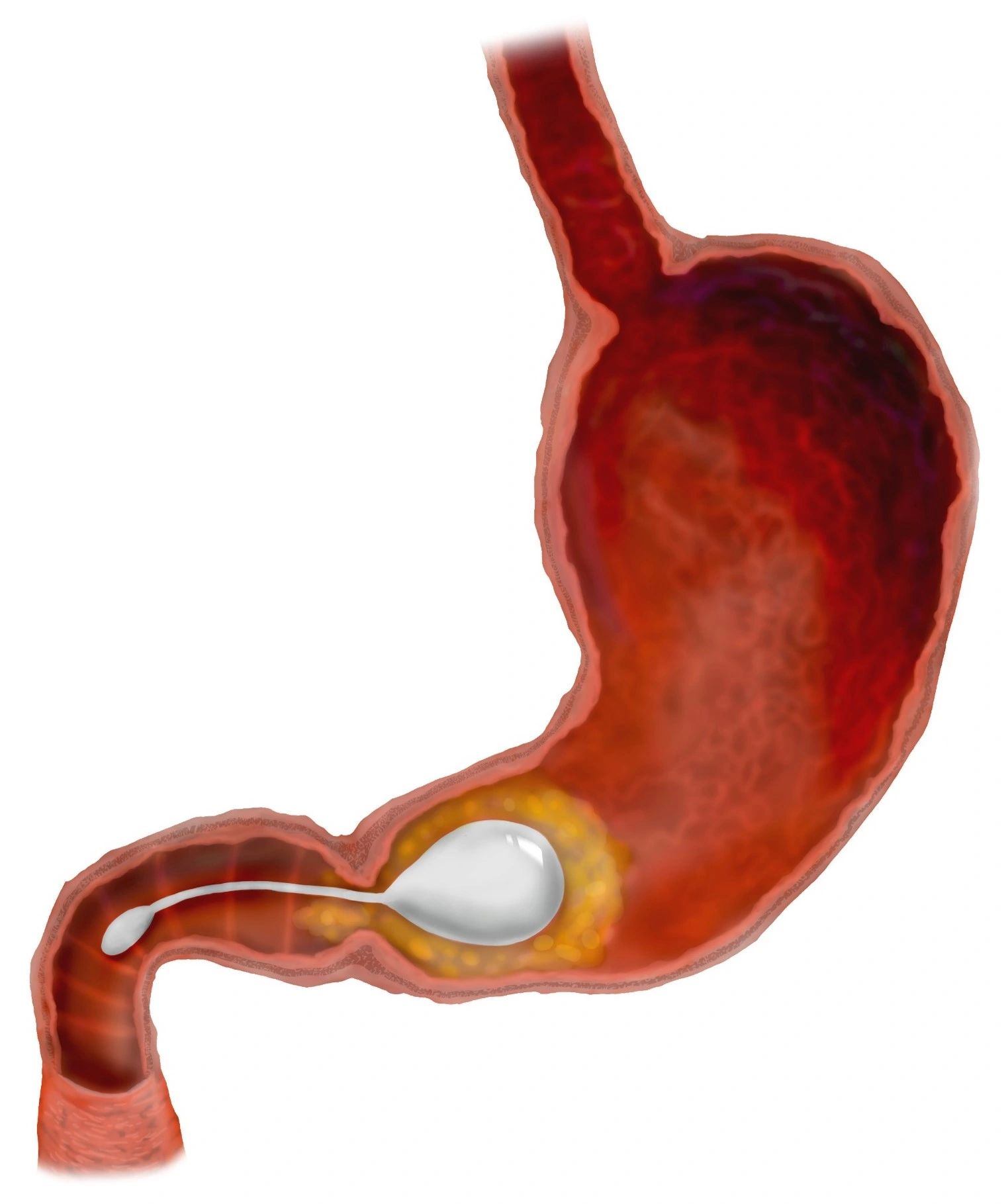
One of the most fascinating FDA-approved medical devices used for weight loss is the TransPyloric shuttle (TPS®). The TPS® is an endoscopically deployed device containing two bulbs. The larger smooth bulb of the TPS® sits in the stomach, while the small bulb is free to move into the proximal duodenum with peristalsis. This results in slowed gastric transit of food content and increased satiety, ultimately leading to less caloric intake per meal.
Given the uniqueness of the TPS® and limited indications, it would likely be found in more specialized weight loss centers, with the goal of transient weight loss (12 months or less). This could make sense for a high-risk patient or a patient with a significantly elevated BMI who is trying to pursue a more definitive metabolic and bariatric surgery (MBS). However, as noted below, it is limited to those with a BMI of less than 40 kg/m², which is lower than the current BMI parameters for MBS.
So, who may this be helpful for? It is hard to find a scenario where temporarily treating a chronic disease like obesity would be preferred. Potentially in someone who has contraindications to anti-obesity pharmacotherapy and is limited in physical activity, such as someone needing a total knee replacement (TKA), and an orthopedic surgeon requires some pre-operative weight loss. Then, after a TKA, the patient may be able to maintain weight loss with increased physical activity. However, this is a very niche market to target, which is why it lacks wide availability.
Regardless, the ABOM will not require you to ponder the perfect scenario to use this device, but will want you to be familiar with some basic information about this device, as summarized below:
- Indications: Adults with a BMI of 30 to 34.9 kg/m² (class I obesity) with ≥1 obesity comorbidity or a BMI of 35.0 to 40.0 kg/m² (class II obesity), in conjunction with lifestyle modifications. Importantly, these are ranges of BMI that it is approved in, not minimum BMI requirements. Therefore, it is not currently approved for anyone with class III obesity.
- Contraindications: Although a number are listed, the most likely to be tested are altered upper gastrointestinal anatomy such as a stricture or prior surgery, esophageal varices, erosions, ulcerations, untreated H. pylori infections, gastritis, pregnancy, and coagulopathy.
- Precautions: Given the risk of ulcers with this device, prophylactic proton pump inhibitors should be taken as long as the device is in place.
- Duration: The device must be removed after 12 months.
- Effectiveness: In trials, 66% (vs. 30% placebo) lost 5% of their weight, with an average of 9.3% total body weight loss (vs. 2.8% placebo).
Eventually, this device may get approved for class III obesity and, therefore, would be an excellent bridging tool for our higher BMI and higher-risk patients for MBS. That would definitely change this discussion. Until then, I will have to brainstorm reasons to refer patients for this procedure.
For more information on this device, click here.
Sample Question
A 63-year-old man presents to a metabolic and bariatric surgical clinic to discuss weight loss options. He has read about the TransPyloric Shuttle® and would like to know if he is a candidate for this device placement. Which of the following is a contraindication to this device?
A. History of colectomy due to colon cancer
B. Taking anticoagulation for atrial fibrillation
C. Treatment for H. Pylori within the past six months
D. Prior history of NSAID-induced gastric ulcer
Next Week: Obesity hypoventilation syndrome
Upcoming Topics: Monthly Knowledge Check (Subscribe!). This is a review checklist of must-know items for ABOM exams based on the previous four blog topics. In addition, this will include a brief explanation of the correct answers to previous sample questions.
For more practice questions, check out the following:
- Obesity Medicine Board Review Questions (2026): Q 278.
- Obesity Medicine Practice Tests (2026): Qs 118, 158, and 204.
(Copyright 2026) Obesity Medicine Board Review Questions, LLC: obesitymedicinereview.com
Featured image: Image custom-created by J. J. Giraldo Agudelo. Copyright owned by Kevin Smith.
Copyediting by Kelly Smith
