
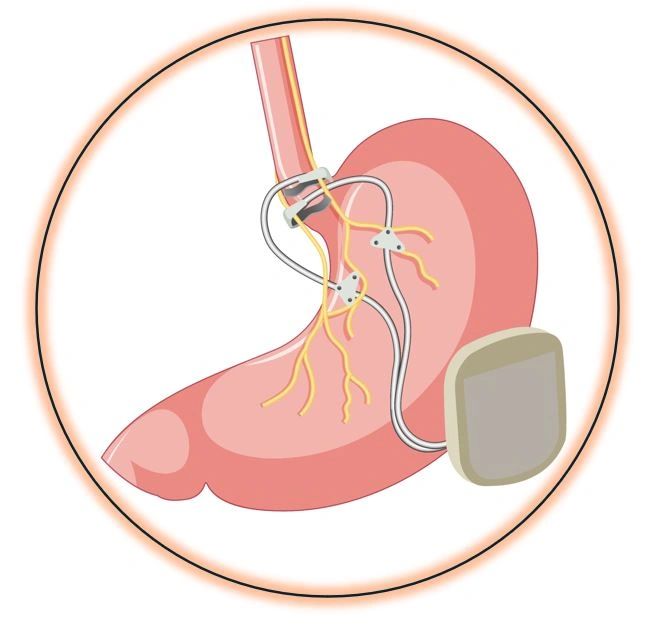
Welcome to the 2024 ABOM exam prep season! If you are new here, I post a weekly blog covering a variety of ABOM exam topics with a sample question. So, to get started, let’s discuss a novel device, the vagal nerve stimulator, which is marketed under the brand name vBloc®. This device’s efficaciousness is based on the pathophysiology of hunger mediated via ghrelin, which makes it high yield for boards.
Ghrelin is the hunger hormone produced in the fundus of the stomach that acts directly on the central orexigenic pathway as it crosses the blood-brain barrier. In addition, ghrelin also has an effect on the afferent branch of the vagus nerve. These afferent fibers have receptors that, when stimulated by ghrelin, mediate a signal from the stomach to the brain. Historically, when vagotomies were performed to treat recalcitrant peptic ulcer disease (prior to knowledge of H. pylori), a common byproduct was decreased hunger, which often led to weight loss due to the loss of this signaling pathway. With this physiology in mind, Maestro® created a vagal nerve stimulator that impedes/interrupts this pathway, leading to improved satiety, with decreased negative consequences.
Similar to how a spinal stimulator impedes electrical signals from nerves carrying pain signals to the brain, the vagal nerve stimulator produces electrical signals that impede daytime hunger signals. This laparoscopically placed device is composed of a superficially placed rechargeable neuroregulator with a battery outside of the ribs and two electrode leads attached to the anterior and posterior branches of the vagus nerve, which are tacked onto the stomach (see featured image). The battery pack can be recharged by placing a transmit coil over the skin near the implanted battery/regulator, which connects to a charger.
The cleverly named ReCharge Study showed those with the vBloc® device achieved an average of 9.8% total body weight loss at 12 months (vs. 6.7% in the blinded sham group). Both groups received lifestyle education, but no formal dietary or exercise plans were provided. However, over time, the sham group regained weight, dropping the total body weight loss average to less than 4%, whereas those with the device maintained approximately 9% total body weight loss at 18 months and 8% at 24 months.
- Indications: Age ≥18 years old with a BMI 40-45 kg/m² or 35-39.9 kg/m² with ≥1 obesity-related co-morbidity and having failed one supervised weight management program within the past 5 years. Importantly, the BMI criteria for this device are similar to the older metabolic and bariatric surgery (MBS) guidelines, which have since been updated.
- Contraindications: Cirrhosis, portal hypertension, esophageal varices, or uncorrected significant hiatal hernia, and anyone with an implanted electrical device (i.e., pacemaker, defibrillator, etc.). In addition, it is not MRI-compatible.
- Side effects: Pain at the neuroregulatory site of implantation (28%) and heartburn/dyspepsia (25%) are the most common. Although nausea was reported in 6% of cases, it was mild and did not lead to significant vomiting. Other side effects include belching (9%), dysphagia (8%), abdominal cramps (6%), and constipation (6%).
This long-term weight management device seems to provide sustained, clinically meaningful weight loss in a manner that makes physiological sense. Its lack of anatomical gastrointestinal changes may make it more attractive to those who prefer a less invasive surgical option, albeit less effective. The most significant limitation is its MRI incompatibility. Over time and with further studies, I would expect the BMI indications to decrease and mimic the current MBS recommendations.
For the ABOM exam, I would focus on the high-yield information provided in this blog. You will be expected to have a general knowledge of all surgical/procedural treatments for weight loss, especially those with a physiological tie-in, as this device does.
Sample Question
A 38-year-old woman is being evaluated for the placement of a vagal nerve blockade (vBloc®) device. Which of the following components in a medical history would be a contraindication to the placement of the device?
A. End-stage renal disease
B. Esophagitis
C. Spinal stimulator
D. Treated hepatitis C
E. Class III obesity
(Answer and explanation will be provided in an upcoming monthly Knowledge Check.)
Next Week: Copper/selenium deficiency
Upcoming: Pediatric hypertension and Fragile X syndrome
For more practice questions, check out the following:
- Obesity Medicine Board Review Questions (2026): Q 226.
- Obesity Medicine Practice Tests (2026): Qs 45 and 218.
(Copyright 2026) Obesity Medicine Board Review Questions, LLC: obesitymedicinereview.com
Featured image: Image custom-created by Charu G. Copyright owned by Kevin Smith, DO.
Copyediting by Kelly Smith
Now available: A full line of ABOM study resources with 775+ challenging questions in a mobile or book format. Access to both formats is available in a discounted Ultimate Package, which also includes a Pass Guarantee (if you fail the exam in 2026, you get the 2027 edition free), 50 bonus questions released in August, and the newest book, Obesity Medicine: Sample Questions and Study Blogs, which includes all the updated previous study blogs in a paperback format. Check it out here!
