

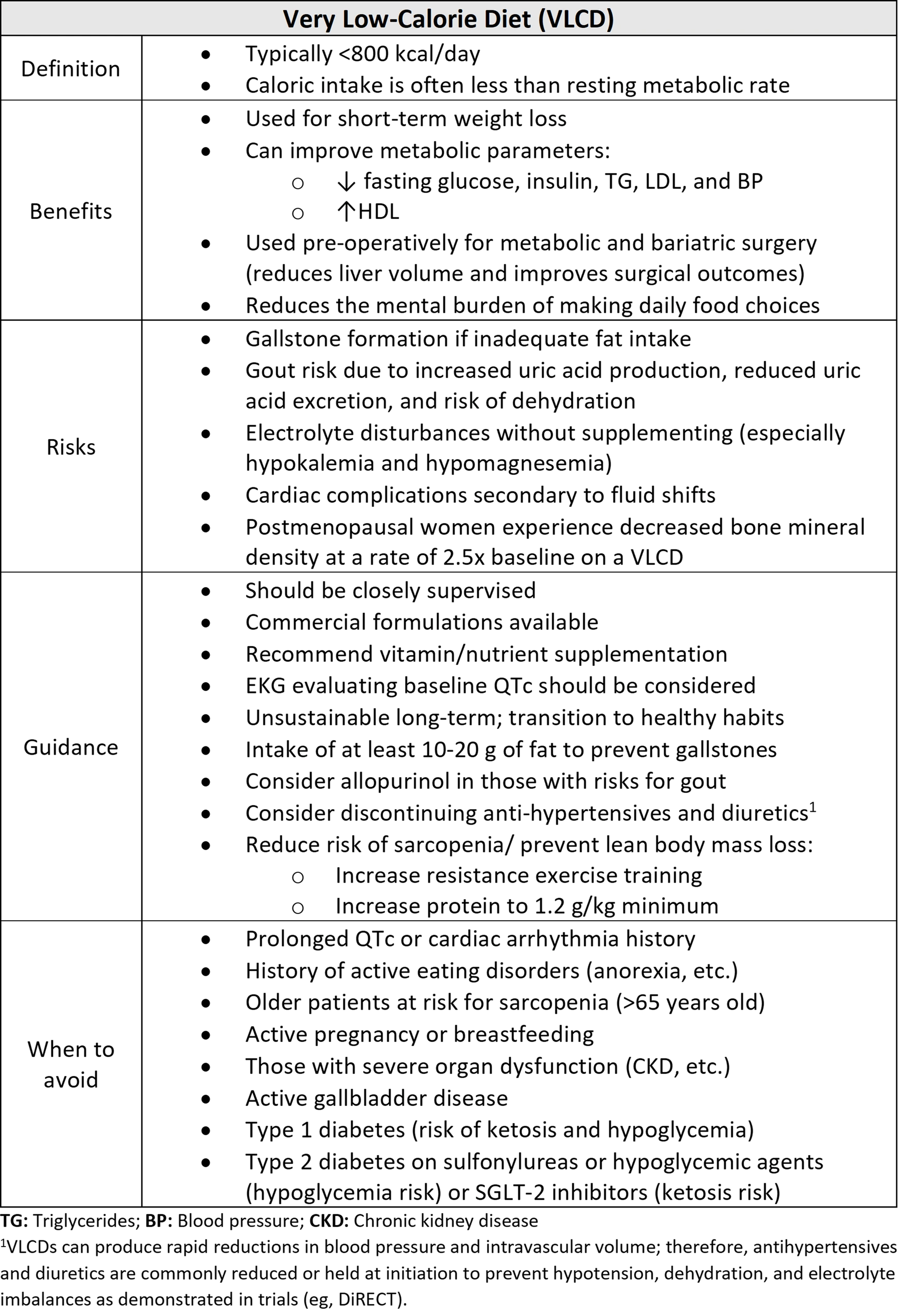
A very low-calorie diet (VLCD) is one in which caloric intake falls below the patient’s resting metabolic rate, meaning that even if the patient is completely sedentary, they remain in a caloric deficit. By definition, a VLCD typically provides fewer than 800 kcal/day. While this can lead to rapid weight loss, it also carries important risks. In this blog, we’ll review this dietary pattern and highlight key ABOM-relevant concepts.
VLCDs are often medically implemented to induce rapid weight loss in the weeks leading up to metabolic and bariatric surgery, primarily to reduce liver volume and thereby decrease intraoperative risk. In other fields like competitive weight-based sports such as wrestling or bodybuilding, similar dietary patterns may be adopted for short-term body composition changes.
Importantly, VLCDs have not been shown to produce superior long-term outcomes when compared to less extreme caloric-restriction diets. VLCDs are not sustainable long-term and are generally used for short durations, often fewer than 12 weeks. However, the more rapid weight loss associated with VLCDs may result in earlier metabolic benefits, which can be meaningful for patients with severe metabolic disease. In some cases, early weight loss may also serve as a motivator for further behavioral changes. Contrary to myths, the rate of weight loss (gradual vs. rapid) does not appear to influence long-term success; in other words, the faster you lose it, the higher risk of regaining it has not been proven.
Let’s look at some studies that support its utility. In one meta-analysis, 12-week variations of VLCDs, particularly very low-calorie ketogenic diets with carbohydrate restriction <10% (ideally <50 g/day), have demonstrated significant weight loss, improved glycemic control (lasting up to 6 months), and improved triglyceride and HDL levels (lasting up to 12 months). Longer-term use, particularly of the ketogenic variant, however, was associated with increased total cholesterol and LDL levels. Interestingly, dropout rates were lower than in other diet plans, likely due to early perceived results, which helped sustain motivation.
A 2020 study evaluated an 8–12 week VLCD in individuals with metabolic-associated steatohepatitis (MASH) and followed them for 9 months. Two-thirds achieved ≥10% weight loss at the end of the 12 weeks. However, following them for 9 months, they found:
- One-third maintained ≥10% loss
- 50% maintained ≥7%, and the rest maintained at least 5%
- Improvements in liver enzymes, liver stiffness, and quality of life were sustained
- Several patients reduced or discontinued diabetes medications
This suggests that, when properly followed and reintroduced with less restrictive eating and support, a short-term VLCD can lead to clinically meaningful, sustained improvements in high-risk patients.
Despite potential benefits, VLCDs are not without risk, especially without proper supervision. Key risks include:
- Loss of lean mass (muscle): Rapid weight loss often leads to skeletal muscle loss, particularly in the absence of adequate protein intake and resistance training. Those with greater body fat stores are somewhat protected early on, but muscle loss remains a concern, especially in older adults at risk for sarcopenia and postmenopausal women, who may also experience up to 2.5x greater bone mineral density loss compared to moderate caloric restriction.
- Electrolyte imbalances & cardiac risk: VLCDs are contraindicated in patients with a prolonged QT interval, as hypokalemia, hypomagnesemia, and fluid shifts can trigger life-threatening arrhythmias.
- Gout: Rapid weight loss increases uric acid turnover, which may precipitate gout flares.
- Gallstone formation: Inadequate dietary fat can increase the risk of cholelithiasis, particularly in those with existing gallbladder disease.
- Nutritional deficiencies: Although less of a concern when using commercial VLCD products under supervision, patients may self-administer a VLCD, which increases the risk of micronutrient deficiencies.
To mitigate these risks, a VLCD should be considered contraindicated in pregnant or breastfeeding women, patients with eating disorders (e.g., anorexia nervosa), which could induce regression and relapse, individuals with type 1 diabetes or type 2 diabetes using hypoglycemic agents, due to risk of hypoglycemia or ketosis, and patients with severe end-organ disease, frailty, or significant cardiac history. In addition, holding or discontinuing antihypertensive medications, particularly diuretics, during VLCD initiation helps prevent hypotension, reduces the risk of electrolyte abnormalities, and has been shown to be safe with appropriate monitoring.
To summarize, VLCDs can be clinically valuable in select high-metabolic risk populations when used short-term and with proper supervision, particularly when rapid metabolic improvement is needed. However, they come with well-documented risks and require thoughtful patient selection and follow-up.
Whether or not you utilize VLCDs in practice, you should expect them to show up in multiple ways on the ABOM exam. In particular, be prepared to recognize appropriate indications (e.g., pre-bariatric surgery liver volume reduction), common complications (e.g., gallstones, lean mass loss), contraindications and red flags (e.g., QT prolongation, sarcopenia risk, diabetes on insulin), typical micronutrient deficiencies that may arise, and situations where a patient may self-prescribe a VLCD without informing you until complications occur.
Sample Question
A 29-year-old man presents to his dietitian after starting a very low-calorie diet. He has done some research and determined that he would like to maintain less than 800 kcal/day and eliminate all fat from his diet. Currently, he is consuming 1300 kcal/day without significant weight loss. The dietitian discusses the importance of close monitoring and recommends adding some fat to his diet instead of eliminating it altogether. Without this recommendation, what possible complications could arise?
A. Gout flares
B. Cholelithiasis
C. Electrolyte derangements
D. Cold intolerance
Next Week: Adverse Childhood Events and Antibiotics (Risk Factors for Childhood Obesity)
Following Week: Underwater Weighing
Upcoming: Brown/Beige adiposity
For more practice questions, check out the following:
- Obesity Medicine Board Review Questions (2026): Qs 47 and 298.
- Obesity Medicine Practice Tests (2026): Qs 148, 186, 224, and 253.
(Copyright 2026) Obesity Medicine Board Review Questions, LLC: obesitymedicinereview.com
Featured image: Modified from VectorStock (image license purchased)
Copyediting by Kelly Smith
Now available: A full line of ABOM study resources with 775+ challenging questions in a mobile or book format. Access to both formats is available in a discounted Ultimate Package, which also includes a Pass Guarantee (if you fail the exam in 2026, you get the 2027 edition free), 50 bonus questions released in August, and the newest book, Obesity Medicine: Sample Questions and Study Blogs, which includes all the updated previous study blogs in a paperback format. Check it out here!
