

Women have sex specific hormonal differences that are important to note in obesity medicine. When compared to men, women have a higher prevalence of obesity. This causes a trickle-down effect where women face higher costs in healthcare, experience more weight bias, and more frequent internal stigmatization. Women are at risk for weight gain during each life stage, such as adolescence, early adulthood, preconception, pregnancy, postpartum, mid-life, and older adulthood. This blog provides a brief overview of some of the key life stages within obesity medicine.
Menstrual Cycle
Menstrual irregularities can be a common occurrence in women with obesity. This disruption to the hypothalamic-pituitary-ovarian axis is partly caused by an increase in aromatase activity in adipose tissue, which converts androgens into estrogens, thereby increasing circulating estrogen levels and altering the estrogen-to-progesterone ratio. This increase in adipose hormonal activity has also been associated with earlier onset of puberty, chronic anovulation, and more severe vasomotor symptoms in perimenopause. It is important to note that prolonged lifetime exposure to elevated estrogen leads to increased endometrial proliferation and risk of endometrial and breast cancer.
Fertility
As mentioned above, disruption of the hypothalamic-pituitary-ovarian axis causes menstrual irregularities, impairing ovulation and fertility. This leads to higher rates of infertility and miscarriage among women with obesity. Lifestyle modifications, anti-obesity medications, and metabolic and bariatric surgery (MBS) all enhance hormonal regulation and improve menstrual regularity.
However, it is vitally important to know that all weight management medications are contraindicated during pregnancy. Tirzepatide and topiramate are associated with direct fetal harm. Long-acting GLP-1 receptor agonists are associated with an increased risk of small-for-gestational-age infants. Manufacturers recommend discontinuing GLP-1s, such as semaglutide, 2 months prior to conception due to a long ‘wash-out’ period. Manufacturers in the U.S. for tirzepatide and topiramate do not give a specific time to discontinue prior to conception, but note the risk of severe fetal harm. Lastly, conception soon after MBS can increase the risk of vitamin deficiencies and obstetric complications. Conception should be delayed for 12 to 18 months after surgery.
Pregnancy and Breastfeeding
Obesity is the most common medical issue women face in pregnancy. Prepregnancy obesity or excessive pregnancy weight gain can lead to several complications, such as gestational diabetes, preeclampsia, thromboembolism, induction failure, cesarean birth, and postpartum infections, bleeding, and depression. A detailed table about the recommended weight gain during pregnancy can be found here. These complications can also cause fetal harm and increase the risk of obesity during childhood.
Breastfeeding has been shown to help mitigate health risks and provide protective benefits to both the mother and baby. This includes reducing the risk of obesity in childhood, enhancing infant immunity, and decreasing the risk of type 2 diabetes, cardiovascular disease, and certain cancers in the mother. However, women with obesity have lower success rates with breastfeeding. It is estimated that 82% of women with obesity initiate breastfeeding, and nearly half (44%) continue to do so for 6 months. Difficult deliveries, complications, cesareans, positioning difficulty, and negative body image, along with increased stigmatization and provider implicit bias, can create barriers to support breastfeeding longevity.
Menopause
Menopause is another common life stage that is influenced by pre-obesity and obesity. During this time, estrogen levels decline, which causes a decrease in leptin and an increase in ghrelin and neuropeptide Y. This leads to changes in body composition, including increased fat mass, abdominal adiposity, and loss of fat-free mass. A decrease in moderate and vigorous cardiovascular activity, as well as dietary changes, can also exacerbate body composition changes. These changes increase the overall health risks for women.
Cardiovascular disease risk is 2-4 times higher for women during menopause alone. Other health risks to all women during menopause include elevated blood pressure and LDL levels, weight gain, central adiposity, and loss of lean muscle mass. An increased BMI and central adiposity increase mortality, breast cancer, and coronary artery disease. Women with obesity are at an even higher risk during menopause.
As discussed, women are disproportionately affected by obesity and have higher rates of class III obesity compared to their male counterparts. Women face specific challenges related to each life stage, with excess weight increasing the risk for fat mass disease and adiposopathy. For the ABOM exam and in practice, be able to identify women at risk for developing obesity and the corresponding comorbidities. Women at any life stage and all BMIs will benefit from mitigating health risks associated with obesity.
Sample Question
A 53-year-old woman presents to discuss treatment options for hot flashes and night sweats that have developed since she went through menopause 3 years ago. She reports one episode of vaginal bleeding 2 months ago but has otherwise had no menstrual cycles since menopause. She denies pelvic pain. Her BMI is 39 kg/m². She is otherwise healthy, takes no medications, and has no family history of gynecologic cancers. She is interested in symptom management and asks about options such as hormone therapy. Which of the following is the most appropriate next step in management?
A. Begin hormone replacement therapy
B. Start paroxetine therapy
C. Order a transvaginal ultrasound
D. Recommend weight loss for symptom control
E. Prescribe clonidine for vasomotor symptoms
Blog co-written with Kelly Smith, BSN
Next Week: Knowledge Check
Following Week: BONUS! Final Tips and Tricks (updated)
Upcoming Week: BONUS! I took the Exam…. NOW WHAT?? By Carolynn Francavilla, MD, FOMA, ABOM
For more practice questions, check out the following:
- Obesity Medicine Board Review Questions (2026)
- Obesity Medicine Practice Tests (2026)
(Copyright 2026) Obesity Medicine Board Review Questions, LLC: obesitymedicinereview.com
Featured image: Modified from VectorStock (image license purchased)
Copyediting by Kelly Smith
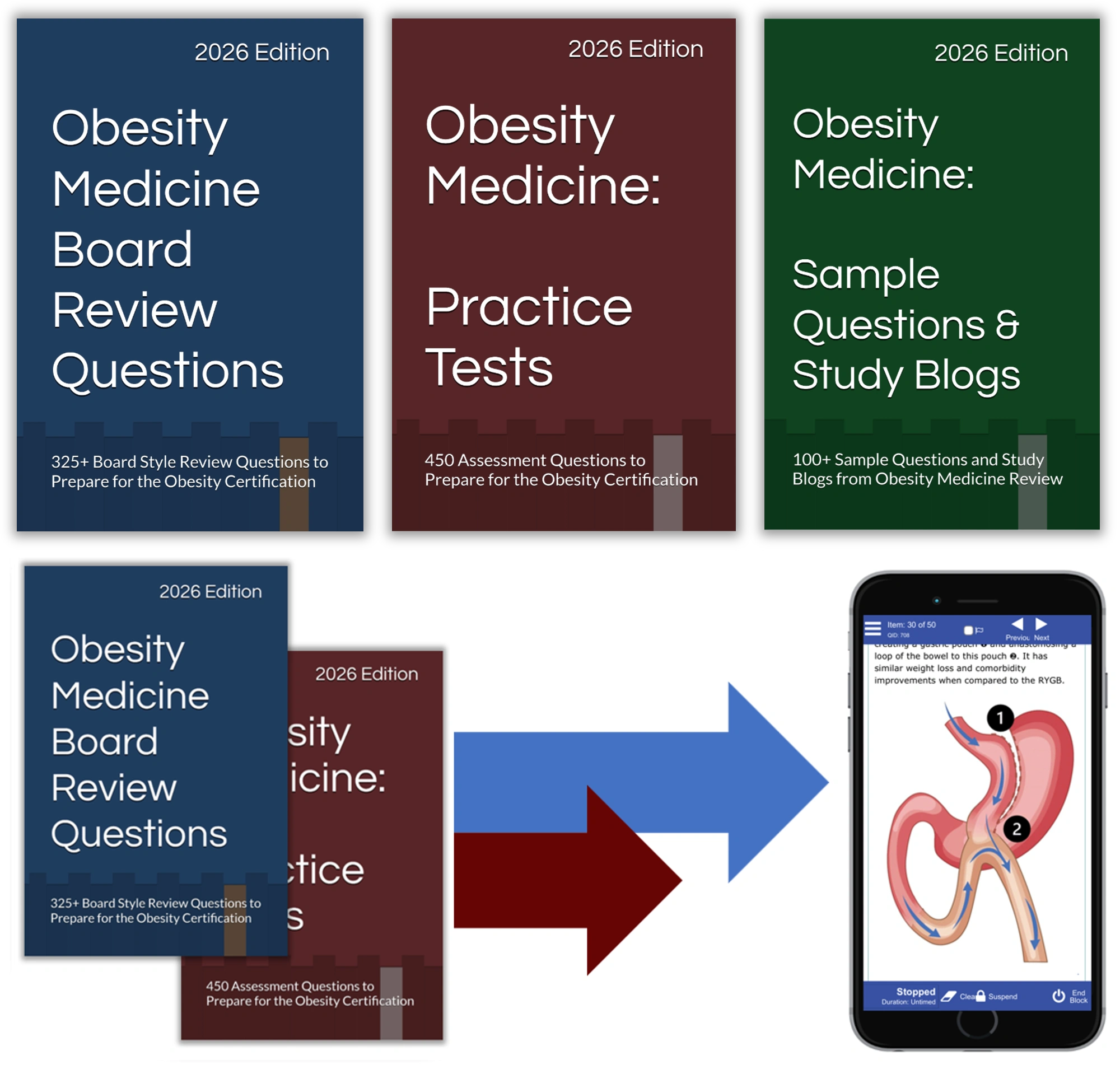
Now available: A full line of ABOM study resources with 775+ challenging questions in a mobile or book format. Access to both formats is available in a discounted Ultimate Package, which also includes a Pass Guarantee (if you fail the exam in 2026, you get the 2027 edition free), 50 bonus questions released in August, and the newest book, Obesity Medicine: Sample Questions and Study Blogs, which includes all the updated previous study blogs in a paperback format. Check it out here!
