
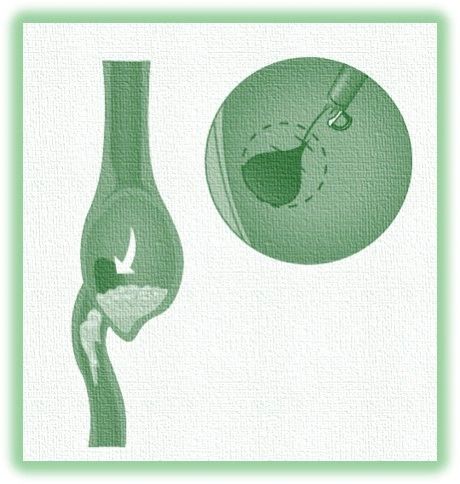
Endoscopic interventions continue to expand within the field of obesity treatment, offering both primary and secondary therapeutic options. Prior to the development of transoral outlet reduction (TORe), the only way to address recalcitrant dumping syndrome or weight regain due to loss of restriction following Roux-en-Y gastric bypass (RYGB) was through surgical revision. Introduced in 2013, TORe provides an alternative, less invasive, endoscopic approach for patients who have previously undergone RYGB. In this blog, we will review what TORe is, its indications, and its potential benefits.
The RYGB has long-term weight loss durability, but still nearly one-third of patients will have excessive weight regain years following metabolic and bariatric surgery. There are numerous factors that contribute to this weight regain, which requires a multidisciplinary approach. Among these, one of the strongest predictors of weight regain due to anatomical issues is dilation of the gastrojejunal anastomosis to greater than 3 cm.
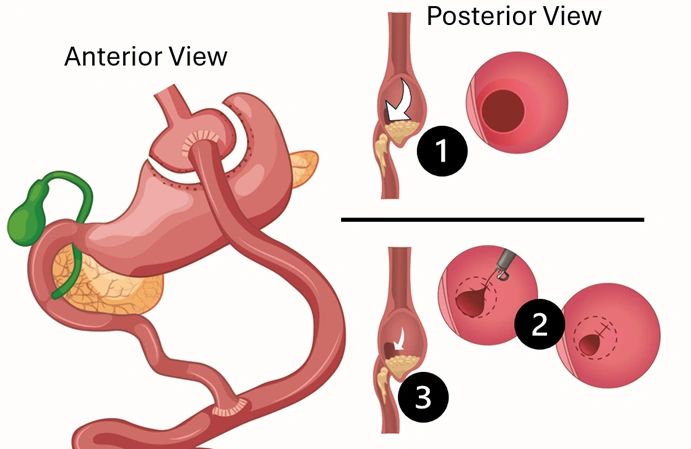
The outpatient TORe procedure was specifically developed to address weight regain due to anastomotic dilation ❶, a common late complication after RYGB. This minimally invasive endoscopic procedure involves full-thickness overstitching the anastomosis ❷, thereby reducing its diameter and restoring restriction ❸, as illustrated below.
Following the TORe procedure, the majority of patients (77%) experienced cessation of weight regain, with 66% maintaining an average total body weight loss of at least 5% at five years post-procedure, with numerous studies showing greater than 12%. Notably, the greater the reduction in the diameter of the gastrojejunal anastomosis, the more pronounced the weight loss observed. Importantly, no serious adverse events were reported in these studies; however, bleeding from marginal ulceration and stenosis requiring balloon dilation are potential complications that have been reported elsewhere. Fortunately, both complications can typically be managed endoscopically, and surgical intervention is rarely required. No deaths have been reported.
In addition to its benefits for weight management, dumping syndrome is another important indication for considering TORe. Dumping syndrome occurs due to rapid gastric emptying, particularly after the ingestion of simple sugars, leading initially to hyperglycemia followed by an exaggerated insulin response, resulting in reactive hypoglycemia. Patients may experience a constellation of gastrointestinal and vasomotor symptoms, including tachycardia, flushing, diaphoresis, and others.
Initial management of dumping syndrome focuses on dietary modifications, emphasizing increased protein intake, consumption of complex carbohydrates, and limiting simple sugars. Pharmacologic interventions may be considered if symptoms persist. Historically, in cases of severe, refractory dumping syndrome, reversal of the RYGB was contemplated, although is technically challenging.
However, recent studies have evaluated the role of TORe in treating refractory dumping syndrome. By reducing the size of the gastrojejunal anastomosis and thereby slowing gastric emptying, TORe was associated with a 90% resolution rate of dumping syndrome at three months post-procedure.
A loss of postprandial restriction may be an early indication to evaluate the appropriateness of TORe, along with excessive weight regain. In patients with significant weight regain after RYGB, and in the absence of other secondary causes, anatomical factors should be assessed in collaboration with the surgical team. As obesity specialists, it is important to recognize these patients, some of whom may have fallen out of regular follow-up with their metabolic and bariatric surgery programs.
While the depth of knowledge required on this topic for the ABOM exam will likely not be extensive, understanding which patients may benefit from TORe and being familiar with it as a treatment modality is well within the expected scope of testing. Given that TORe has been available for over a decade, it is no longer considered a novel procedure; however, insurance coverage, similar to many endoscopic treatments for obesity, remains one of the biggest barriers to access. With five-year data supporting sustained improvements in both dumping syndrome and weight regain, TORe should be recognized as a valuable tool in the arsenal for managing specific post-RYGB patients.
Sample Question
A 53-year-old man who underwent Roux-en-Y gastric bypass 11 years ago presents with progressive weight regain over the past 2 years. He now notices reduced restriction during meals and difficulty controlling portion sizes. His BMI has increased from 26 kg/m² to 32 kg/m². Medical history includes hypertension, hyperlipidemia, and poorly controlled atrial fibrillation on anticoagulation therapy. Which of the following is the most effective treatment option for this patient?
A. Ingestible space-occupying device
B. Intragastric balloon
C. Surgical revision
D. Transoral outlet reduction
E. Phentermine
Take it one step further: Which of these options are contraindicated in this patient?
Next Week: Wilson-Turner Syndrome
Following Week: Monthly Knowledge Check. This is a review checklist of must-know items for ABOM exams based on the previous four blog topics (Cushing’s Syndrome, Wilson-Turner Syndrome, Transoral Reduction Outlet Procedure, Obesity and Cancer). In addition, this will include a brief explanation of the correct answers to previous sample questions.
Upcoming: Very-low-calorie diet, Adverse Childhood Events and Antibiotics, Underwater Weighing, and Brown/Beige adiposity
For more practice questions, check out the following:
- Obesity Medicine Board Review Questions (2026): Q 228.
- Obesity Medicine Practice Tests (2026)
(Copyright 2026) Obesity Medicine Board Review Questions, LLC: obesitymedicinereview.com
Featured image and TORe image: Images custom-created by Charu G. Copyright owned by Kevin Smith, DO.
Copyediting by Kelly Smith
Now available: A full line of ABOM study resources with 775+ challenging questions in a mobile or book format. Access to both formats is available in a discounted Ultimate Package, which also includes a Pass Guarantee (if you fail the exam in 2026, you get the 2027 edition free), 50 bonus questions released in August, and the newest book, Obesity Medicine: Sample Questions and Study Blogs, which includes all the updated previous study blogs in a paperback format. Check it out here!
