

Last year, I posted a blog on the basics of motivational interviewing (MI), which discussed a lot of the foundational ideas of testing MI on the exam. (Check out: “Motivational Interviewing: The Basics”). As I mentioned then, MI is a vast topic to explore. Today’s blog post will take it one step further and discuss some additional framework items for this patient-centered counseling model.
Motivational interviewing is a technique that reinforces the patient’s motivation to change. MI success is measured by a positive behavior change, regardless of an end goal. In obesity medicine, it is these progressive steps that point toward improved health and can target nutrition, physical activity, or eating behaviors. For example, if a patient consumes 6 cans of soda daily, the ultimate goal may be to eliminate these beverages altogether. However, through MI, the patient may identify that they could reduce this to 5 cans daily and add 1 cup of water. At follow-up appointments, this successful behavior change should be praised, and further incremental (and potentially more robust) changes may be tackled, as the patient has now experienced motivation and success.
Note: MI should be aimed at the person in charge of the behavior change. For pre-adolescent patients, MI is most commonly focused on the parents’ behavior.
Let’s tackle the 4 processes of MI. Although these may not be completed in a linear path, they often are a step-wise approach to helping the patient focus on their goals, while ensuring the patient that you are on their team. These processes include:
- Focusing: Helping the patient identify their areas of ambivalence or potential struggles to begin setting goals accordingly. For example, if a patient states that they tend to eat poorly when they are stressed, it allows you to focus on alternative ways to deal with stress, or potentially how to directly reduce the underlying stressor. “So what I am hearing is that you use food as a way to cope with stress. Do you feel there are stressors you could eliminate? Or, what are some other healthy ways that you could relieve stress?”
- Engagement: Establishing a therapeutic relationship (displaying empathy, acceptance, etc.) and utilizing OARS (Open-ended questions, Affirmation, Reflection, and Summarize). For example, “I hear that you’re feeling frustrated about your exercise routine. It can be tough to stay on track sometimes. Can you tell me more about what you’ve been experiencing?”
- Evoking: Discovering the patient’s interest and motivation to change and being able to use these to reach their goals. Listening for words (desire, ability, reasons, and need to change) to cue you in that the patient is ready for changes.
- Planning: Assisting the patient in making short and long-term goals and providing appropriate follow-up and guidance.
MI is incorporated into the behavioral modification pillar of obesity treatment and you should expect the ABOM exam to test these concepts. In addition to understanding the 4 processes of MI, spend some time reviewing topics from the prior MI blog (five principles of motivational interviewing, the 5 A’s of obesity medicine, etc.). Also, be familiar with the stages of change, summarized below, as motivational interviewing is commonly used to move patients from one stage to the next.

Sample Question
A 32-year-old woman is being evaluated by a psychiatrist before metabolic and bariatric surgery. During the interview, the patient understands the risks and benefits of the planned gastric sleeve procedure but shows a lack of motivation to adhere to the necessary dietary and exercise changes. The patient is asked to write a list of potential pitfalls or concerns the patient has regarding maintaining weight postoperatively. What key process of motivational interviewing is being displayed?
A. Engagement
B. Focusing
C. Evoking
D. Planning
Next Week: Adjustable gastric banding
Upcoming: Idiopathic intracranial hypertension (i.e., pseudotumor cerebri), and cortisol levels/weight gain with no sleep
For more practice questions, check out the following:
- Obesity Medicine Board Review Questions (2026): Qs 184 and 277.
- Obesity Medicine Practice Tests (2026): Qs 88, 104, 143, 246, and 248.
(Copyright 2026) Obesity Medicine Board Review Questions, LLC: obesitymedicinereview.com
Featured image: Modified from VectorStock (image license purchased)
Copyediting by Kelly Smith
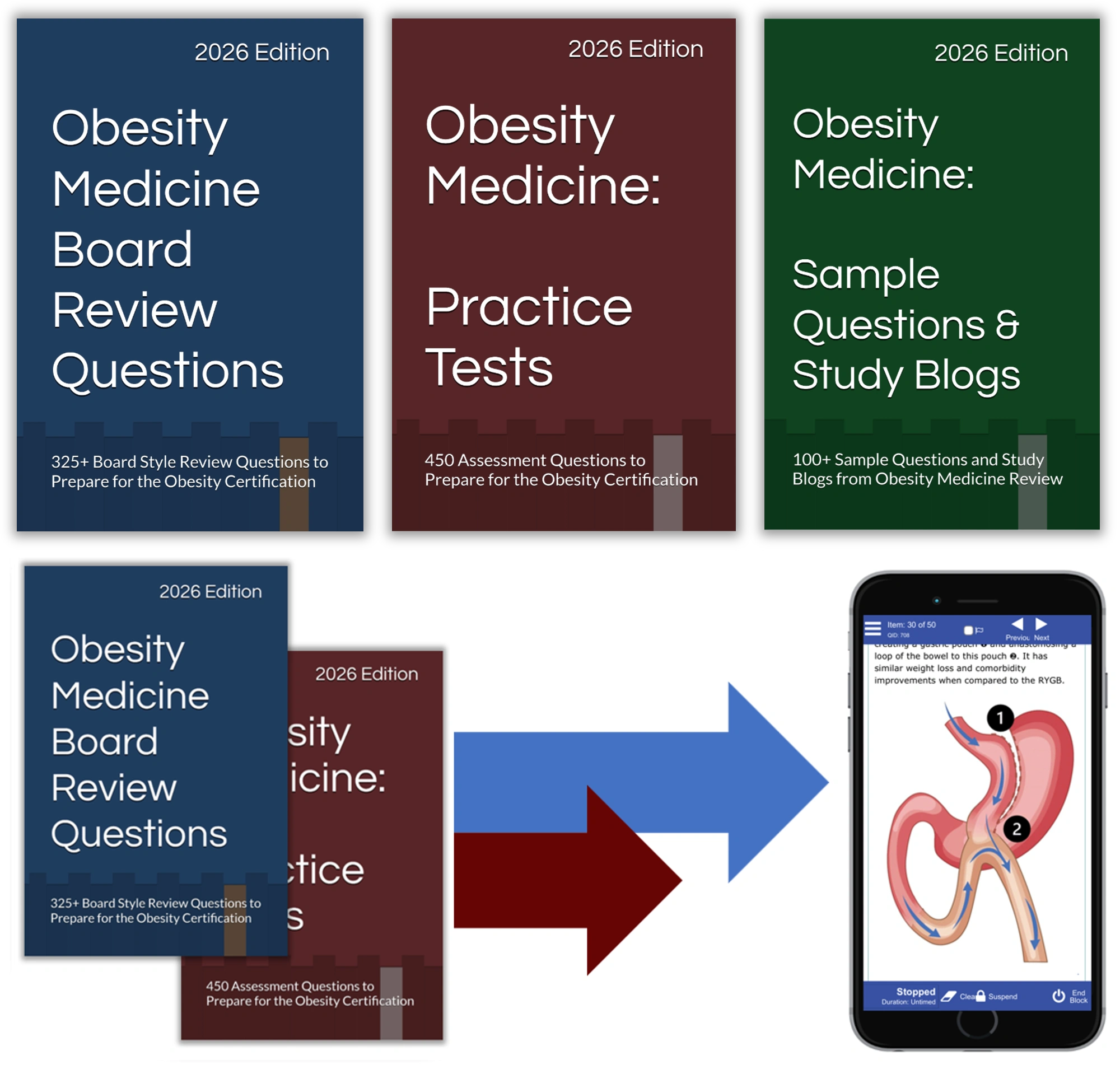
Now available: A full line of ABOM study resources with 775+ challenging questions in a mobile or book format. Access to both formats is available in a discounted Ultimate Package, which also includes a Pass Guarantee (if you fail the exam in 2026, you get the 2027 edition free), 50 bonus questions released in August, and the newest book, Obesity Medicine: Sample Questions and Study Blogs, which includes all the updated previous study blogs in a paperback format. Check it out here!
