

For adults, the classification of obesity is calculated primarily based on anthropometric measurements, such as body mass index and waist circumference. However, the Edmonton Obesity Staging System (EOSS) is changing this paradigm. Created in Edmonton, Alberta, Canada, this well-established staging model risk-stratifies patients based on the level of obesity-related comorbidities, psychological symptoms, and functional limitations, rather than focusing strictly on anthropometric measurements.
The EOSS utilizes five distinct stages, categorized by the severity of obesity-related comorbidities, ranging from asymptomatic (stage 0) to end-stage (stage 4). Two patients with a similar BMI may have a vastly different EOSS stage. This difference in staging would more accurately predict mortality and therefore assist in prioritizing patients who require more intensive weight-loss interventions such as metabolic and bariatric surgery (MBS), regardless of BMI. For example, a patient with a BMI of 34 kg/m² and a higher EOSS stage 2 may be a better candidate for MBS than someone with a BMI of 38 kg/m² and an EOSS stage 0.
Note: Insurance does not currently consider EOSS for MBS qualifications. The presently accepted surgical indications include a BMI of ≥35 kg/m² or a BMI of ≥30 kg/m² with metabolic disease (2022). This is what should be memorized for ABOM boards. There are two main ways that excess weight contributes to comorbidities, often with concurrent components from each:
- Fat-mass disease: This concept is based on the direct effects of excessive body weight in relation to increased mechanical forces. Some conditions associated with fat-mass disease include obstructive sleep apnea, osteoarthritis, acid reflux, and obesity hypoventilation syndrome (external restrictive lung disease).
- Sick fat disease (i.e., adiposopathy): This refers to the inflammatory/hormonal effects of excess weight. Some examples are metabolic syndrome, cardiovascular disease, malignancies, insulin resistance, and metabolic dysfunction-associated steatotic liver disease.
The two subcategorizations of pathology associated with excess weight listed above are considered in the EOSS, both directly and indirectly.
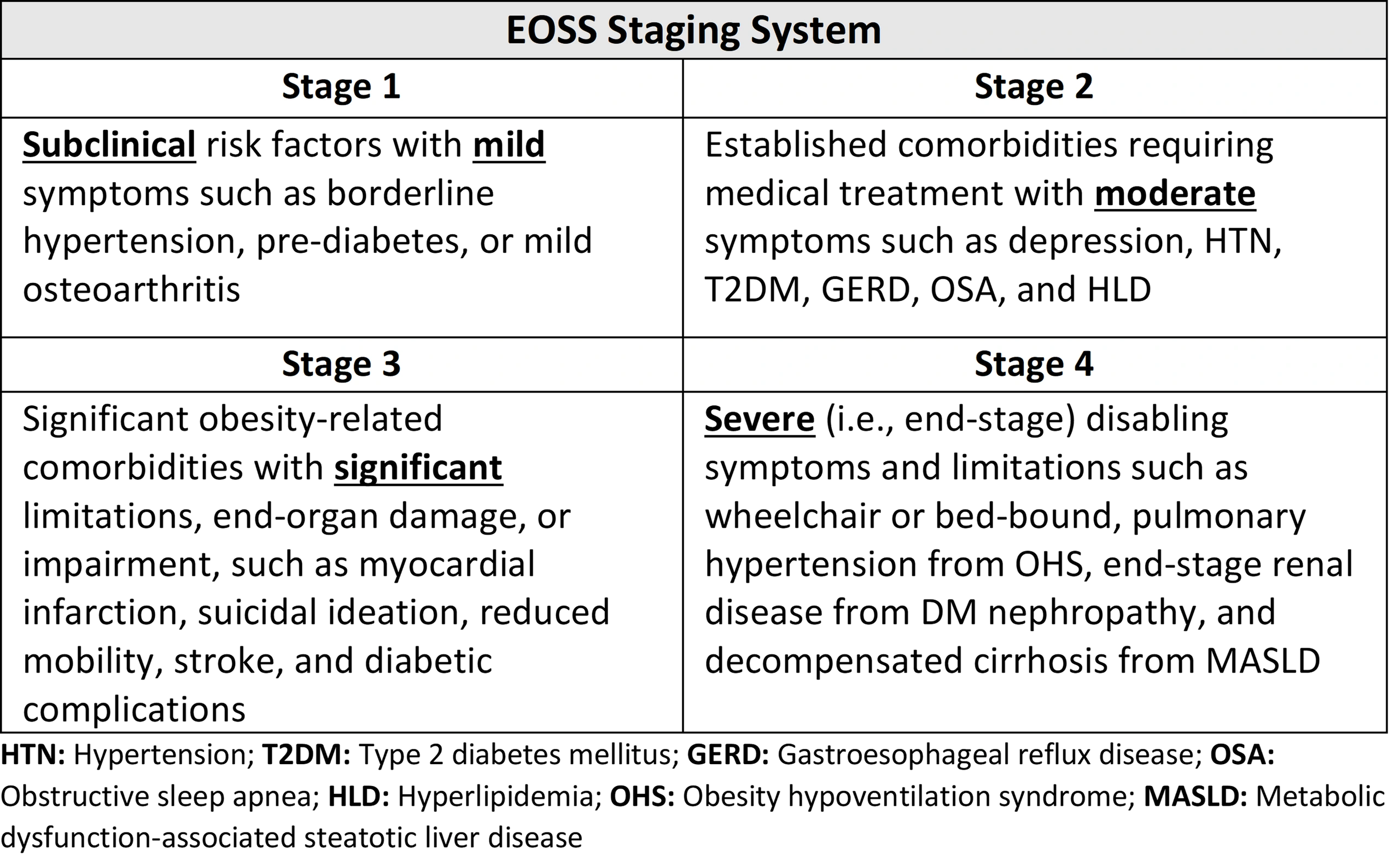
Because BMI does not always correlate directly with health, the EOSS system is recognized as an important discriminator of those requiring more aggressive management or earlier intervention. A patient with no reportable obesity-related comorbidities or symptoms would be classified as stage 0. The other four stages are summarized below.
Sample Question
A university hospital is working with the Centers for Medicare and Medicaid Services (CMS) regarding billing and repayments. The current system allows for an increased hospital length of stay based on body mass index alone. The new proposal is to establish reimbursements and recommend an appropriate length of stay for comorbidities and functional limitations. Which of the following would be the best categorization method to initiate?
A. New York Heart Association Classification
B. Edmonton Obesity Staging System
C. Epworth Sleepiness Score
D. World Health Organization Obesity Classification
E. King’s Obesity Staging Criteria
A look ahead:
- Next Weeks Topic: Bardet-Biedl
- Upcoming in the following weeks: Post-Prandial Hypoglycemia and Adiponectin
For more practice questions, check out the following:
- Obesity Medicine Board Review Questions (2026): Qs 109 and 137.
- Obesity Medicine Practice Tests (2026): Qs 25, 338, and 369.
(Copyright 2026) Obesity Medicine Board Review Questions, LLC: obesitymedicinereview.com
Featured Image (modified): Rossdale Power Plant Edmonton Alberta Canada 2011.jpg. (2021, October 15). Wikimedia Commons, the free media repository.
Copyediting by Kelly Smith
Now available: A full line of ABOM study resources with 775+ challenging questions in a mobile or book format. Access to both formats is available in a discounted Ultimate Package, which also includes a Pass Guarantee (if you fail the exam in 2026, you get the 2027 edition free), 50 bonus questions released in August, and the newest book, Obesity Medicine: Sample Questions and Study Blogs, which includes all the updated previous study blogs in a paperback format. Check it out here!
