Scattered throughout the ABOM-recommended test resources are two United States Preventive Services Task Force (USPSTF) recommendation statements that appear repeatedly. While these documents may not contain groundbreaking information, they do highlight several points of testable content. In this blog, we’ll break down the key takeaways from two similarly titled statements: “Behavioral Counseling Interventions to Promote a Healthy Diet and Physical Activity for Cardiovascular Disease Prevention in Adults Without Cardiovascular Disease Risk Factors” (found here), and “…in Adults With Cardiovascular Disease Risk Factors” (found here).
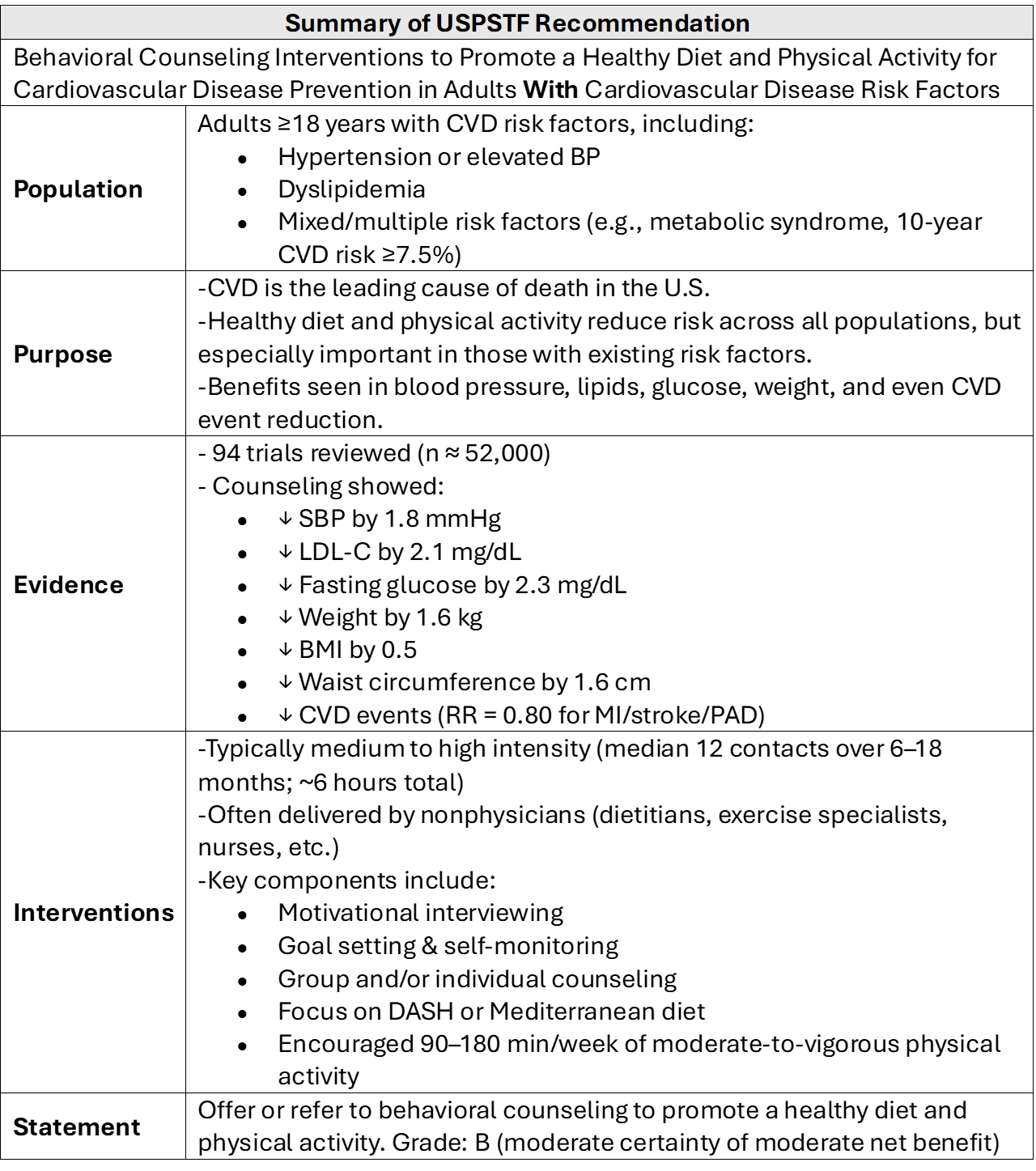
We will begin by summarizing the USPSTF recommendations for adults with cardiovascular disease (CVD) risk factors. This includes individuals with dyslipidemia, elevated blood pressure or hypertension, metabolic syndrome, or a 10-year CVD risk ≥7.5% (as calculated by the Pooled Cohort Equations or Framingham Risk Score). Adults with diabetes are excluded, as a separate recommendation statement addresses that population.
If you are looking for step-by-step guidance on delivering behavioral counseling or more detailed lifestyle modification strategies, this article does not offer that level of specificity. However, it does include links to general resources and does offer general examples in three key areas:
- Dietary recommendations: Emphasize a balanced and varied diet, including increased intake of whole grains, fruits, vegetables, healthy oils and fats, and lean proteins. Dairy products should ideally be low-fat or fat-free, while foods high in sodium, saturated or trans fats, and added sugars should be avoided. Specific dietary patterns mentioned include the Mediterranean diet and the DASH (Dietary Approaches to Stop Hypertension) diet. Importantly, the primary focus of this recommendation is CVD risk reduction, not weight loss.
- Physical activity: Following guidance from the Department of Health and Human Services, adults are encouraged to engage in at least 150 minutes of moderate-intensity or 75 minutes of vigorous-intensity aerobic activity per week, along with strength training at least twice weekly. Studies referenced in the article varied slightly and generally recommended 90–180 minutes per week of moderate to vigorous activity.
- Behavioral counseling: Counseling may be provided by the provider or through referral to support personnel such as dietitians, nurses, exercise specialists, or behavioral counselors. Interventions typically included around 12 contacts totaling 6 hours, focusing on lifestyle modifications using techniques like motivational interviewing and cognitive behavioral therapy (e.g., goal setting, self-monitoring, and overcoming barriers). Both individual and group counseling formats were used.
Ultimately, the evidence shows that these interventions are associated with meaningful improvements in CVD outcomes, including reductions in blood pressure, lipid levels, body weight, BMI, and waist circumference (see table below). The USPSTF concludes that adults with CVD risk factors experience a moderate net benefit from behavioral counseling interventions, while those without risk factors experience only a small net benefit. Therefore, behavioral counseling focused on dietary and physical activity changes should be offered or provided to adults with CVD risk factors.
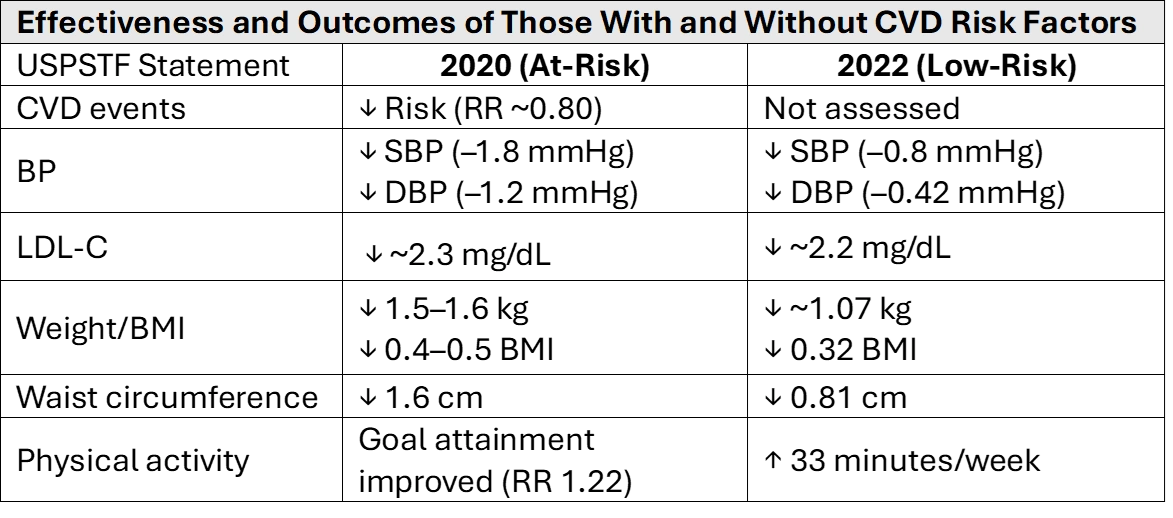
Now, let’s move on to the USPSTF 2022 recommendation that focuses on those without CVD risk. This statement recommendation similarly evaluates adults in a similar manner but specifically excludes those with CVD risk factors (i.e., hypertension, dyslipidemia, diabetes, or obesity). Ultimately, it found behavioral interventions led to improvements in most of the same parameters as those with CVD risks, but to a slightly lesser degree, as shown below:
Intervention effectiveness was improved when they were tailored to the patient’s goals, environment, and resources. Socioeconomic disparities and inequities in social determinants of health (the environment that someone lives, works, shops, worships, is educated etc.) were mentioned as well. For example, non-Hispanic Black adults statistically report lower fruit and vegetable intake, while individuals of lower socioeconomic status report reduced physical activity. Additional barriers to physical activity, including safety concerns, neighborhood crime, and lack of sidewalks, may further hinder exercise. These factors highlight the importance of customizing behavioral interventions to address individual needs and circumstances.
Across the referenced studies, counseling approaches varied in intensity and were often delivered by non-physician personnel using strategies such as motivational interviewing and goal setting. Although the overall benefit may be less pronounced in lower-risk groups, counseling remains appropriate for motivated individuals seeking preventive lifestyle changes. As expected, adults who adhere to national dietary and physical activity guidelines experience lower rates of cardiovascular disease morbidity and mortality compared to those who do not.
The USPSTF concluded that there is a small net benefit, with moderate certainty, for improving intermediate outcomes such as blood pressure, LDL cholesterol, and weight in individuals without known cardiovascular disease or risk factors. As a result, it issues a Grade C recommendation, advising individualized decision-making about whether to offer or refer these patients for behavioral counseling to promote a healthy diet and physical activity. Notably, the USPSTF found no associated harms from offering such interventions.
Although the recommendation is brief, one key clinical takeaway is that behavioral interventions are more effective when delivered repeatedly over time, much like smoking cessation counseling. This principle is supported across numerous studies and forms the foundation of intensive health behavior and lifestyle treatment, which is the first-line approach for managing pediatric obesity. Additionally, the more cardiovascular risk factors a patient has, the greater the potential benefit from these interventions.
While the USPSTF provides the recommendation, it does notoffer a detailed framework for implementation. As you continue your training in obesity medicine and prepare for the ABOM exam, you are building the knowledge and tools to fill that gap. For those who do not practice obesity medicine or feel less confident in delivering lifestyle counseling, the recommendation explicitly allows for referral. Just as primary care providers refer patients for colonoscopies rather than perform them, providers can fulfill the USPSTF recommendation by referring patients to dietitians, digital resources, or obesity medicine specialists, especially for patients with cardiovascular risk factors.
Sample Question
An internal medicine attending is providing a medical school lecture reviewing the USPSTF recommendation on behavioral counseling interventions to promote a healthy diet and physical activity in adults with cardiovascular disease (CVD) risk factors. The recommendations come from numerous studies that show the following observed improvements in those with CVD risk factors that receive behavioral interventions:
↓ SBP by 1.8 mmHg
↓ LDL-C by 2.1 mg/dL
↓ Fasting glucose by 2.3 mg/dL
↓ Weight by 1.6 kg
↓ BMI by 0.5
↓ Waist circumference by 1.6 cm
↓ CVD events (RR = 0.80 for MI/stroke/PAD)
He notes that many of the improvements observed in clinical trials overlap with components of the metabolic syndrome. Which of these components is he referring to?
A. Fasting glucose and LDL-C
B. Waist circumference and cardiac events
C. Body mass index and LDL-C
D. Blood pressure and weight
E. Waist circumference and fasting glucose
Next Week: Monthly Knowledge Check. This is a review checklist of must-know items for ABOM exams based on the previous four blog topics (Epitomee®, CBT vs MI, vital hormone receptors, USPSTF recs). In addition, this will include a brief explanation of the correct answers to previous sample questions.
Following Week: Cushing Syndrome
Upcoming: Wilson-Turner Syndrome, Transoral Reduction Outlet Procedure, and Obesity and Cancer
For more practice questions, check out the following:
- Obesity Medicine Board Review Questions (2026)
- Obesity Medicine Practice Tests (2026)
(Copyright 2026) Obesity Medicine Board Review Questions, LLC: obesitymedicinereview.com
Featured image: Modified from VectorStock (image license purchased)
Copyediting by Kelly Smith
Now available: A full line of ABOM study resources with 775+ challenging questions in a mobile or book format. Access to both formats is available in a discounted Ultimate Package, which also includes a Pass Guarantee (if you fail the exam in 2026, you get the 2027 edition free), 50 bonus questions released in August, and the newest book, Obesity Medicine: Sample Questions and Study Blogs, which includes all the updated previous study blogs in a paperback format. Check it out here!
