

Hepatic steatosis is one of the many obesity-associated metabolic diseases (adiposopathy) and a leading cause of cirrhosis and liver transplants in the United States. The recent nomenclature updates related to fatty liver removed the “nonalcoholic” and replaced it with “metabolic-associated” to better represent the underlying process. This blog will focus on the highlights that the ABOM will require you to know including definitions, screening, and treatment.
Metabolic dysfunction–associated steatotic liver disease (MASLD, formerly NAFLD) is the umbrella term that includes hepatic steatosis involving more than 5% of the liver, occurring in individuals with at least one cardiometabolic risk factor (such as obesity or dyslipidemia), in the absence of other causes of fatty liver disease and with minimal or no alcohol intake. Progressive processes of MASLD include the following severity stages:
- Metabolic dysfunction–associated steatohepatitis: MASH is a progressive form of MASLD characterized by hepatic steatosis accompanied by inflammation and hepatocellular injury (ballooning), with or without fibrosis.
- MASH cirrhosis: MASH cirrhosis refers to cirrhosis that has developed as a consequence of longstanding MASH, defined by advanced fibrosis with nodular regeneration, architectural distortion, and progressive loss of normal hepatic function.
The premise of this cascade of progressive events is that dysfunctional or ‘sick’ fat accumulation, because of lipogenesis and increased fatty acid delivery, disrupts normal liver function. This increased fat leads to oxidative stress, resulting in the production of reactive oxygen species that damage cells and contribute to ongoing inflammation. This inflammation triggers cytokine release and immune cell recruitment to the liver, perpetuating hepatocellular injury and amplifying the inflammatory cascade. Untreated, in the setting of this chronic oxidative stress, hepatocellular injury and apoptosis occur, progressing the severity of the disease to fibrosis and, ultimately, cirrhosis.
Like other diseases, understanding the screening and diagnostic algorithm is important. Although liver biopsy remains the gold standard for diagnosing steatohepatitis and staging fibrosis, it would hardly be practical to screen patients in this fashion. Instead, biopsy is generally reserved for cases of diagnostic uncertainty, inconclusive noninvasive testing, or suspected alternative liver conditions. For this reason, a thorough history, including medications, alcohol intake, and metabolic risk factors, is vital to identify potential contributing causes and guide further evaluation.
The updated pediatric guidelines recommend initial screening with ALT in children aged 10 years and older with obesity and allow screening in those with overweight who have additional risk factors for diabetes or MASLD (Key Action Statements 3, 3.1, and 7). ALT is the preferred liver enzyme for initial pediatric screening because it is more specific for liver injury than AST, although it is not specific for MASLD itself. If ALT is elevated, repeat testing and further evaluation is warranted to exclude other causes of liver disease. Persistent ALT elevations greater than twice the sex-specific upper limit of normal for more than 3 months, or an ALT ≥80 U/L, warrant additional evaluation and consideration of referral to pediatric gastroenterology or hepatology.
In adults, screening is a little more nuanced. Those younger than 35 years with increased metabolic risk, elevated liver enzymes, or other findings concerning for MASLD should be considered for direct fibrosis assessment using vibration-controlled transient elastography (VCTE) or the enhanced liver fibrosis (ELF) blood test. This is because FIB-4, which we will discuss next, has lower accuracy in this age group. Higher-risk individuals include those with type 2 diabetes, overweight or obesity with additional metabolic risk factors (such as dyslipidemia, hypertension, or insulin resistance), elevated liver enzymes, or incidentally identified hepatic steatosis.
In adults over the age of 35, routine blood work, including a CBC and CMP, can help assess the risk of advanced liver fibrosis using the FIB-4 score. Patients with high scores (>2.67) should be referred to hepatology, while those with intermediate scores (1.3–2.67) should undergo additional noninvasive testing with VCTE or ELF blood test. Those at low risk (FIB-4 <1.3) can generally be monitored in primary care, with repeat FIB-4 testing every 1–2 years.
Note: In adults aged 65 years and older, a higher cutoff of 2.0 is used to distinguish low from intermediate risk. See the table below.
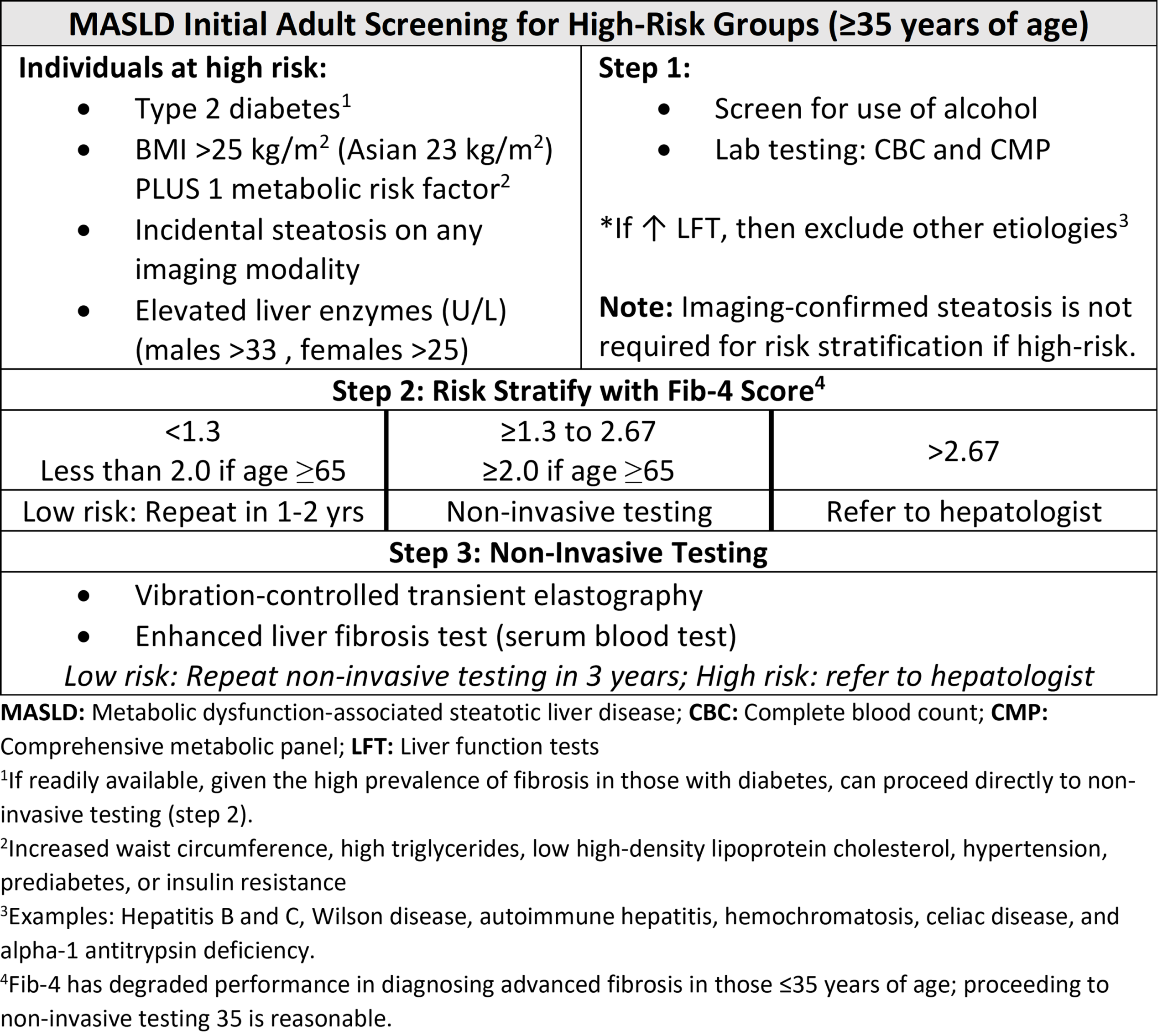
A few other important notes regarding imaging. Conventional ultrasound lacks sufficient sensitivity to reliably screen for mild hepatic steatosis, particularly in patients with obesity. However, steatosis identified incidentally on imaging can be helpful in identifying patients who warrant further evaluation. Other imaging modalities include MRI-PDFF, which accurately quantifies hepatic fat, and CT, which may identify steatosis but is limited by radiation exposure and reduced sensitivity for mild disease. MRI is also limited by cost and availability.
So why do we screen? Screening leads to diagnosis, which then allows for disease staging and consideration of advanced treatment options. Significant weight loss has always been the mainstay of treatment, with approximately 10–40% total body weight loss associated with meaningful improvements in liver disease. In addition to healthy eating and increased aerobic physical activity, metabolic and bariatric surgery and/or GLP-1-based pharmacotherapy are often preferred because of their robust weight-loss potential. GLP-1 receptor agonists, including semaglutide (now FDA-approved for MASH with moderate to advanced fibrosis), demonstrate benefits extending beyond weight loss, including improvements in hepatic steatosis, inflammation, and markers of fibrosis. Resmetirom, approved in March 2024, is also available for patients with noncirrhotic MASH and moderate to advanced fibrosis. The Mediterranean dietary pattern has demonstrated benefits independent of weight loss. Finally, reducing cardiovascular risk factors is vital, as cardiovascular disease is the leading cause of death in patients with MASLD.
The ABOM is a test for primary obesity management. Although the complexities of MASLD are vast, further diagnostic approaches and new imaging would likely be deferred to a hepatologist, ideally, and thus likely beyond the scope of this exam. For more information on this topic, check out the American Association for the Study of Liver Disease Practice Guidelines, American Gastroenterology Association Clinical Care Pathway, or American Diabetes Association consensus report.
Sample Question
An 11-year-old girl presents to her pediatrician for a follow-up regarding weight management. The patient’s weight is in the 95th percentile, and blood pressure was elevated on the prior visit. Her mother has end-stage cirrhosis secondary to metabolic dysfunction-associated steatotic liver disease (MASLD). Given the above findings, what is the best initial screening test for this patient?
A. AST: ALT ratio
B. ALT
C. AST
D. MASLD fibrosis score
Next Week: Monthly Knowledge Check. This is a review checklist of must-know items for ABOM exams based on the previous four blog topics (Weight gain in pregnancy, measuring dietary intake, viral etiology of obesity, metabolic-associated steatohepatitis). In addition, this will include a brief explanation of the correct answers to previous sample questions.
Upcoming: Single anastomosis gastric bypass, Alstrom’s disease, ketogenic diet, and everything to know about metformin
For more practice questions, check out the following:
- Obesity Medicine Board Review Questions (2026): Qs 46, 102, and 151.
- Obesity Medicine Practice Tests (2026): Qs 48, 95, 100, and 129.
(Copyright 2026) Obesity Medicine Board Review Questions, LLC: obesitymedicinereview.com
Featured image: Modified from VectorStock (image license purchased)
Copyediting by Kelly Smith
