

Imagine, just before a meal taking a pill that expands in your stomach, reducing your appetite, allowing you to eat less and lose weight. It sounds like a magic pill, right? Well, it may not be exactly magical after we discuss results, but cellulose and citric acid hydrogel (Plenity®) is a unique concept that could have a special role in obesity management.
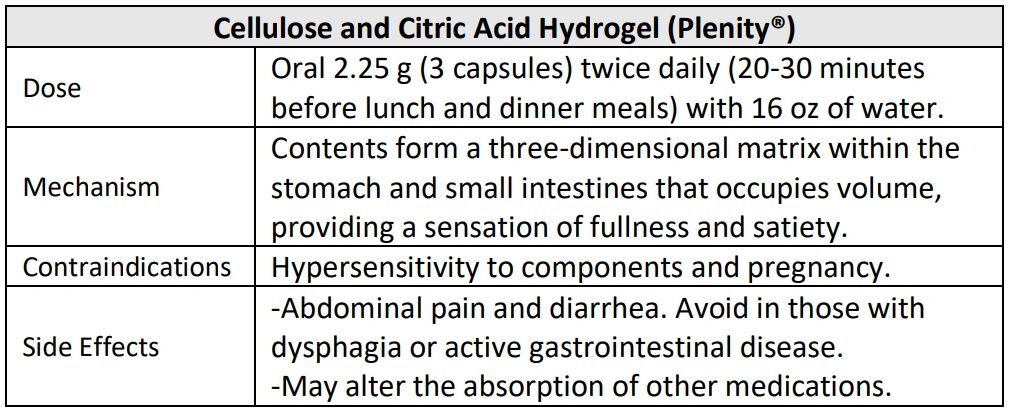
This oral superabsorbent hydrogel is considered a medical device, not a medication, that expands nearly 100x in the stomach when taken with adequate water (16 ounces). This three-dimensional matrix occupies the stomach space providing a sensation of fullness and satiety, likely from ghrelin suppression, allowing the patient to consume less caloric intake. Eventually, this gel (consistency of chewed vegetables) makes it to the colon, where the water is reabsorbed, and the remnants are excreted.
So, is it effective? Well, on their website, it seems very effective; they tout 6.4% weight loss with this medication at six months (GLOW trial). This is a clinically significant amount of weight loss and commendable! However, the fine print helps tell a little more of the story. The placebo group lost an average of 4.4%, so the net benefit is only 2%. Regardless, 59% lost at least 5% (42% in placebo) and 27% lost at least 10% (15% in placebo). Patients with pre-diabetes or those diagnosed with diabetes type II not yet on diabetes medications had a 6x odds of achieving 10% weight loss.
After reading through the trials, my biggest question was, how did the placebo group lose so much weight in this study? It turns out both groups were required to drink 500 mL of water with the pill (placebo vs. control) 30 mins before a meal, so my theory is that maybe water before a meal is the key. After all, if that can help 42% of our patients lose 5% weight, it is a low-risk, high-reward tactic we should consider.
Enough of my theories, what will the ABOM want you to know regarding this on test day?
- Indications: Compared to other anti-obesity medications, cellulose and citric acid hydrogel is indicated down to a BMI of 25 kg/m², regardless of comorbidities.
- Special populations: Although easy to gloss over if provided with other treatment options, this may be the only option without contraindications in specific people. Some examples may be those with end-stage renal disease, women currently breastfeeding, or those with a lower BMI than FDA-approved otherwise. Tolerance, insurance coverage, and contraindications will likely help guide towards cellulose and citric acid hydrogel on test day.
- Contraindications/Avoidance: Although it does not form a cement paste in your stomach, there is a concern for issues with obstruction in anyone with gastrointestinal motility or anatomical pathology. This includes those with dysphagia (imagine these capsules expanding in the esophagus), strictures (or those with risk of strictures like Crohn’s disease), and even acid reflux. Also, avoid in post-bariatric surgery patients for the reasons above. The only true labeled contraindications are hypersensitivity reactions or pregnancy.
- Side effects: It makes sense that gastrointestinal side effects are likely, including abdominal pain, diarrhea, flatulence, and bloating. Interestingly, these were fairly similar in occurrence amongst those in the placebo group.
- Caution: Given its mechanism, it can prevent medication absorption if taken closely together. A great board question would be someone who develops hypothyroid symptoms because their levothyroxine is not being absorbed after starting this treatment.
As obesity medicine specialists, the more tools we are provided to help combat obesity, the better. Cellulose and citric acid hydrogel is exactly that- another tool that may be the perfect fit for a certain patient.
Sample Question
A 57-year-old patient presents to the office after reading about a novel treatment option: cellulose and citric acid hydrogel. She would like to be started on this, as she has gained weight since the start of the pandemic. Her BMI is currently 29 kg/m². Which of the following comorbidities must this treatment option be avoided?
A. Plummer Vinson syndrome
B. Cirrhosis
C. Celiac disease
D. Irritable bowel syndrome
E. End-stage renal disease
Next Week’s Topic: Leg pathology in kids with obesity (SCFE, Blount, etc.)
Upcoming Topics: Motivational interviewing, and immediate RYGB complications: Anastomotic Leak.
For more practice questions on this topic, check out the following:
- Obesity Medicine Board Review Questions (2023): Q’s 108 and 179
- Obesity Medicine Practice Tests (2023): Q’s 102 and 223
(Copyright 2022) obesitymedicinereview.com
Copy editing by: Kelly Smith
Featured image: Modified from VectorStock (image license purchased)
