
 Protocols focused on improving patient outcomes throughout the perioperative period have been utilized for decades, with formal enhanced recovery protocols first introduced in colorectal surgery in 2005 after recognition that common postoperative complications, including delayed bowel motility and return of function, contributed to prolonged recovery. This subsequently led to the formation of the Enhanced Recovery After Surgery (ERAS) Society in 2010, with numerous surgical subspecialties following suit and developing their own specialty-specific guidelines.
In 2016, the first guidelines specific to metabolic and bariatric surgery (MBS) were published, termed Enhanced Recovery After Bariatric Surgery (ERABS), with updated recommendations released in 2021. These evidence-based protocols aim to optimize outcomes across the perioperative period by establishing standardized practices that can reduce morbidity, length of hospital stay, and recovery time without increasing complications or readmissions. This blog will review the highlights of the ERABS protocols and what you need to know both clinically and for the ABOM examination.
Abdominal surgery places significant physiologic stress on the body. In addition to potent medications used in general anesthesia, tissue manipulation and injury trigger the release of numerous inflammatory cytokines and mediators, including interleukins and tumor necrosis factor, with subsequent increases in acute-phase proteins such as C-reactive protein. This inflammatory response also activates hormonal pathways, increasing cortisol and catecholamine levels and promotes a catabolic state that can impair recovery and healing. The magnitude of this surgical stress response is influenced by factors such as the duration of surgery, degree of tissue injury (e.g., open versus laparoscopic surgery), blood loss, and postoperative recovery course. Minimizing these physiologic stressors and accelerating the return to normal function are central goals of enhanced recovery protocols.
The ERAS Society bariatric guidelines aim to mitigate the physiologic and catabolic stress of surgery while promoting earlier postoperative recovery and mobility, thereby reducing downstream complications. The guidelines can be divided into four main areas:
Preadmission:
This area focuses on appropriate patient selection and ensuring that indications for MBS are met. Additional considerations include smoking cessation counseling if applicable, preoperative weight management, behavioral and lifestyle modifications, and appropriate preoperative evaluations, all of which were discussed in greater detail in prior blogs here and here.
A preoperative liver-reduction diet is also recommended for approximately 2–4 weeks before surgery. In addition to improving insulin sensitivity, this diet reduces liver volume and may decrease the technical complexity of surgery, with evidence also suggesting a reduction in length of hospital stay. Finally, prehabilitation, consisting primarily of aerobic and resistance exercise to improve physical conditioning before surgery, may be beneficial, although evidence demonstrating improved postoperative recovery remains limited.
Preoperative:
This portion covers the period immediately before surgery, including preparation prior to arrival and care once the patient enters the preoperative area. Recommendations include a multimodal approach to prevent postoperative nausea and vomiting, utilizing antiemetics and dexamethasone when appropriate. Shorter fasting periods are also recommended, with solid foods discontinued at least 6 hours before induction of anesthesia, while clear liquids may be continued until 2 hours before induction. Preoperative carbohydrate loading may also be considered, although the evidence is less robust in patients undergoing MBS. Potential benefits include improved postoperative insulin sensitivity and reduced postoperative protein catabolism.
Intraoperative:
Intraoperative strategies involve both the anesthesia and surgical teams. Anesthesia considerations include individualized perioperative fluid management, anticipation of a difficult airway in patients with obesity and increased neck circumference, and lung-protective ventilation using low tidal volumes and individualized positive end-expiratory pressure to reduce atelectasis and other pulmonary complications. From a surgical perspective, laparoscopic techniques, avoidance of routine drains, and appropriate surgical expertise and procedural volume all contribute to improved outcomes.
An opioid-sparing, multimodal approach to pain management, including regional blocks when appropriate, should also be incorporated. Excessive postoperative opioid use increases the risk of respiratory depression, while inadequate pain control can limit mobility, indirectly increasing the risk of venous thromboembolism, and delay recovery. Opioids can also slow gastrointestinal motility, further delaying postoperative recovery. Together, these strategies minimize surgical stress and promote a faster return to normal function.
Postoperative:
In the postoperative period, maintaining adequate oxygenation and ventilation is vital. Patients with diagnosed obstructive sleep apnea should resume their CPAP therapy immediately postoperatively, while supplemental oxygen should be provided as needed to maintain adequate oxygen saturation. In patients with obesity hypoventilation syndrome, there should be a low threshold for initiating noninvasive positive-pressure ventilation, such as BiPAP, particularly if hypoxemia or respiratory distress occurs.
Venous thromboembolism prophylaxis should include mechanical measures and pharmacologic prophylaxis as soon as it is considered safe, along with encouragement of early ambulation. Oral intake should also resume early, with clear liquids generally initiated within several hours after surgery, accompanied by appropriate nutrition counseling and assessment. Micronutrient supplementation is essential following MBS, with particular attention to thiamine during the early postoperative period and appropriate lifelong vitamin and mineral supplementation based on the procedure performed.
Following Roux-en-Y gastric bypass, proton pump inhibitor therapy should be considered for at least 30 days to reduce the risk of marginal ulceration. In patients without gallstones, ursodeoxycholic acid may also be considered for approximately 6 months to reduce the risk of postoperative gallstone formation due to rapid weight loss.
These recommendations are summarized in the table below:
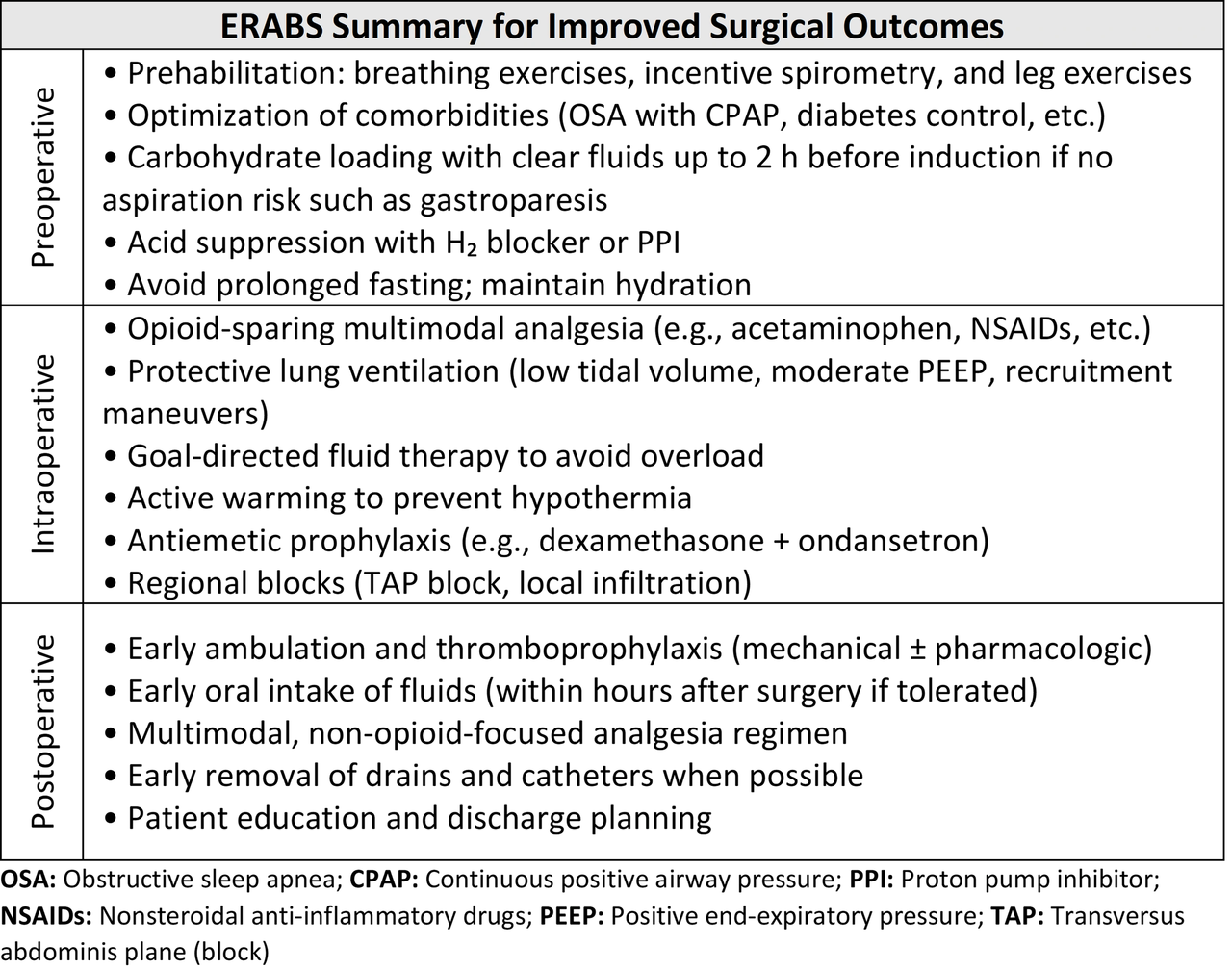
As these measures are appropriately implemented, outcomes include shorter hospital stays, reduced postoperative pain, and earlier return of gastrointestinal function, without an associated increase in complications or readmissions. The Metabolic and Bariatric Surgery Accreditation and Quality Improvement Program (MBSAQIP) is a national accreditation and quality improvement program that collects and monitors outcomes following MBS. Studies utilizing MBSAQIP data have demonstrated that enhanced recovery protocols can substantially reduce prolonged hospital stays without increasing readmission rates, reoperation rates, or postoperative morbidity.
Be familiar with the major principles of ERABS. Although some components may not directly affect your day-to-day management of patients, ABOM diplomates should understand the perioperative care of patients undergoing MBS, including strategies for risk mitigation before and after surgery. Patients may also have questions about what to expect during the perioperative period. Understanding these protocols allows clinicians to provide practical guidance, such as reminding patients with OSA to bring their CPAP device to the hospital, while reassuring them that enhanced recovery protocols are designed to improve outcomes and are supported by ongoing quality monitoring through programs such as MBSAQIP. These concepts are important not only for the ABOM examination, but also for appropriately counseling and managing patients throughout their MBS journey.
Sample Question
A patient is undergoing a preoperative evaluation before Roux-en-Y gastric bypass. The patient has a history of obstructive sleep apnea and well-controlled type 2 diabetes managed with metformin. Family history is notable for a father who underwent coronary artery bypass grafting and a mother who experienced a provoked venous thromboembolism. The patient has no known cardiovascular disease and has a low perioperative cardiovascular risk. The patient jogs for 20 minutes twice weekly. Which of the following should be recommended as part of the patient’s perioperative management?
A. Use CPAP therapy during the immediate postoperative period
B. Initiate a beta blocker to reduce perioperative cardiovascular events
C. Undergo an exercise stress test before surgery
D. Initiate insulin therapy before surgery to reduce the risk of hyperglycemia
E. Avoid oral intake for 12 hours before surgery to reduce aspiration risk
Next Week: Orforglipron
Upcoming: Physical Examination Findings in Obesity Medicine
For more practice questions, check out the following:
- Obesity Medicine Board Review Questions (2026): Q 176.
- Obesity Medicine Practice Tests (2026): Q’s 93, 144, and 189.
(Copyright 2026) Obesity Medicine Board Review Questions, LLC: obesitymedicinereview.com
Featured image: Modified from VectorStock (image license purchased)
Copyediting by Kelly Smith

Comments & Discussion
Responses