
 Several conditions are classified as special populations in the ABOM content outline because they are associated with an increased risk of early metabolic complications and may require disease-specific growth charts due to differences in growth patterns compared with the general population. Achondroplasia, Turner syndrome, and Down syndrome are the three special populations that will be the focus of this blog. By the end of this blog, you should be able to recognize these conditions from a clinical vignette, understand their associated metabolic risk factors, and know when disease-specific growth charts are appropriate, which is the depth of knowledge that is likely to be expected on the exam.
Turner Syndrome (TS)
TS is a sex chromosome disorder that affects phenotypic females. Although mosaic forms exist, the most common karyotype is monosomy X (45,X). TS occurs in approximately 1 in 2,500 live female births, although milder phenotypes, particularly those with mosaicism, may not be diagnosed until adolescence or adulthood, likely resulting in an underestimation of its true prevalence.
Although intelligence is typically normal in individuals with TS, certain mosaic subtypes may have mild neurocognitive differences. Numerous characteristic physical examination findings are associated and are summarized below.
- Short stature: More than 95% of individuals with TS have short stature. Infants are typically born approximately 1 standard deviation below the mean birth length and demonstrate reduced growth velocity throughout childhood. Without growth hormone therapy, the average adult height is approximately 3 standard deviations below the mean.
- Cardiovascular: Congenital heart disease affects up to 50% of individuals with TS and is the primary contributor to the nearly threefold increase in mortality compared with the general population. Common abnormalities include bicuspid aortic valve, coarctation of the aorta, atrial and ventricular septal defects, and partial anomalous pulmonary venous return. Individuals are also at increased risk for aortic dilation and aortic dissection.
- Musculoskeletal features: Classic findings include a short, webbed neck. Other features include shortened metacarpals and metatarsals, congenital lymphedema of the hands and feet, cubitus valgus, genu valgum, scoliosis, and kyphosis.
- Gonadal insufficiency: Premature ovarian insufficiency and ovarian agenesis results in delayed or absent puberty, primary amenorrhea, estrogen deficiency, and infertility in the majority of affected individuals.
- Hearing loss: Progressive sensorineural hearing loss develops in more than 30% of adults with TS.
From an obesity medicine standpoint, there are several important metabolic associations to recognize. First, both insulin resistance and β-cell dysfunction are common and are thought to result, at least in part, from a lack of genes located on the missing X chromosome. Abnormal glucose metabolism is reported in up to 70% of girls with Turner syndrome, with progression to type 2 diabetes occurring in up to 25% of young adults. In addition, despite reduced linear growth, individuals with TS have an increased waist circumference and a greater proportion of visceral adiposity. Consequently, annual screening for diabetes, dyslipidemia, and other components of the metabolic syndrome is recommended starting at age 10.
Given the characteristic short stature associated with Turner syndrome, disease-specific growth charts derived primarily from European cohorts are available. However, stature and weight should also be plotted on standard CDC growth charts to allow comparison with the general pediatric population, while recognizing the expected differences in stature.
Down Syndrome (DS)
DS is the most common chromosomal abnormality, occurring in approximately 1 in 700 live births. Similar to Turner syndrome, mosaic forms exist; however, the vast majority of cases result from trisomy 21 caused by meiotic nondisjunction. The associated clinical features are discussed below.
- Facial features: Characteristic facial features include upslanting palpebral fissures, epicanthal folds, a flat nasal bridge, low-set and small ears, and an open mouth with relative macroglossia.
- Cardiovascular disease: Approximately 50% of individuals with DS have a congenital heart defect. The most common lesions are atrioventricular septal defects, followed by atrial septal defects and ventricular septal defects. Tetralogy of Fallot occurs in approximately 5% of individuals with DS.
- Short stature: Growth restriction begins in infancy and affects weight, length, and head circumference, which are approximately 0.5 standard deviations below the mean. The exact cause is unknown, as growth hormone secretion and receptor function are generally normal. The average adult height is approximately 5 ft 2 in (157 cm) for men and 4 ft 9 in (145 cm) for women.
- Cognitive and developmental delay: Intellectual disability is nearly universal, with most individuals having mild to moderate impairment, although approximately 25% have more severe impairment. Developmental milestones are typically delayed, with 75% of children speaking their first words by 1.5 years of age, walking independently by 4.5 years, and achieving daytime toilet training by 9 years of age. Early-onset Alzheimer disease is common, with dementia affecting nearly 75% of adults with DS by 65 years of age.
As mentioned above, individuals with DS typically have lower weight percentiles at birth, with excess weight gain and obesity commonly developing between 4 and 5 years of age. This is thought to partially result from a lower resting metabolic rate and reduced physical activity related to delayed motor milestones. In addition, feeding and gastrointestinal disorders may influence food choices, while dysregulation of central appetite signaling may also contribute to obesity.
Given the characteristic differences in stature, several DS-specific growth charts developed in the United States and Europe are available. The American Academy of Pediatrics (AAP) recommends using these charts to monitor height and weight. However, because disease-specific BMI percentiles are less well established, standard CDC BMI growth charts are more sensitive for identifying excess adiposity at an earlier stage and are therefore preferred by the AAP for classifying BMI status.
Prediabetes and dyslipidemia are additional adiposity-based chronic diseases that become increasingly common during adolescence, warranting closer screening and earlier intervention. Finally, obstructive sleep apnea (OSA) is more prevalent because of upper airway soft tissue and craniofacial abnormalities. Although adenotonsillectomy is considered first-line therapy, it is effective in only approximately one-third of patients. Furthermore, continuous positive airway pressure is often poorly tolerated, making hypoglossal nerve stimulation a potential treatment option in appropriately selected individuals. In fact, although typically only approved for adults, the hypoglossal nerve stimulator has a special FDA indication for those with DS aged 13-18 years who have severe OSA and are unable to use, or achieve consistent benefit from, CPAP and who were not effectively treated with adenotonsillectomy.
Achondroplasia
Achondroplasia is an autosomal dominant disorder and the most common form of skeletal dysplasia, with a prevalence of approximately 1 in 20,000 live births. It is caused by an activating mutation in the FGFR3 (fibroblast growth factor receptor 3) gene, which inhibits chondrocyte proliferation and endochondral bone growth. Intelligence is not affected, and the characteristic physical examination findings are summarized below.
- Craniofacial features: The most characteristic findings include macrocephaly, midface hypoplasia, and frontal bossing (a prominent, protruding forehead resulting from enlargement of the frontal bones).
- Musculoskeletal: Disproportionate shortening of the proximal long bones of the upper and lower extremities is the hallmark finding, along with trident hands, characterized by short, broad fingers with increased separation between the third and fourth fingers, producing a characteristic three-pronged appearance. These skeletal abnormalities restrict certain movements and contribute to delayed motor development during early childhood. Trunk length is relatively preserved, although the axial skeleton may exhibit deformities, including thoracolumbar kyphosis during infancy and lumbar hyperlordosis after ambulation begins. Genu varum and lumbar spinal stenosis are also common.
- Short stature: Because of disproportionate shortening of the appendicular skeleton, the average adult height is approximately 4 feet 4 inches (132 cm) in men and 4 feet 1 inch (125 cm) in women.
Obesity is common in individuals with achondroplasia and can further exacerbate weight-bearing joint disease and lumbar lordosis. Excess adiposity is typically distributed centrally, particularly within the abdomen, and is thought to result from a combination of decreased resting energy expenditure and reduced physical activity related to the underlying skeletal abnormalities.
Given the characteristic skeletal features, including macrocephaly and disproportionate short stature, achondroplasia-specific growth and head circumference charts should be used to monitor growth. These disease-specific charts help ensure appropriate assessment of growth for this population while reducing unnecessary evaluation of macrocephaly. In addition, traditional BMI calculations often overestimate adiposity because of the disproportionate body proportions characteristic of achondroplasia. Importantly, children with achondroplasia do not exhibit the typical adiposity rebound or pubertal growth spurt observed in the general population, further emphasizing the need for disease-specific growth charts.
With that information, you should be well prepared for exam day. Be sure to recognize the characteristic physical examination findings, as a clinical vignette may describe one of these special populations when you might otherwise suspect a monogenic or syndromic cause of obesity. Also be aware of the clinical nuances, which are important to recognize for both patient care and the ABOM examination. For example, individuals with DS often have difficulty tolerating CPAP for obstructive sleep apnea; those with TS should be evaluated for aortic pathology before participating in high-intensity exercise; and those with achondroplasia may require modifications to an exercise prescription because of their underlying skeletal abnormalities.
Finally, remember that disease-specific growth charts are available for all three conditions. However, in DS and TS, BMI percentiles should be plotted using the standard CDC growth charts, whereas in achondroplasia, disease-specific growth charts are preferred because traditional BMI measurements can overestimate adiposity due to disproportionate body proportions.
Sample Question
An 8-year-old girl presents to establish care after her family moves to the area. Her parents are concerned about progressive weight gain over the past several years. On examination, she has short stature with disproportionate shortening of the proximal upper and lower extremities, frontal bossing, midface hypoplasia, and trident hands. Which of the following is most accurate regarding her growth?
A. Use Down syndrome-specific growth charts for height and weight.
B. Growth chart review would not demonstrate a typical adiposity rebound.
C. Growth hormone therapy typically normalizes adult height.
D. Congenital hypotonia with progressive muscle wasting is expected.
E. Moderate intellectual disability is characteristic and commonly contributes to obesity.
Next Week: Monthly Knowledge Check: This is a review checklist of must-know items for ABOM exams based on the previous four blog topics. In addition, this will include a brief explanation of the correct answers to previous sample questions.
Upcoming: Sarcopenic Obesity, Physical Examination Findings in Obesity Medicine, Orforglipron, and Enhanced Recovery After Bariatric Surgery
For more practice questions, check out the following:
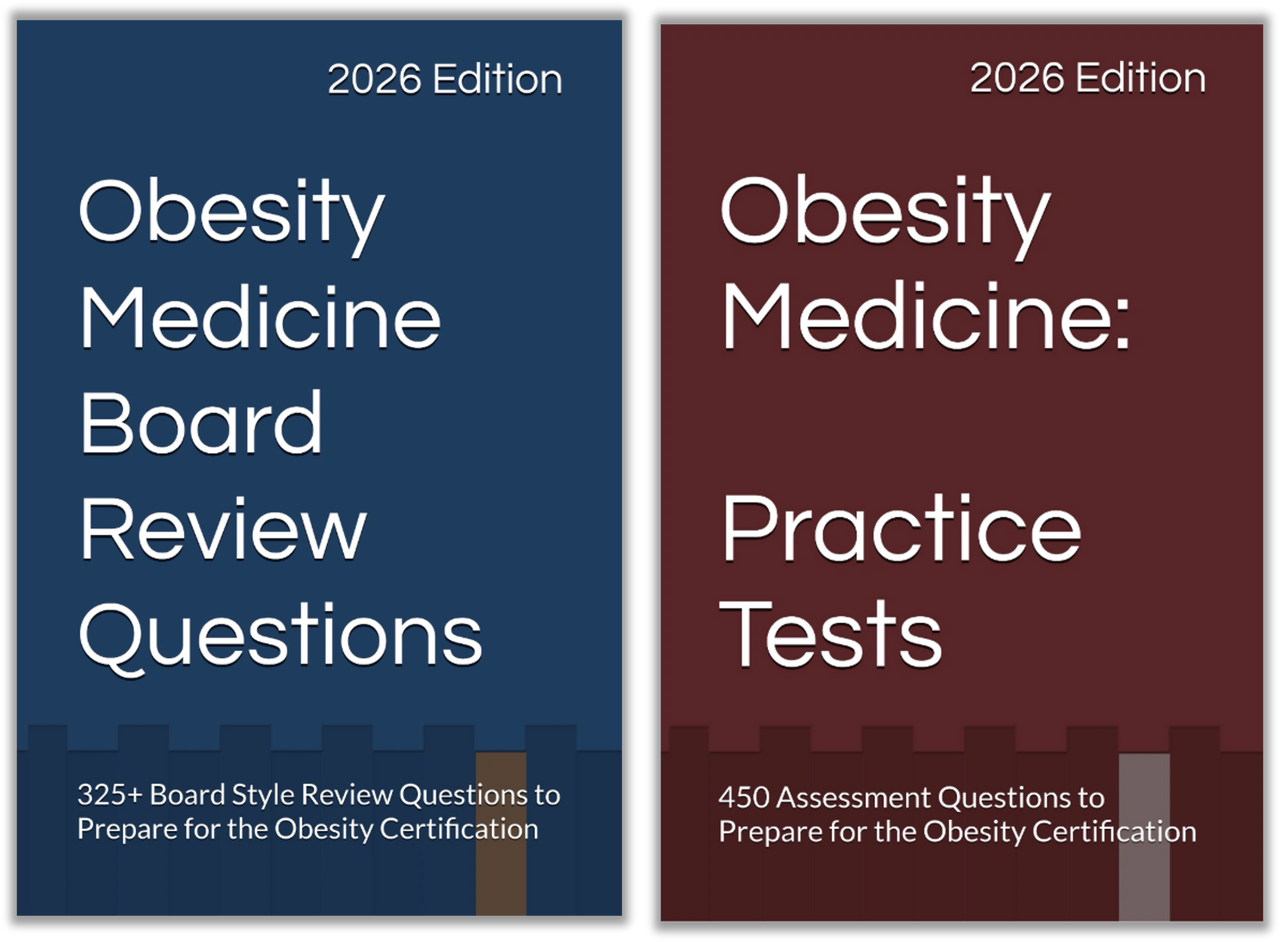
- Obesity Medicine Board Review Questions (2026): Q 148.
- Obesity Medicine Practice Tests (2026): Q’s 64 and 185.
(Copyright 2026) Obesity Medicine Board Review Questions, LLC: obesitymedicinereview.com
Featured image: Modified from VectorStock (image license purchased)
Copyediting by Kelly Smith

Comments & Discussion
Responses