
VO₂ max is a topic I haven’t covered in depth. While it may be easy to gloss over when studying for boards, it is worth mentioning because you likely will see it on test day. Hopefully, after this short and sweet blog, you can collect some extra test points.
VO₂ is the volume of oxygen consumed in one minute. This is a marker of oxygen utilization, with higher levels indicating increased efficiency. VO₂ max, therefore, is the maximum amount of oxygen consumed during intense or maximal exercise. Oxygen consumption involves several organ systems, including oxygen absorption in the lungs, oxygen distribution via the heart, and oxygen utilization in the muscles. Pathological disease or other inefficiencies of any of these systems would cause a decrease in VO₂ max.
Cardiopulmonary exercise testing is used to measure VO₂ max. Patients breathe through a closed loop system containing a mask and tubing, with the tubes connected to an oxygen and carbon dioxide analyzer. Measurements of oxygen consumption are in mL/kg/min. VO₂ max is often looked at as a marker of cardiorespiratory health and endurance, with some of the fittest athletes having levels in the 90 mL/kg/min range. In contrast, the average female and male are in the 35 and 45 mL/kg/min range, respectively.
It is important to note that this type of testing is more commonly found with competitive athletes working in a sports medicine setting. Cardiopulmonary exercise testing to determine VO₂ max is not something usually found in an obesity medicine clinical setting. However, the important idea to take away is that as a person loses weight and decreases body fat, the body becomes more efficient on a physiological level.
Generalizations about VO₂ max include:
- Levels decrease with age (approximately a 30% decrease at age 65 compared to age 20)
- Athletes have higher levels
- Decreasing body fat percentage increases levels
- Men generally have higher VO₂ levels when compared to women
On test day, you may see questions requiring an understanding of the components influencing a person’s VO₂ max. For example, they may require you to select a component, such as age or sex, that has a relatively increased VO₂ max. In addition, another question may state a patient lost weight and ask you what has likely increased compared to before their weight loss. Answer options such as VO₂ max, leptin levels, energy expenditure, etc., may be listed, and knowing that VO₂ max increases with a decrease in body fat would be important to answer this correctly.
Sample Question
A sports medicine physician is working on a research project evaluating VO₂ max across the lifespan. He has each subject undergo testing to determine the VO₂ maximum in order to calculate their cardiorespiratory fitness level. Which patient is most likely to have the highest VO₂ max?
A. A 23-year-old man who swims 30 minutes daily
B. A 65-year-old woman who walks 2 miles daily
C. A 50-year-old man with a body fat percentage of 36%
D. A 33-year-old man with Down syndrome
Next Week: Monthly Knowledge Check. This is a review checklist of must-know items for ABOM exams based on the previous four blog topics (Hypothalamic obesity, gastric balloons, setmelanotide, and VO₂ max). In addition, this will include a brief explanation of the correct answers to previous sample questions.
Upcoming: Meal-terminating anorexigenic hormones, Aspire Assist® device, body fat measurements (calipers vs. DXA, etc.), and Prader-Willi vs. Angelman.
For more practice questions, check out the following:
- Obesity Medicine Board Review Questions (2026): Qs 37, 93, and 101.
- Obesity Medicine Practice Tests (2026): Qs 76, 267, and 359.
(Copyright 2026) Obesity Medicine Board Review Questions, LLC: obesitymedicinereview.com
Featured image: Modified from VectorStock (image license purchased)
Copyediting by Kelly Smith
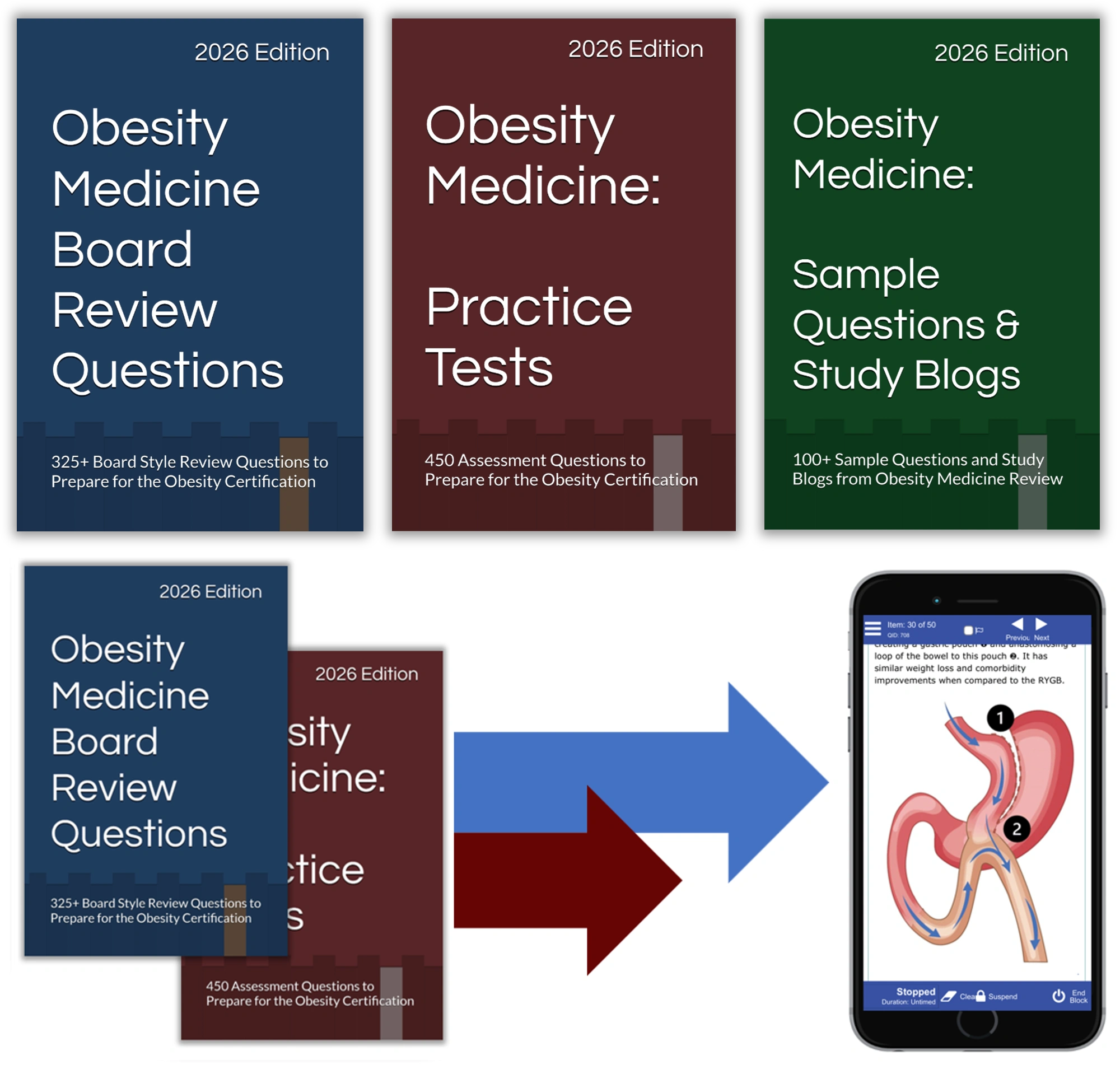
Now available: A full line of ABOM study resources with 775+ challenging questions in a mobile or book format. Access to both formats is available in a discounted Ultimate Package, which also includes a Pass Guarantee (if you fail the exam in 2026, you get the 2027 edition free), 50 bonus questions released in August, and the newest book, Obesity Medicine: Sample Questions and Study Blogs, which includes all the updated previous study blogs in a paperback format. Check it out here!
